Grade 7 – From Holes and Equations to a Journey into Space


Even after our class trip, things were anything but boring in Grade 7. From literary investigations and mathematical puzzles to French grammar, climate research and a virtual journey to the International Space Station, our timetable once again had plenty to offer.
German – following Stanley’s trail
In German, we started by digging – not with shovels, but with pens and plenty of thinking.
Using excerpts from Louis Sachar’s young adult novel “Holes”, we followed the main character Stanley through his unusual experiences. With targeted questions, we explored the text in greater depth and then took a closer look at Stanley himself: What is he like? What does he think and feel? And how does he deal with his difficult situation?
The students recorded their findings in a character description. To conclude, they stepped into Stanley’s shoes and wrote a letter to his parents.
Not an easy task when you have landed in a camp where digging holes is part of the daily routine. Fortunately, no actual digging was required in class.
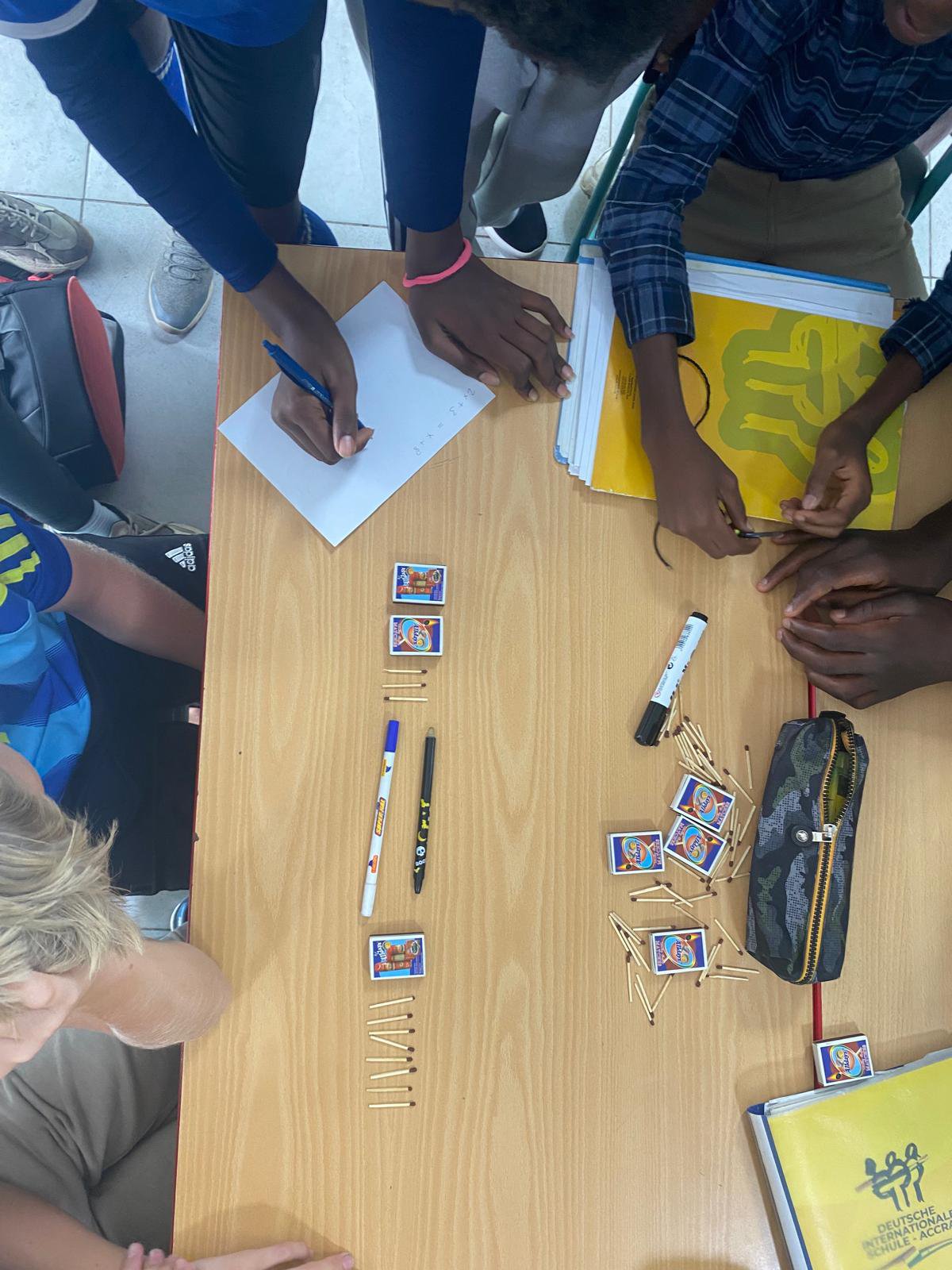
Mathematics – Crack the Box!
Things became more mysterious in Mathematics: What could be hidden inside the closed matchbox?
With the method “Crack the Box”, we began our new topic of equations. Matchboxes represented unknown variables, while individual matches stood for numbers.
The students quickly discovered an important principle: if you change something on one side, you must do the same on the other. After all, the equation needs to stay balanced.
We then transferred the matchstick constructions into mathematical notation and learned our first equivalent transformations. It became especially interesting when the students created their own equations for classmates to solve.
The challenge was simple: crack the box and work out how many matches were hidden inside.
English – poems are meant to be heard
English lessons focused on sound.
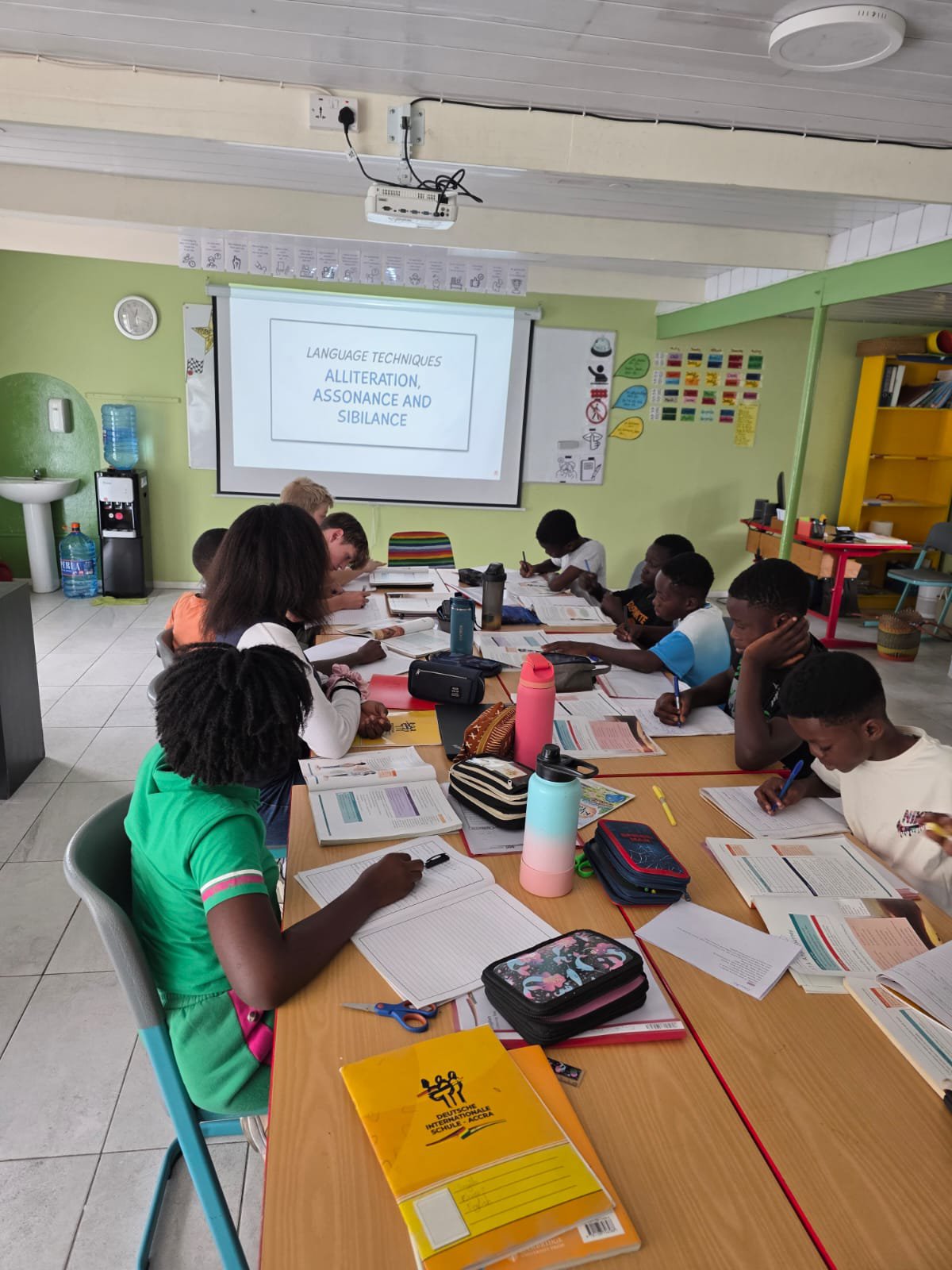
We explored poetic devices such as alliteration, assonance and sibilance and investigated how repeated initial sounds, vowels and hissing sounds can influence the effect of a poem.
The students then went on a sound hunt themselves and identified the different techniques in a poem.
One thing became clear: poems are not only meant to be read – sometimes you need to listen very carefully as well.
French – Bonjour, everyday life!
In French, the class worked with the présent de l’indicatif, the present tense.
The students learned how to talk about regular activities, habits and everyday experiences. They conjugated verbs, matched them with personal pronouns and created their own sentences.
It quickly became clear that the verb changes depending on who is doing the action, so paying close attention to the endings is essential.
Through practical exercises, the class became increasingly confident in forming French sentences. Très bien!
Geography – what climate graphs can tell us
In Geography, the students became young climate researchers.
The focus was on climate graphs. They learned how to read temperatures and precipitation levels, extract important information and finally draw climate graphs themselves.
The class discovered that behind lines, bars and numbers lies a surprising amount of information about the climate of a place.
Who would have thought that a single graph could reveal so much about the climatic conditions of a region?
A trip to the ISS – without leaving the classroom
One of the highlights of the week was our virtual journey into space.
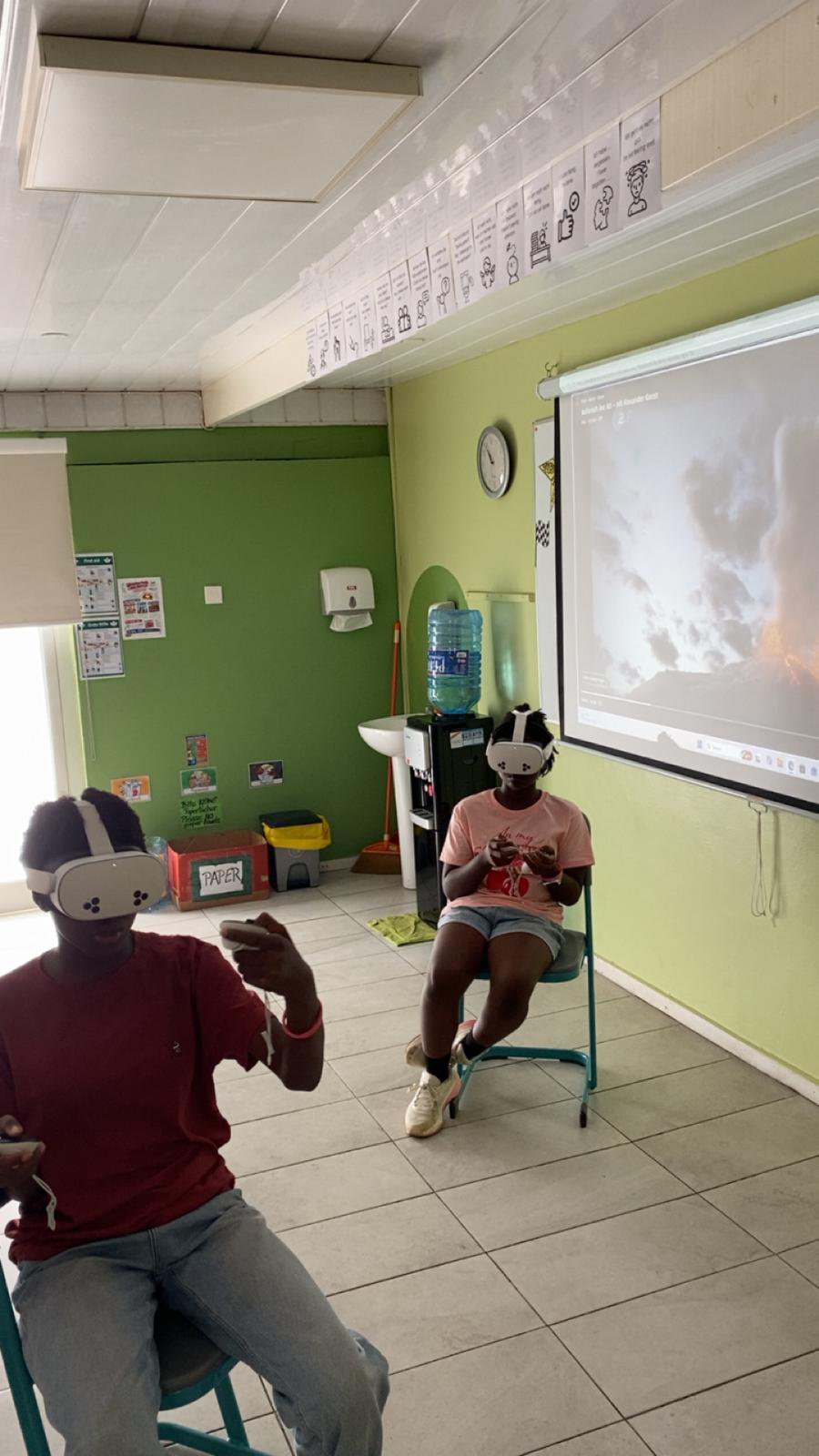
Using VR headsets, we mentally left the classroom and travelled to the International Space Station. At an altitude of around 400 kilometres, we explored the station, admired the Earth from a completely different perspective and gained an impression of life in zero gravity.
Of course, one question had to be asked: What would we miss most in space? A comfortable bed? A proper shower? Or perhaps our favourite food?
Afterwards, we followed German astronaut Alexander Gerst through his everyday life on the ISS in a film and learned more about the special challenges of living and working in space.
The complex construction of a spacesuit was particularly impressive. After all, it is much more than just a stylish outfit for space.
Travelling through space without leaving school – that certainly does not happen every day.
Biology – apple snails in the spotlight
Biology became especially interesting this week.
Our presentation series on invertebrates came to an end with a talk about apple snails. Afterwards, however, there was no time to sit back and relax.
With an increasingly trained eye, the students analysed presentation style and slide design and gave their classmate detailed and constructive feedback.
All prepared presentations have now been completed. Over the coming weeks, some particularly interesting aspects will be explored in greater depth.
And to make sure the newly acquired knowledge does not simply crawl away, a short assessment is also on the horizon.
IT – Excel can do more than tables
There was plenty of digital problem-solving too.
In IT, the class continued working with Excel and moved on to basic charts and simple calculation formulas.
The students quickly realised that Excel does not just make tables look neat – it can also do a fair amount of calculating.
The connection with German was particularly interesting: in targeted reading-comprehension tasks, information first had to be understood accurately before it could be transferred correctly into Excel.
After all, even the best formula is of little use if you have not read the instructions properly.
Ethics and Social Studies – trust, boundaries and responsibility
After the class trip, Ethics and Social Studies were not only about positive memories.
The class also explored questions that are especially important for living together successfully: respect, honesty, ownership, personal boundaries, responsibility and fairness.
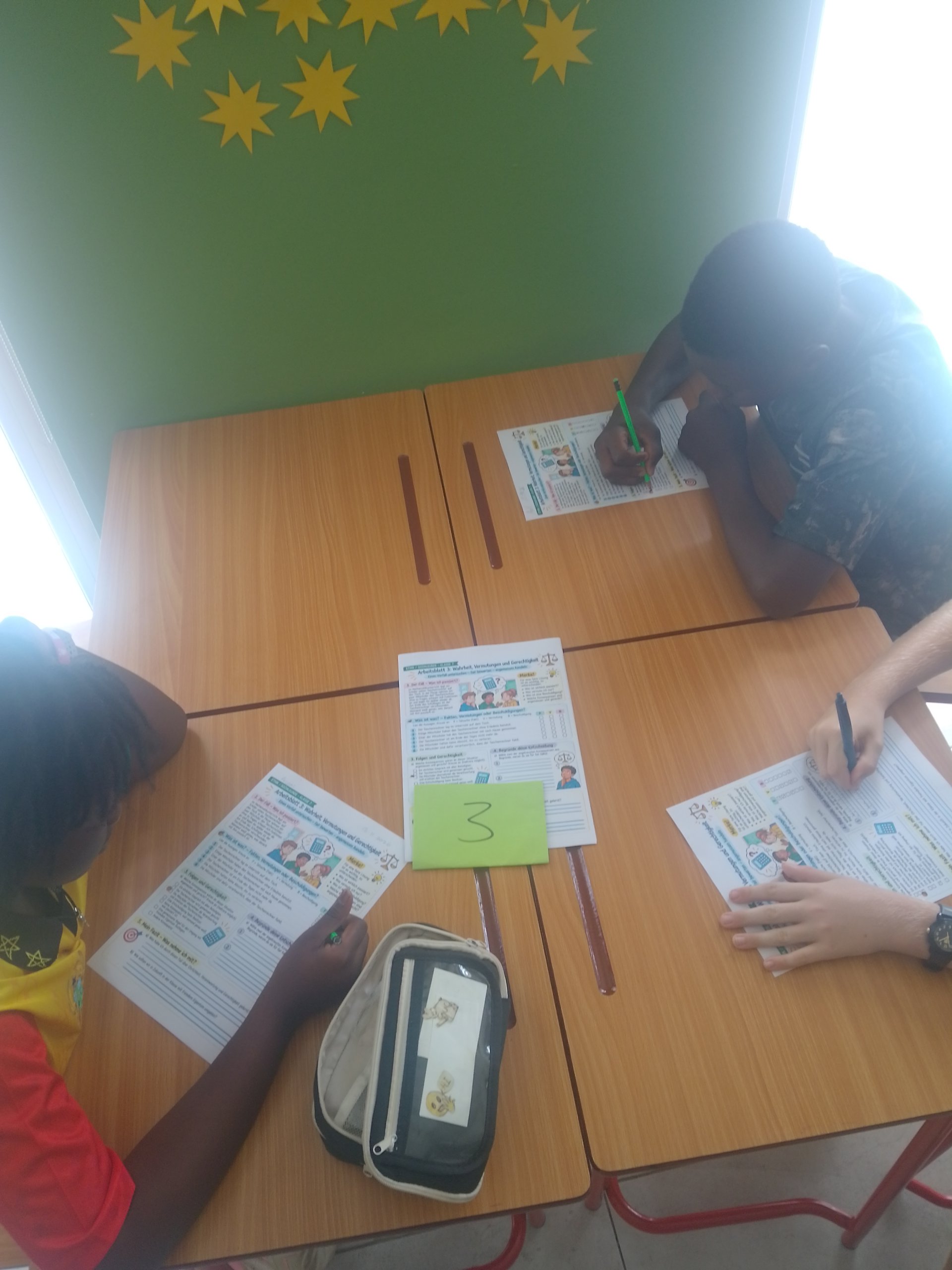
Using everyday situations, the students discussed why it is not acceptable simply to take someone else’s belongings or enter another person’s private space without permission. One point became clear very quickly: just because something is lying around does not mean it belongs to us.
Perspective-taking was especially important. How do the people involved feel? What do we actually know, and what are we merely assuming? Who carries responsibility? And what consequences would be fair?
The students also reflected on trust, conflict resolution and making amends. The aim was not to look for someone to blame, but to learn together from experiences.
A strong class community can only work when we respect other people’s boundaries, communicate honestly and take responsibility for our own actions.
Building trust often takes a long time – losing it can happen surprisingly quickly.
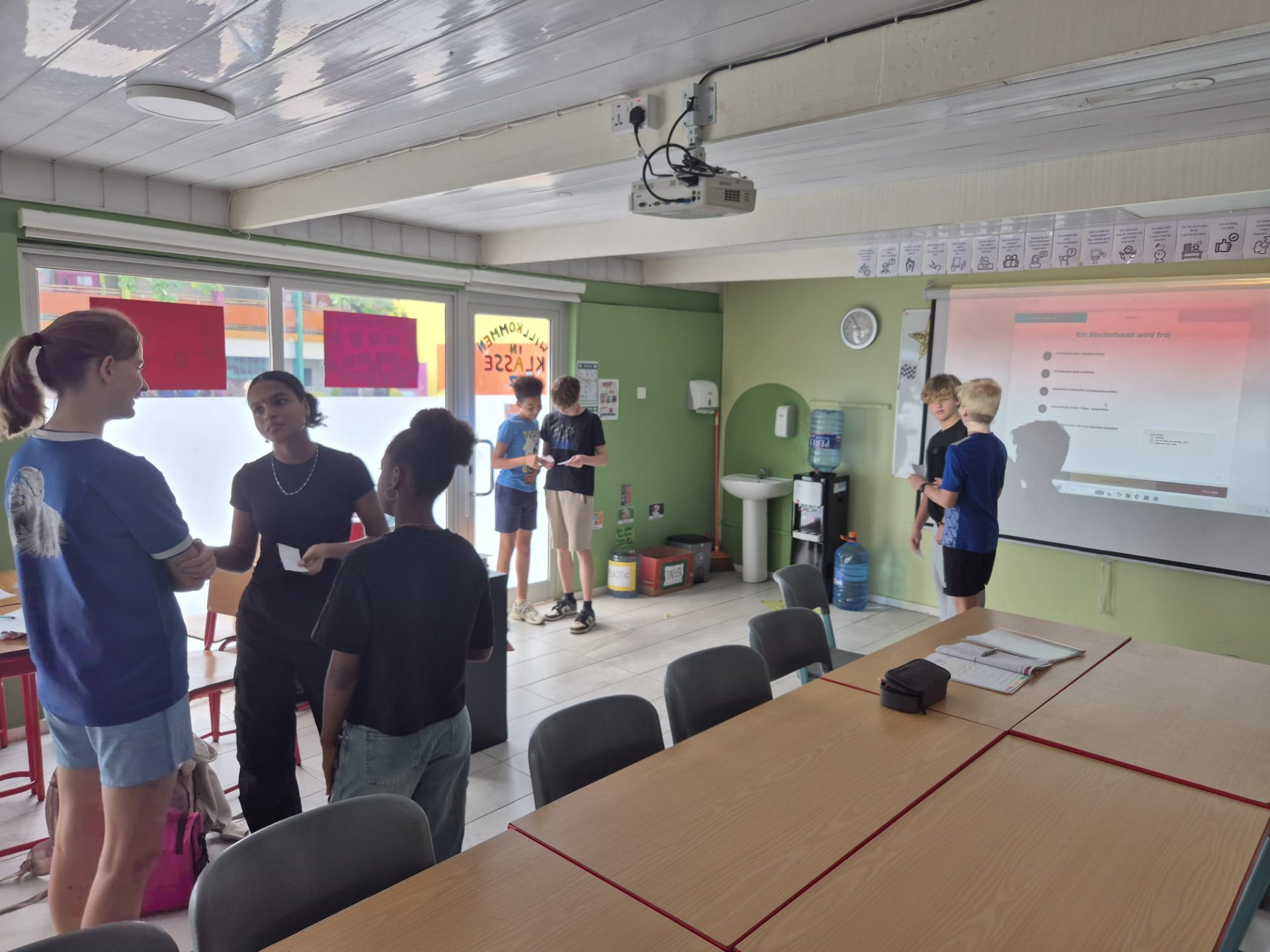
History – Pope or Emperor: Who Gets to Appoint the New Bishop?
In History, the focus was also on power, competing interests and the question of who actually has the right to make important decisions.
The lesson began with a concrete conflict: a bishop’s position becomes vacant – but who is allowed to appoint the new bishop? The emperor? The pope? Or perhaps both?
In a role play, the students took on different positions and quickly realised that a bishop in the Middle Ages was far more than just a religious leader. The office also came with influence, property and political power. It was therefore hardly surprising that both the Church and secular rulers wanted a say in who was appointed.
From this concrete situation, the class moved on to the Investiture Controversy between Pope Gregory VII and King Henry IV. The students explored how closely religion and politics were intertwined in medieval Europe and why the conflict raised such a fundamental question: who had the higher authority – pope or emperor?
The trail eventually led to Canossa in 1077. The students examined why Henry IV made his famous journey to Canossa and what the event reveals about the balance of power between secular and religious authority.
To conclude, the students had to take a position once again: who actually had the stronger arguments in this medieval struggle for power – pope or emperor?
History was therefore not only told, but debated, acted out and evaluated. Sometimes a centuries-old conflict becomes much easier to understand when you suddenly have to decide for yourself who should be allowed to appoint the new bishop.
Physical Education – dribbling, throwing and scoring
To finish the week, things became energetic once again.
In basketball, the students demonstrated their skills with the ball. Dribbling, passing, shooting and, of course, teamwork were at the centre of the lesson.
After all, even the best shot is not much use if you never receive the ball.
At the same time, the students completed their long-throw assessment, which required technique, strength and a good sense of direction.
Whether on the basketball court or during the throwing assessment, movement, teamwork and sporting ambition certainly played an important role.
It was therefore a week in which Grade 7 moved between literature, equations, poetry, climate diagrams, medieval power struggles, snails, Excel and outer space – school life could hardly have been more varied.
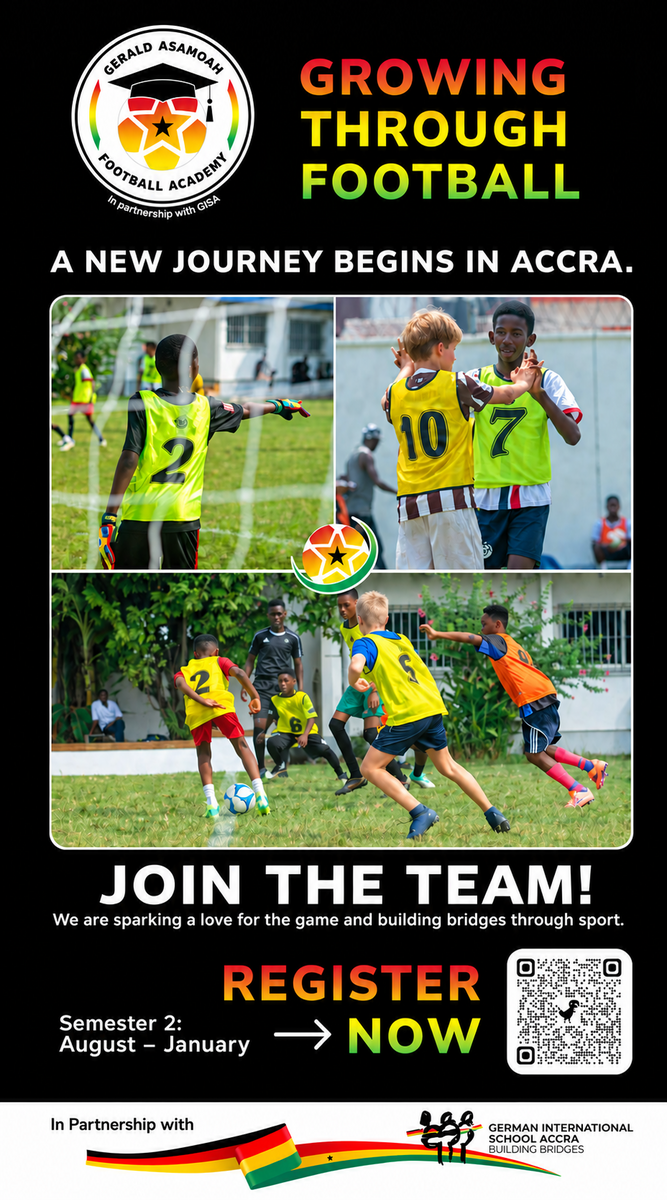
⚽Gerald Asamoah Football Academy
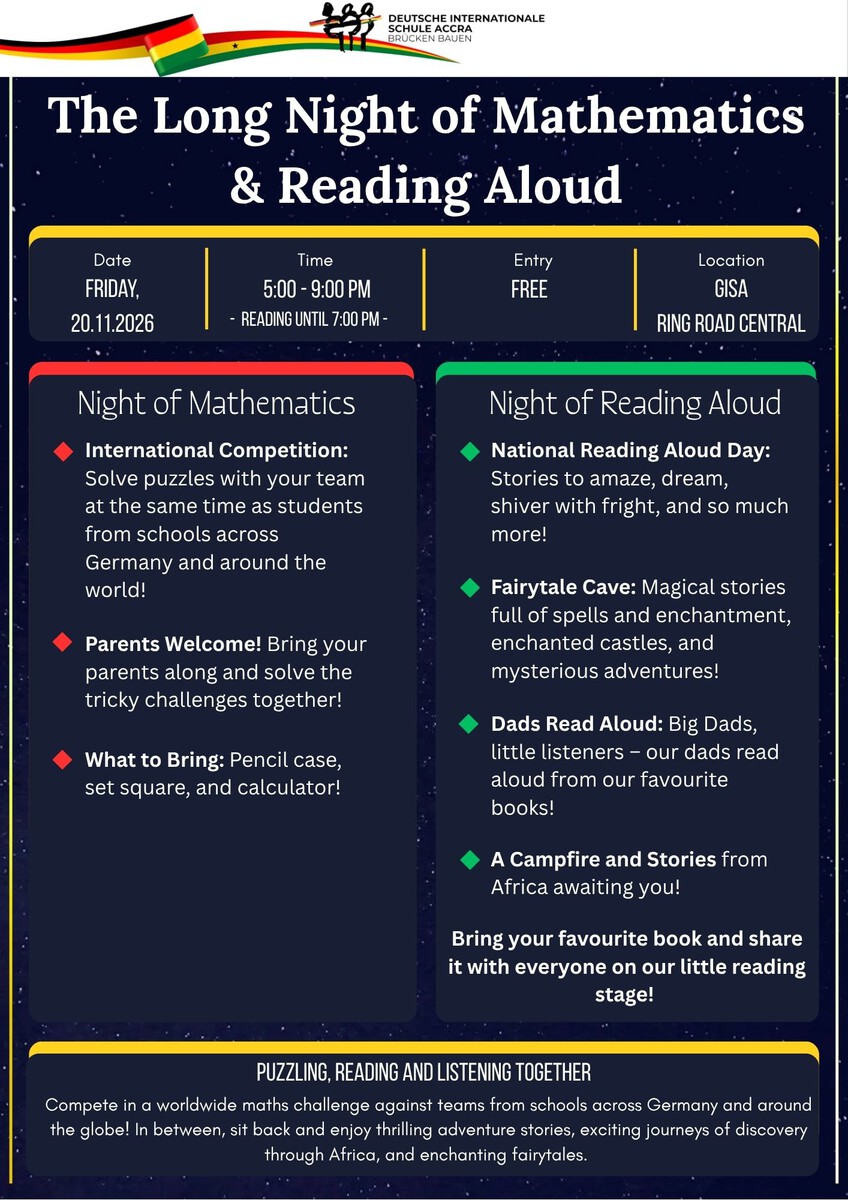
The Long Night of Mathematics & Reading Aloud
Christmas Market

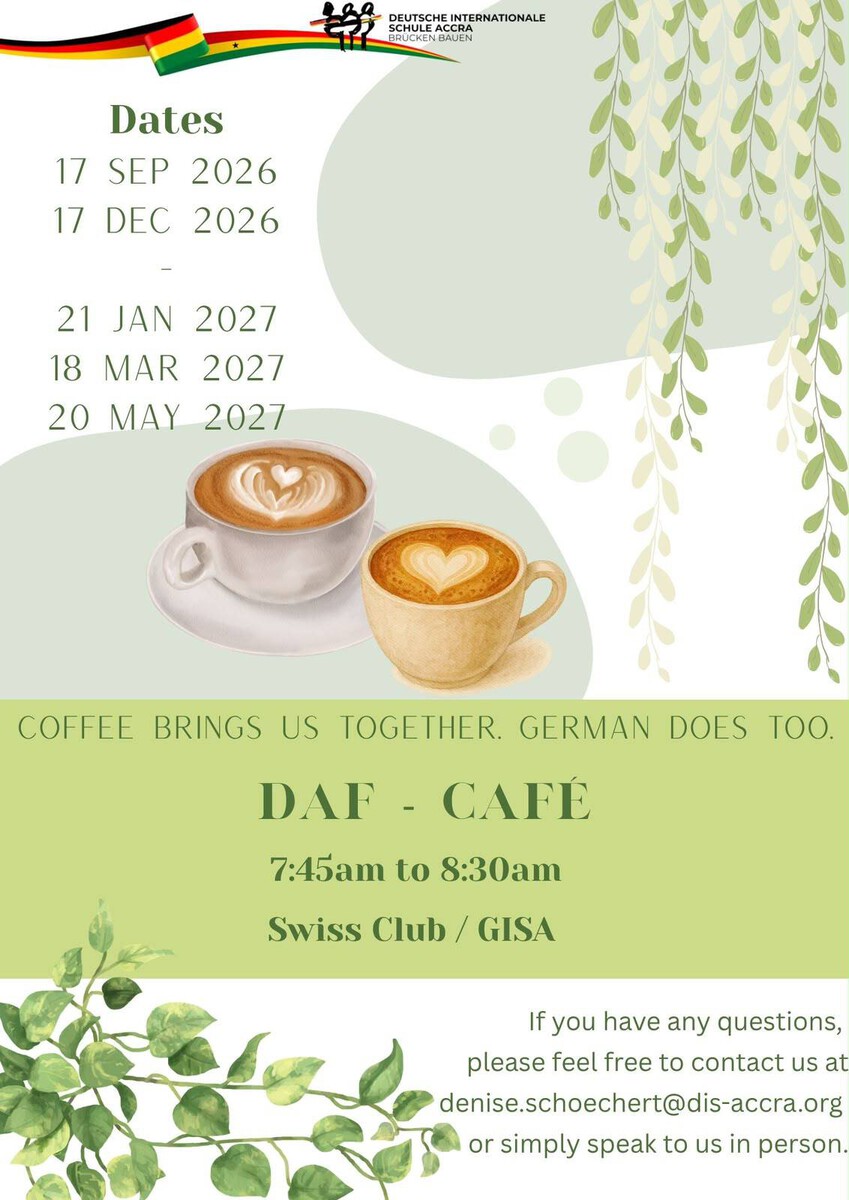
☕ DaF Café: Speaking German and Connecting Through Conversation
GISA Teen Club