Grade 8 – Robots, Binomial Formulas and French in Real Life


After the class trip to Togo, Grade 8 went straight back into another varied week of learning. Between binomial formulas, LEGO robots, everyday French and literary time travel, the students calculated, programmed, analysed and discussed.
Mathematics – getting ready for the test
In Mathematics, the focus remained on binomial formulas.
The students practised applying the formulas confidently, factorising expressions and recognising familiar structures in more challenging tasks.
This is part of their preparation for the test, which will be repeated next week. Until then, it is time to keep looking closely, recognising patterns and making sure no minus sign gets lost along the way.
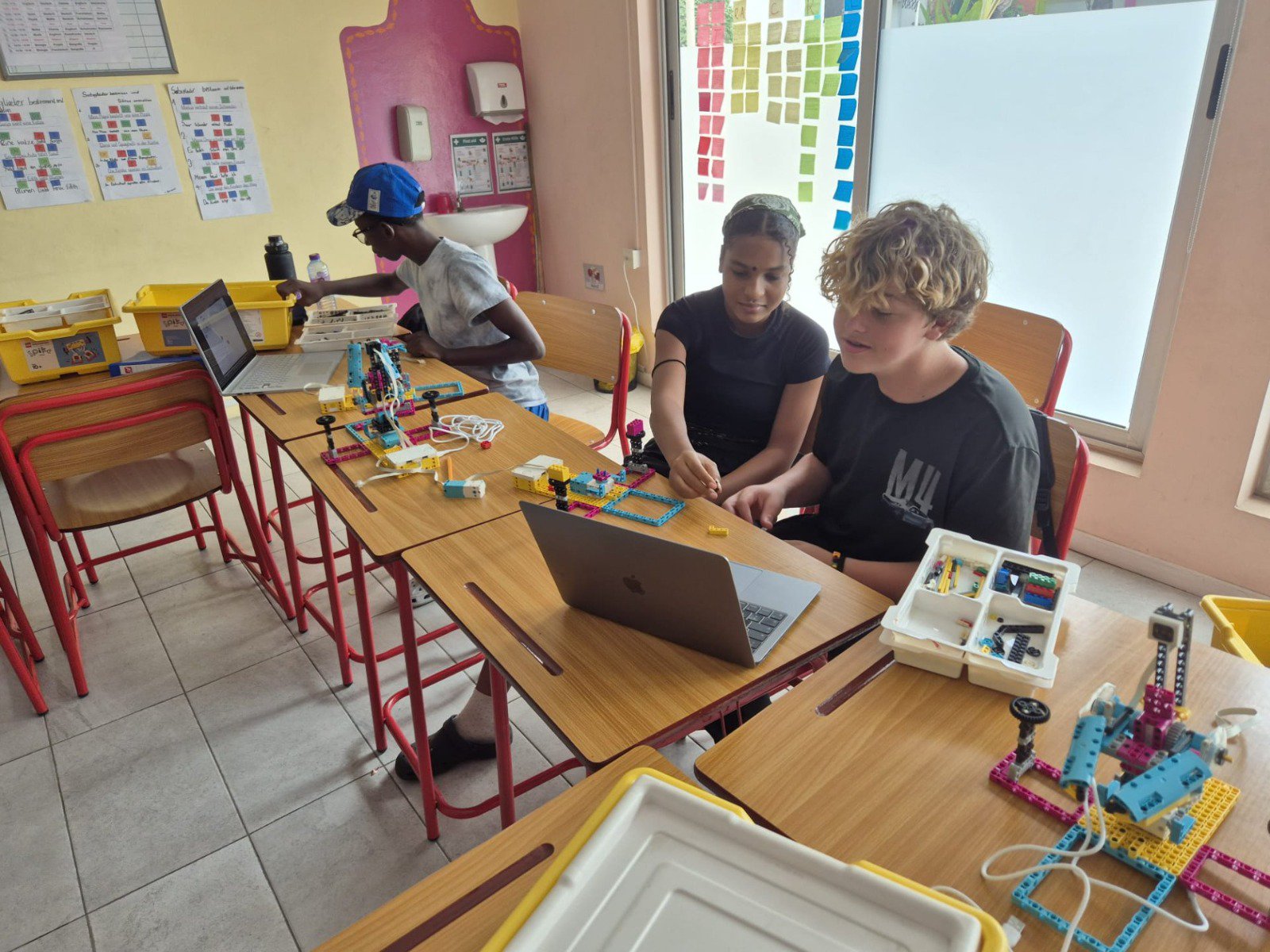
IT – Grade 8 programs LEGO robots
IT lessons became particularly hands-on this week.
During an intensive six-lesson block on Tuesday, the students worked on building and programming a LEGO mini robot. The task was quite demanding: the robot was supposed to pick up goods, check them and then move them on.
First, the construction had to be assembled collaboratively. Then came the next challenge: installing the required control software on the laptops. This did not work immediately for everyone, but it certainly did not stop the class from continuing.
With plenty of perseverance, the students tested, programmed, adjusted and tried again. Step by step, they developed suitable command sequences and immediately observed how the robot responded.
Using the LEGO models, the class eventually simulated the processes of a harbour crane. This provided a clear and practical insight into how automated systems work in modern logistics.
Programming, technical understanding and economic processes came together in a very tangible way. The activity showed clearly how important digital technologies are today for controlling and optimising economic processes.
And just as importantly, the enthusiasm for experimenting and problem-solving was impossible to miss.
Biology – the apple snail takes the final turn
In Biology, the final presentation in our series on invertebrates took place.
This time, the apple snail was in the spotlight.
After the presentation, the student received detailed and well-founded feedback. Once again, the class demonstrated its increasingly impressive ability to analyse presentation style, structure, clarity and slide design in a constructive way.
All prepared presentations on invertebrates have now been completed.
Over the coming weeks, some particularly interesting aspects will be revisited and explored in greater depth. And to make sure the newly acquired knowledge really sticks, a short assessment is also coming up.
History – A Power Struggle Between Pope and Emperor
In History, the class continued with one of the major conflicts of the Middle Ages: the Investiture Controversy.
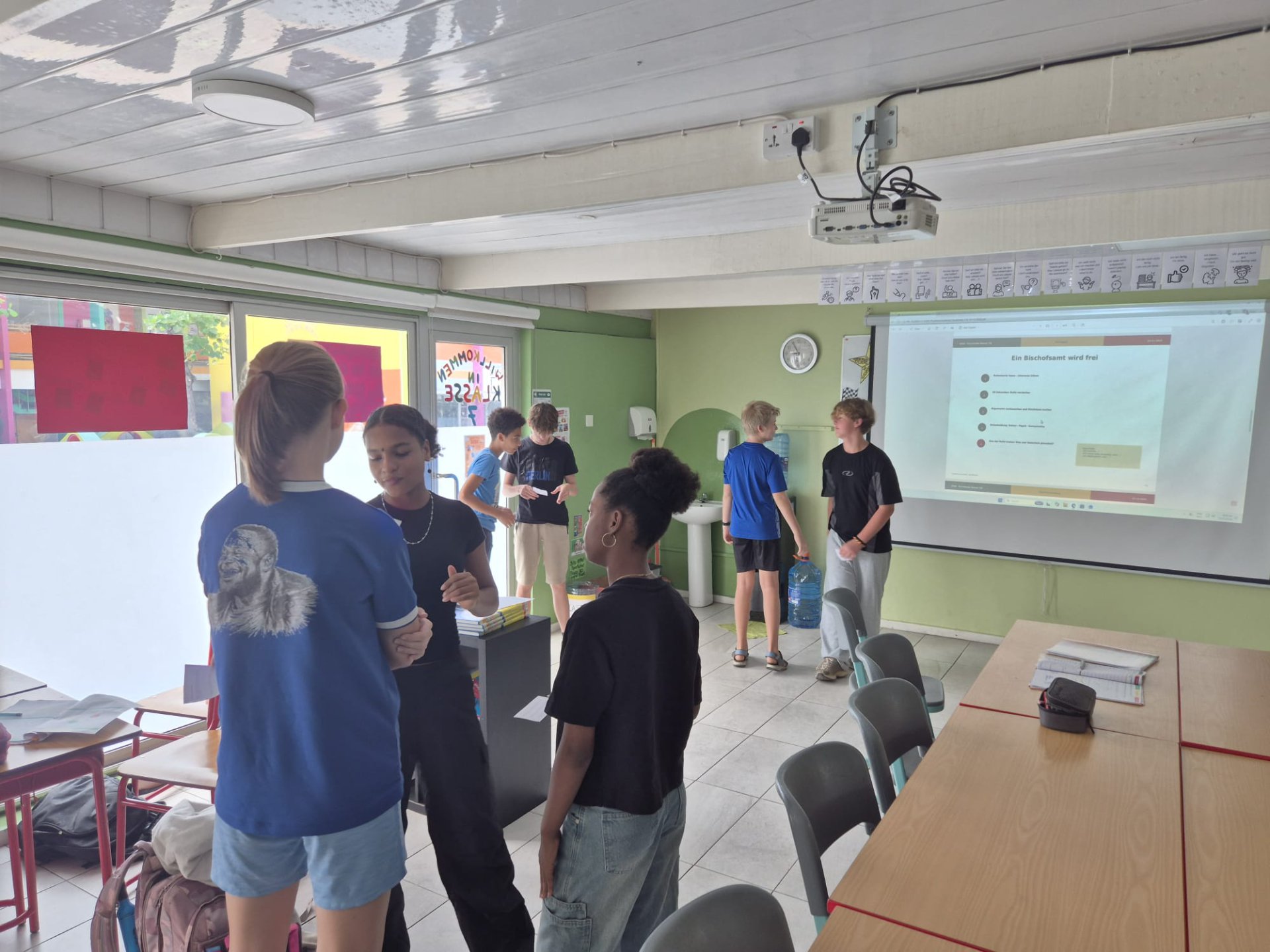
The lesson began with the question of who actually had the right to appoint a new bishop. What might initially sound like a purely religious issue quickly turned out to be a very real political power struggle. Bishops did not only have religious influence; they also controlled property, held political importance and played a significant role in administration and government.
In a role-play simulation, the students represented different interests and explored why both the pope and the emperor claimed the right to influence episcopal appointments.
The focus then shifted to Pope Gregory VII and King Henry IV. Using sources and historical viewpoints, the class examined how the conflict between religious and secular authority escalated and why Henry’s journey to Canossa in 1077 became one of the most famous events of the Middle Ages.
The aim was not only to understand what happened, but also to assess the interests and means of power available to both sides. Who was able to put pressure on whom? What role did religion, political loyalty and public perception play? And was Canossa really a defeat for Henry IV – or could it also be seen as a clever tactical move?
The lesson made it clear that medieval history is not simply about kings, popes and dates. It is also about conflicts over influence, legitimacy and the question of who has the right to exercise authority over others.
History once again became a debate – turning a centuries-old dispute into a surprisingly relevant discussion about power and authority.
French – from Togo back to the classroom
The recent class trip to Togo continued to influence French lessons this week.
The students drew on their experiences in a French-speaking environment to revisit and strengthen everyday conversational situations.
The focus was on greetings, simple questions and answers, exchanging basic information and using common expressions in everyday life.
Again and again, the students were able to connect the classroom language with situations they had actually experienced during their trip.
This made one thing particularly clear: a language is much more than grammar and vocabulary in a textbook. When you suddenly really need French while travelling, you immediately understand what the learning is for.
From Accra to Togo and back to the classroom, Grade 8 is increasingly discovering that French is a language to be lived, not just learned.
German – investigating, analysing and travelling through time
In German, the class once again read, investigated and wrote intensively.
With “Lauf, Junge, lauf!” the students first went on a literary investigation. Who is who? Which characters are connected to one another? And which places play an important role in the story?
Diagrams helped to bring order to the network of relationships. At the same time, the students characterised literary figures and wrote short summaries of important sections of the text.
Things became more challenging with Wolfgang Borchert’s short story “Die Küchenuhr”.
The class answered key questions, wrote short summaries and examined the different time levels within the story. Past or present? Careful reading was essential to avoid losing track of time altogether.
The main character was also analysed in greater detail.
Our conclusion: German lessons are not simply about reading. They involve investigating, analysing and occasionally even travelling through time – all without a time machine.
It was therefore a week full of mathematics, literature, robotics, apple snails, real-life French and a medieval power struggle between pope and emperor. And whether through a programmed harbour crane or the Investiture Controversy, one thing became clear: learning becomes especially engaging when theory suddenly becomes visible, debatable and tangible.
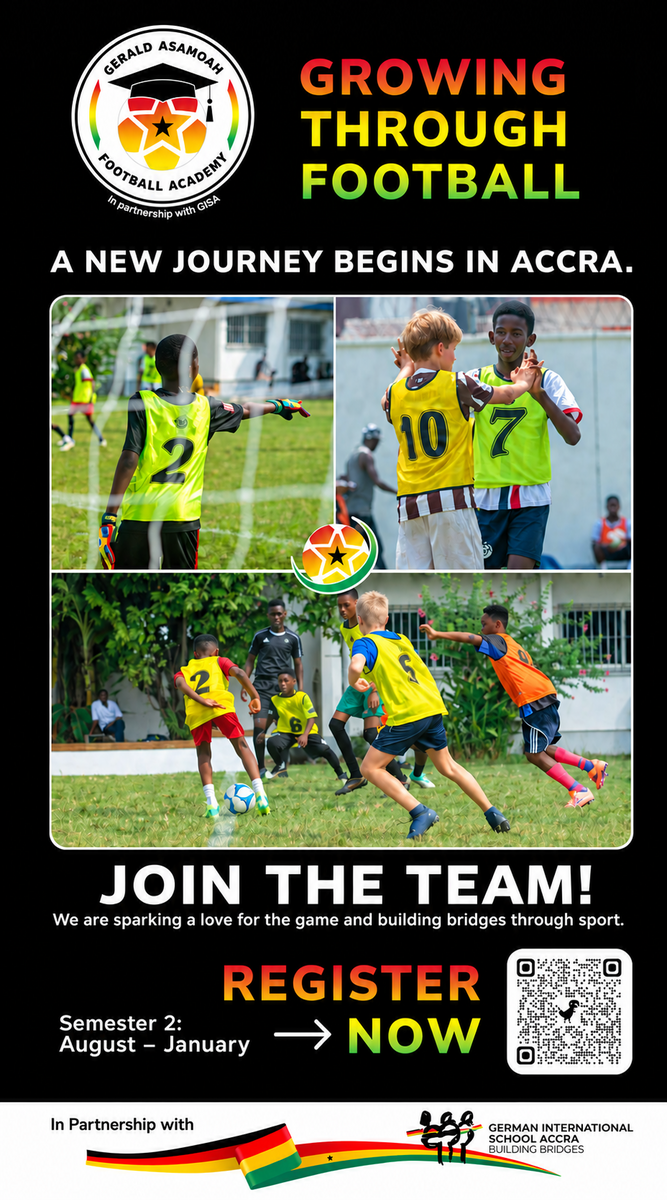
⚽Gerald Asamoah Football Academy
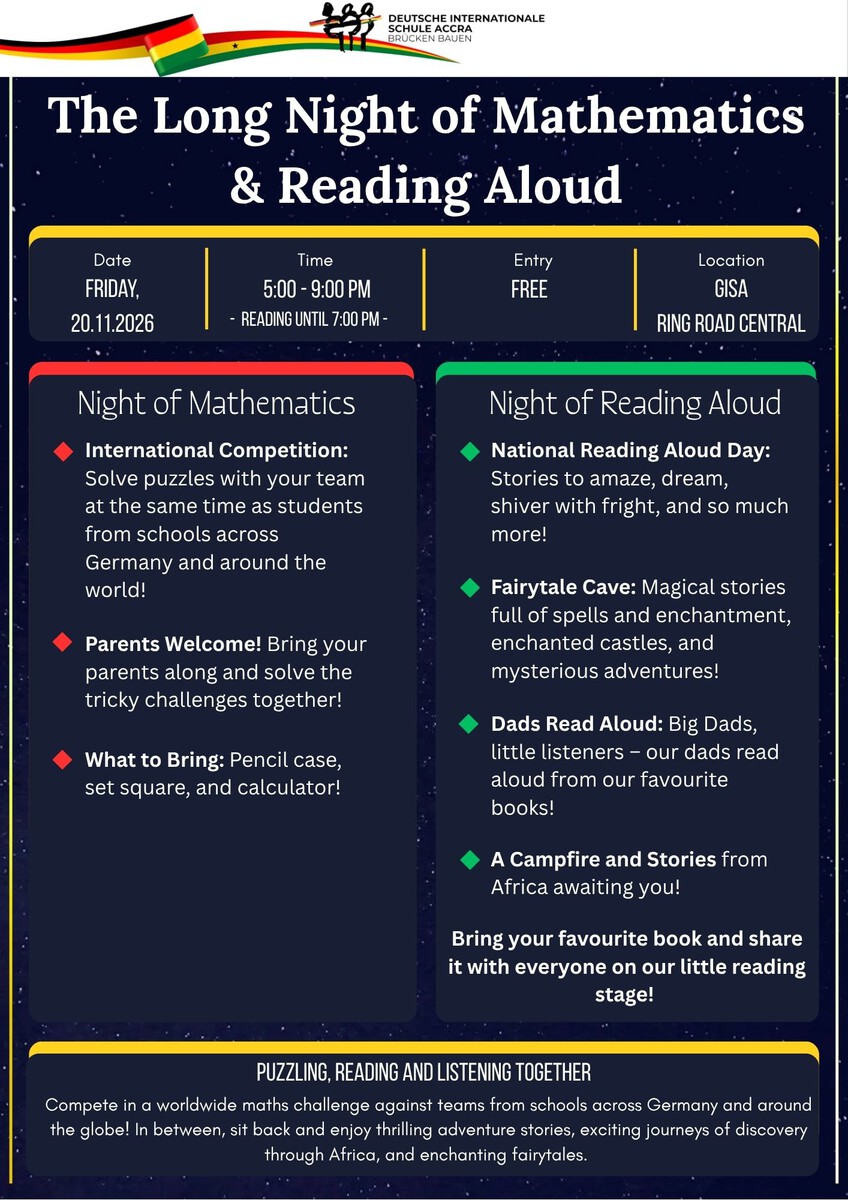
The Long Night of Mathematics & Reading Aloud
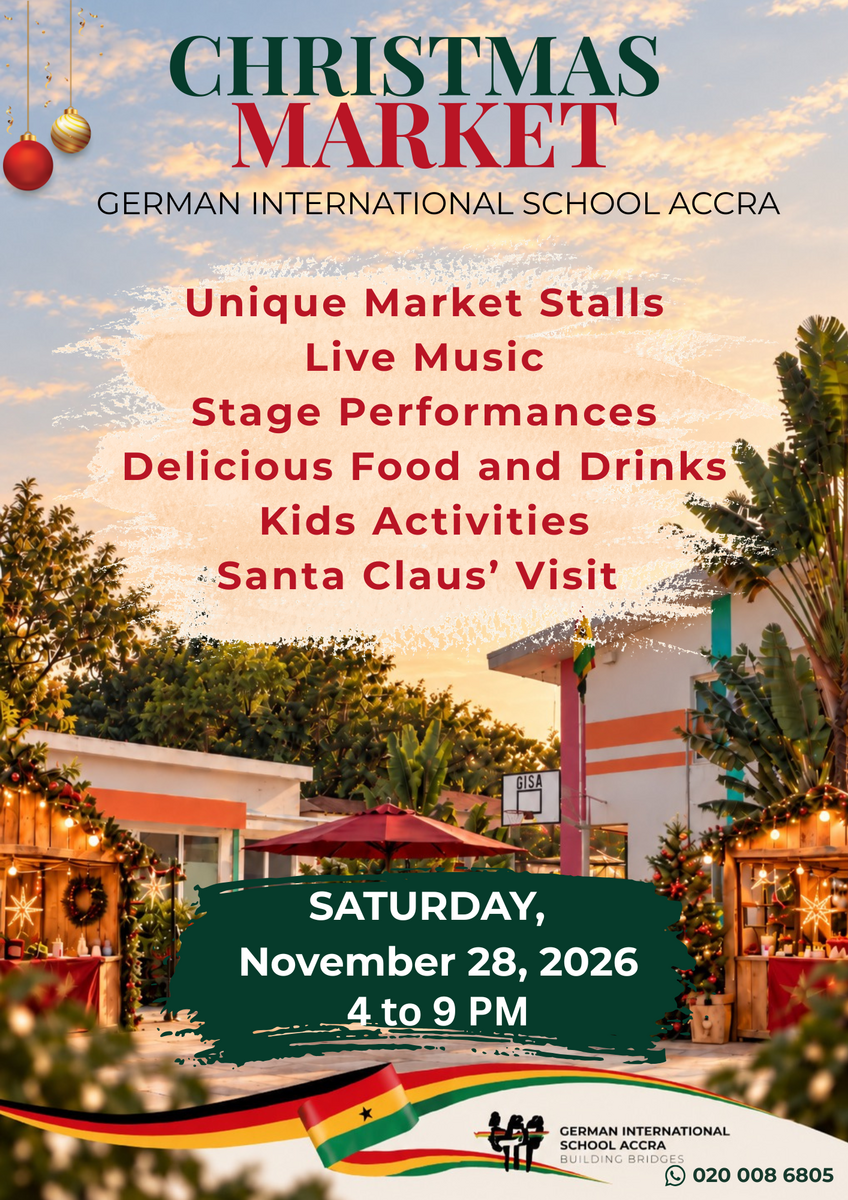
Christmas Market
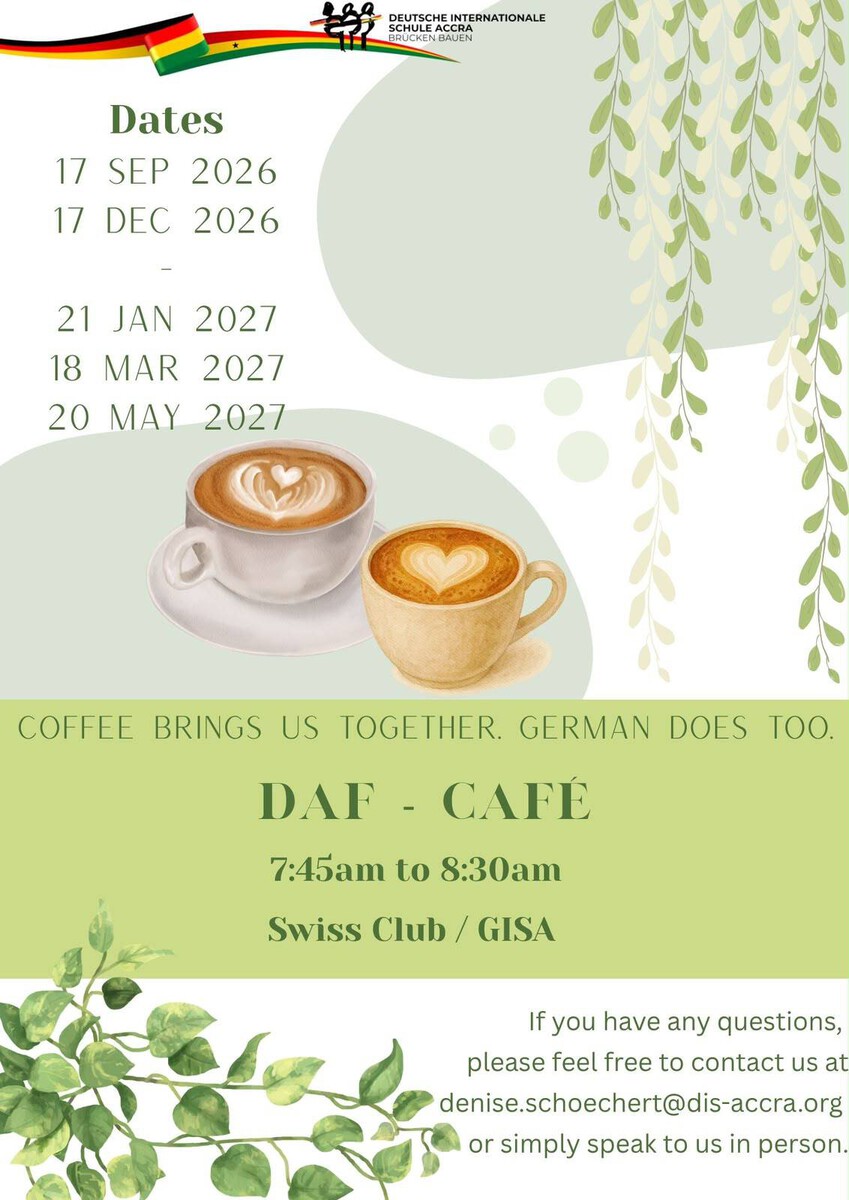
☕ DaF Café: Speaking German and Connecting Through Conversation
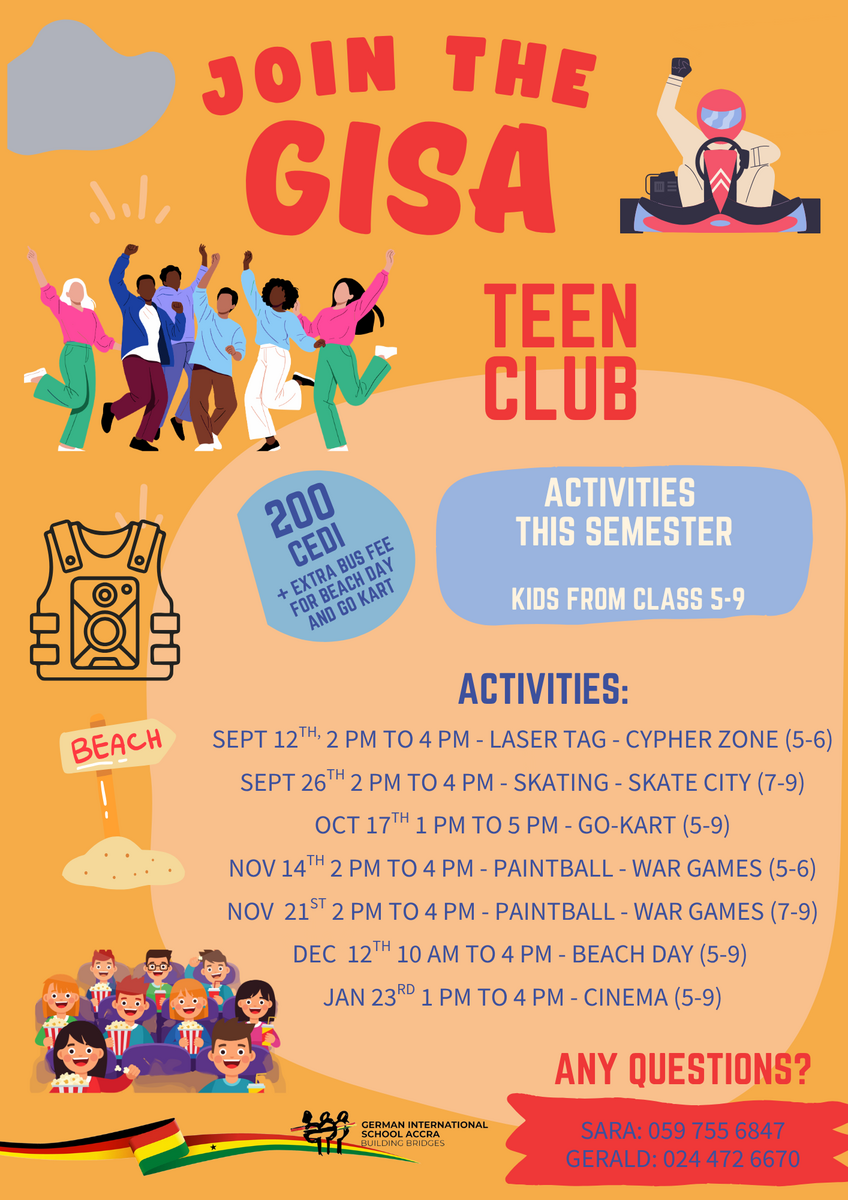
GISA Teen Club