Newsletter 09.10.2026


Another eventful week at GISA is coming to an end: a successful fire drill showed how well our procedures work, the first Student Council meeting brought forward many ideas for shaping school life, and across the classes students were calculating, researching, writing, programming, cooking and getting creative. At the same time, we are already looking ahead to the coming weeks with Teen Club, the autumn break and German Language Day.ck
Fire Drill at GISA
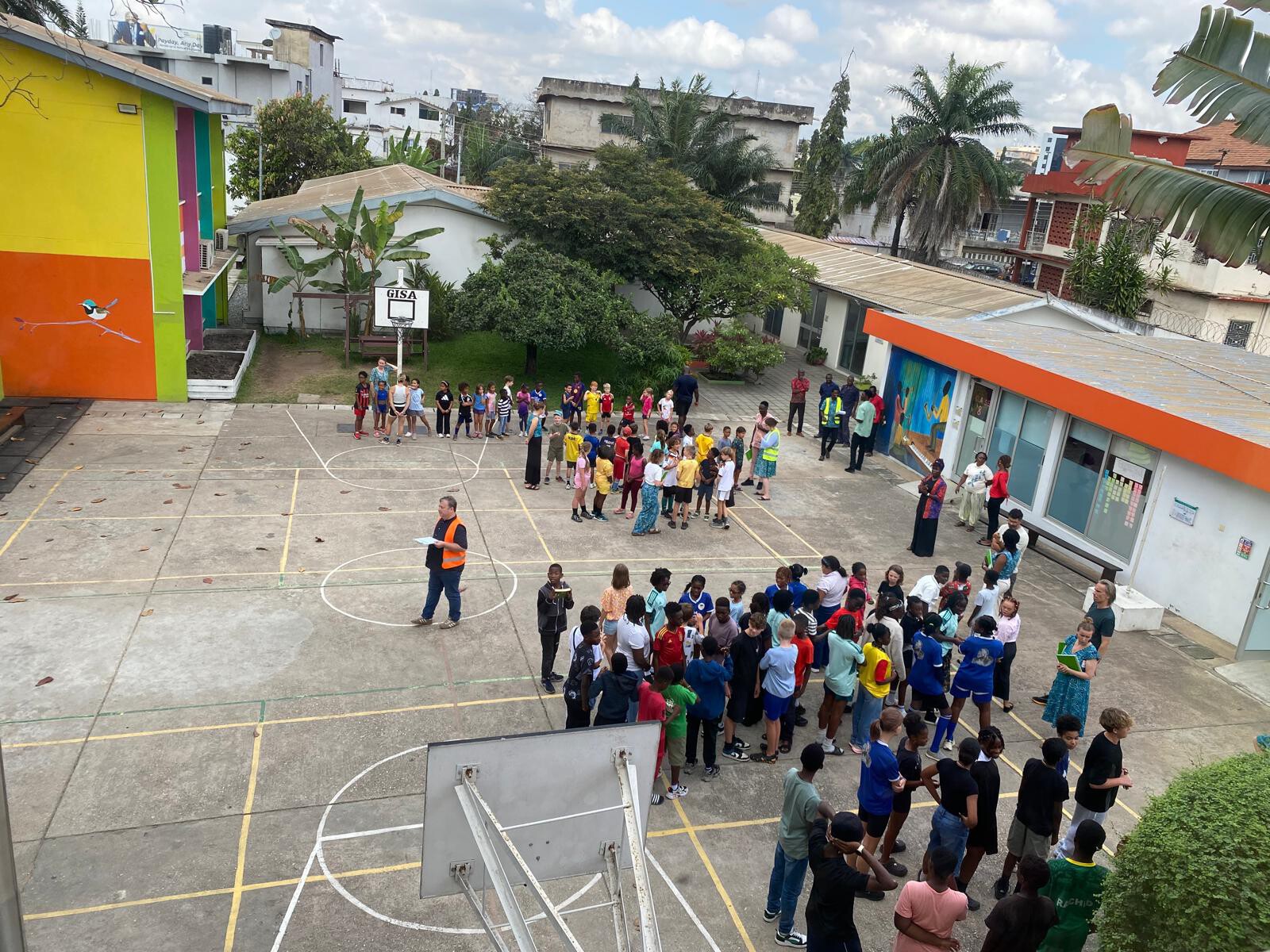 At 9:15 a.m. this morning, things suddenly got loud at GISA: the fire alarm sounded, announcing an unannounced fire drill.
All students, as well as the children from Kindergarten, left the buildings calmly together with their teachers and carers and followed the designated escape routes to the assembly point on the basketball court.
In less than one and a half minutes, everyone had reached the assembly point, been counted and had their attendance checked. A very encouraging result that shows how well our procedures can work in an emergency.
Special praise goes to our youngest children from Kindergarten. They handled the unfamiliar situation with remarkable calm and discipline. Even the older students could learn something from them.
By 9:20 a.m., the drill was already over and everyone returned to their classrooms. A big thank you to all children, students and staff for their excellent cooperation. Today’s drill once again demonstrated how important it is to be prepared for possible emergencies and to act calmly and responsibly together.
Students Help Shape Their School – First Student Council Meeting of 2026/27
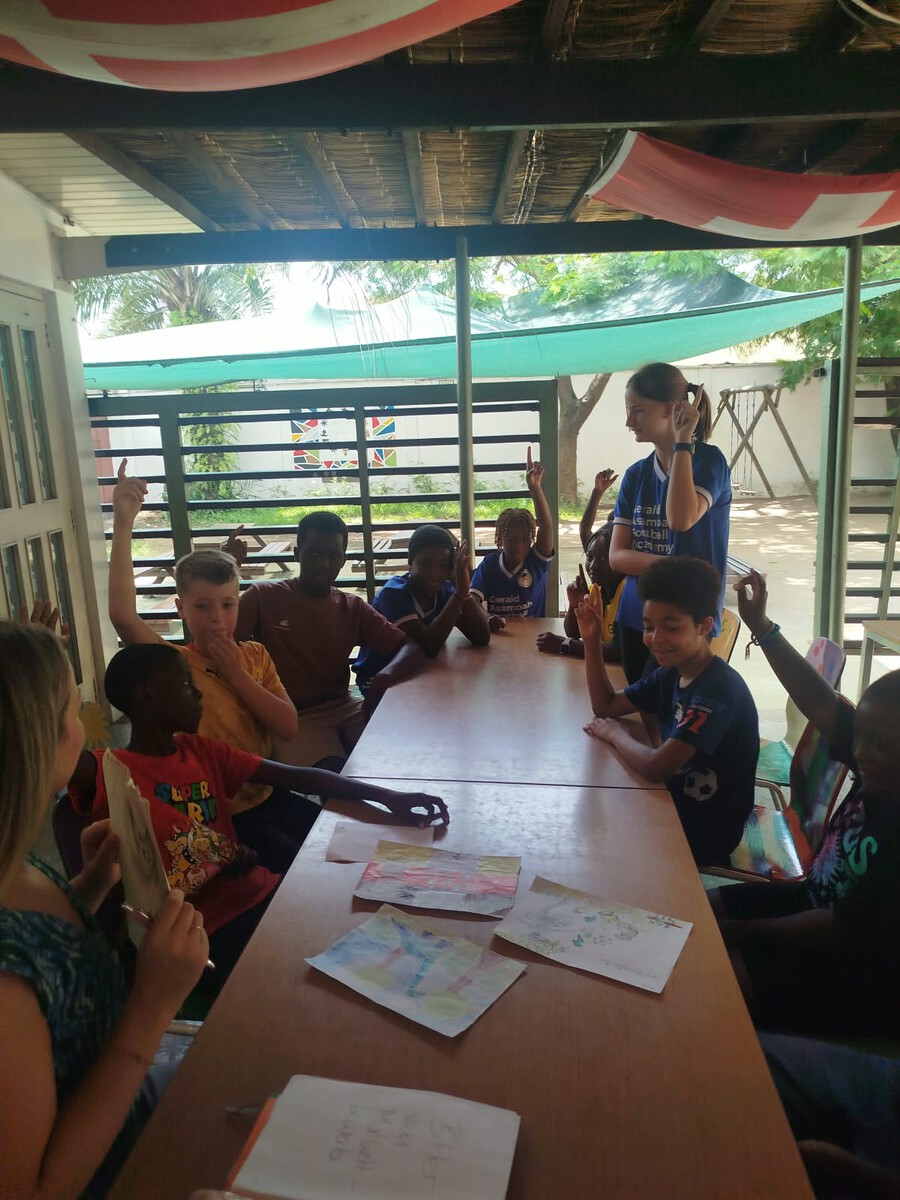 Have a say, think along, help shape things: this week, the first meeting of the Student Council (SMV) took place. Together with the class representatives from Grades 4 to 9 and teacher advisors Ms Mamodaly and Mr Albeiruty, numerous ideas, wishes and suggestions from the student body were discussed.
The proposals range from student-led projects to the creation of a school garden. The ideas will now be reviewed for feasibility, with the aim of actively involving the Student Council in the planning and implementation of suitable projects. After all, our students should not only attend their school, but also help shape it.
Winners of Our “Design the Door!” Creative Competition
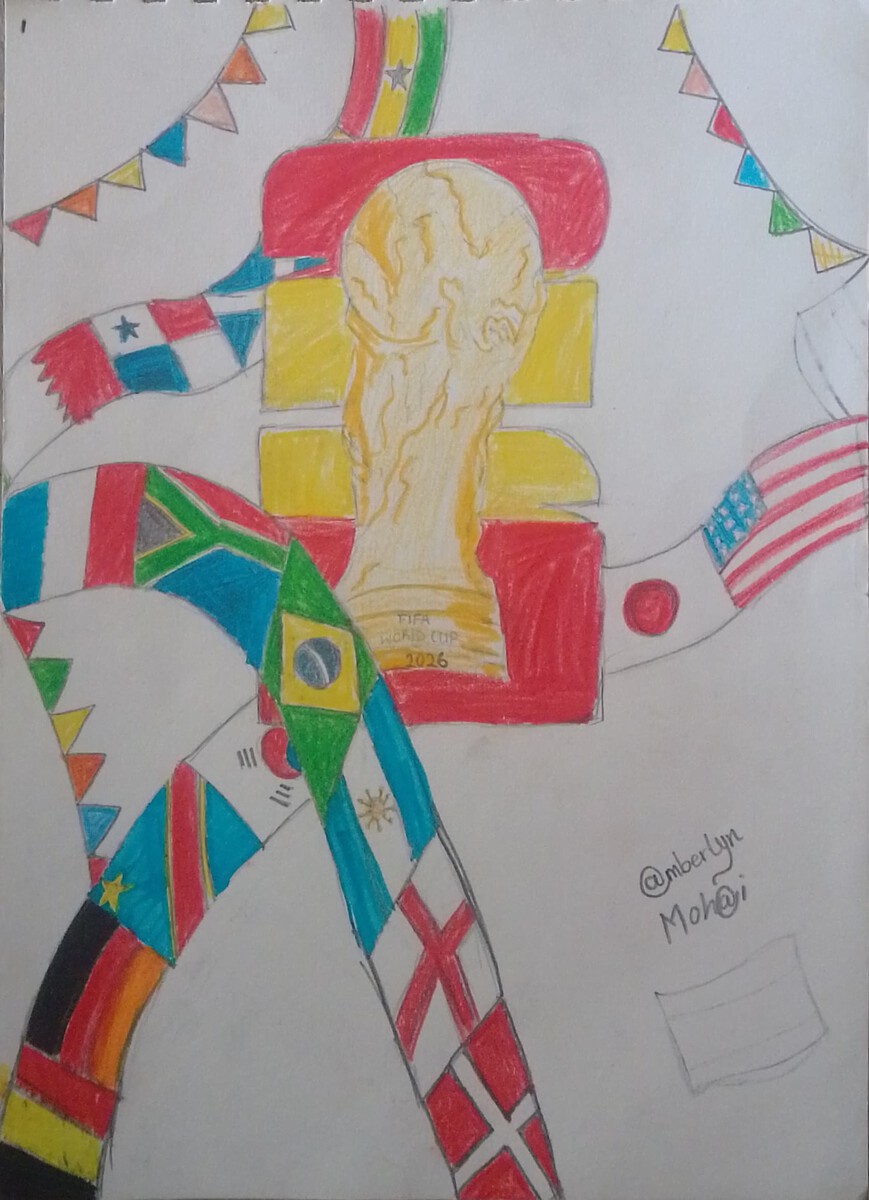 A few weeks ago, we invited our students to create a new design for the door of the equipment room used by our Football Academy. We were looking for a creative motif connected to our school and sport – whether football, teamwork, nature, graffiti style or a completely original idea.
The winning team has now been selected: Amberlyn from Grade 6 and Mohai from Grade 5 impressed us with their joint design. At its centre is the World Cup trophy, surrounded by the flags of numerous nations – a strong symbol of football, international encounters and community.
Congratulations to Amberlyn and Mohai! As announced in the competition, the winning design will now find its way onto the door or wall of the equipment room.
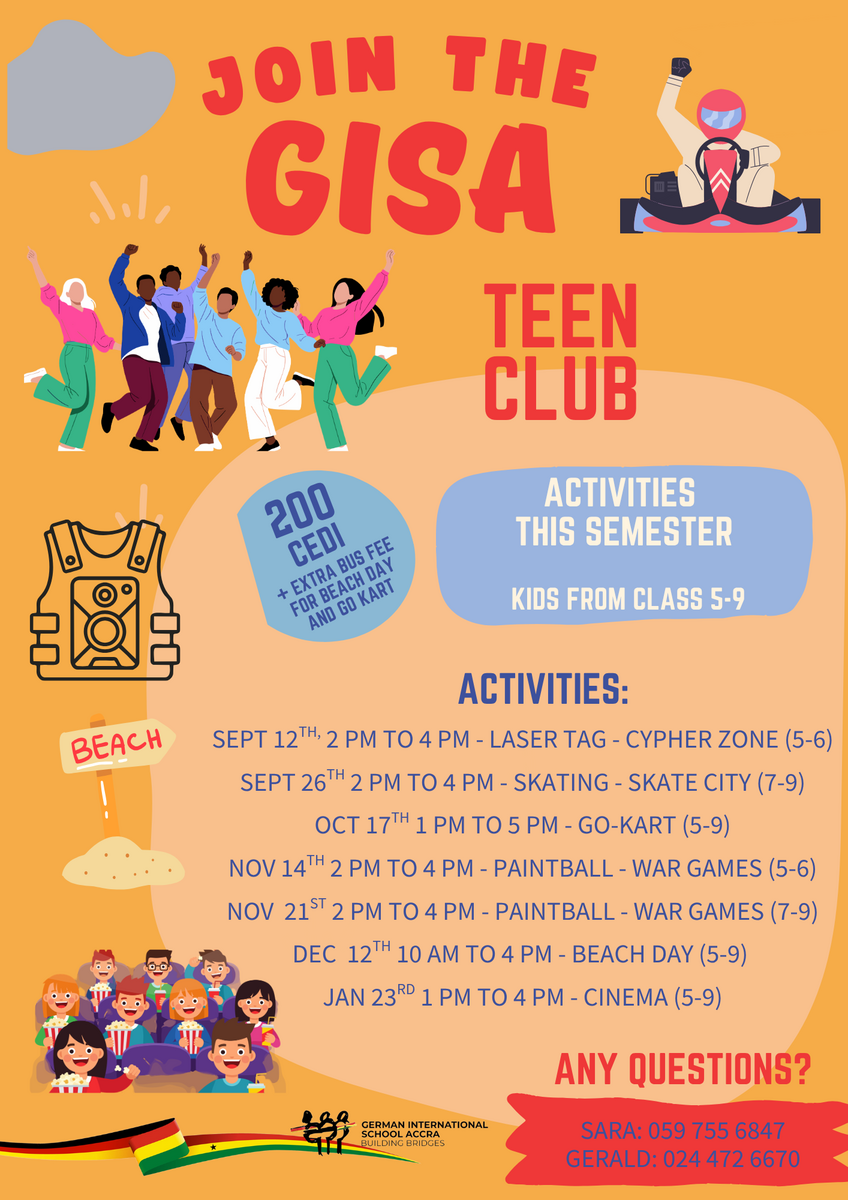
Teen Club – Go-Karting at House Party
On Saturday, 17 October, our Teen Club is planning an afternoon of go-karting at House Party Go-Karts in Accra.
The outing will take place from 1:00 p.m. to 5:00 p.m. Departure from GISA is at 1:00 p.m., with return to school planned for 5:00 p.m.
The cost is 250 GHS per child, including 200 GHS for the activity and 50 GHS for transportation.
As the bus needs to be reserved in advance, we kindly ask parents to register their child if they would like to participate. The teenagers have already shown great interest in the activity, and we would now like to confirm which parents are happy for their child to join.
We are looking forward to another enjoyable Teen Club afternoon together!
German Language Day – Get Ready to Be Surprised!
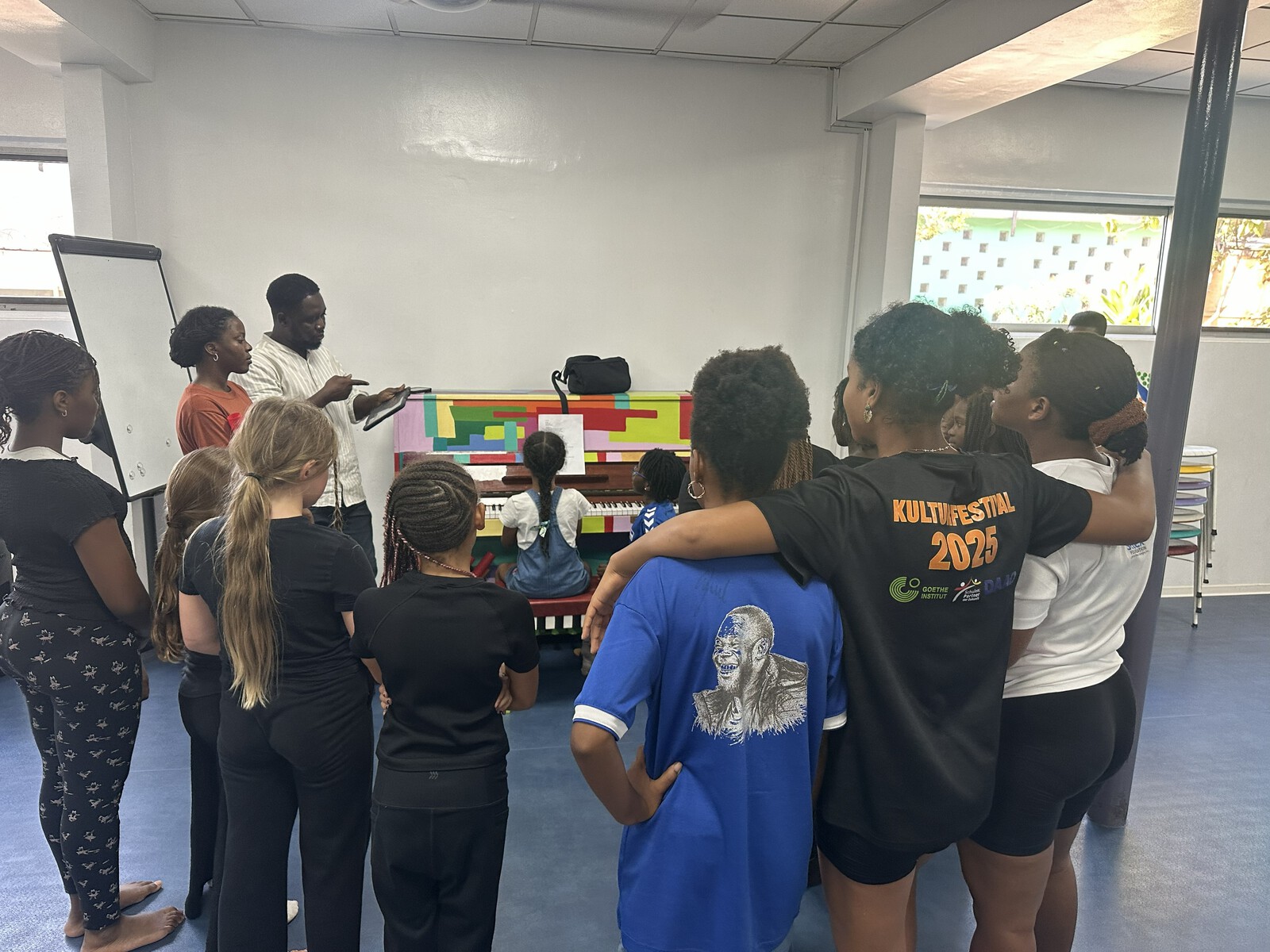 Our Creative Arts Academy is currently preparing something very special for German Language Day. Behind the scenes, the children are working hard on a performance that we hope will surprise and impress our guests.
Join us on Saturday, 31 October, and see what our talented young performers have been preparing. We do not want to reveal too much just yet – but one thing is certain: the children have something special up their sleeves!
Save the date and come cheer them on. We are looking forward to sharing this special moment together.
Fresh Sourdough Products from Waves Bakery
 Waves Bakery offers freshly baked sourdough bread and a selection of sourdough-based cakes for order and collection at GISA.
📦 Delivery: Thursdays at the end of the school day, 2:45–3:30 p.m.
🕗 Order deadline: Tuesday evening
👉 Sourdough wheat bread – 100 GHS
👉 Sourdough butter toast – 120 GHS
👉 Sourdough chocolate cake – 200 GHS
👉 Vegan sourdough banana bread, with or without sugar – 200 GHS
📱 Orders via WhatsApp: +49 176 23288563
https://wa.me/message/RSB4TAY34BP7G1
Dates from the German-speaking Protestant Congregation in Accra
The German-speaking Protestant Congregation in Accra is inviting the German-speaking community to several services during the second half of 2026 at Ridge Church. The programme includes a family Harvest Thanksgiving service on 11 October, a communion service on 8 November, the First Advent service on 29 November, and a Christmas Eve service.
Services usually take place at 10:30 a.m. on the Ridge Church premises.
➡️  Read more: Programme of the Protestant Church Community in Accra
Nursery & Kindergarten
Nursery – Experiencing Autumn with All the Senses
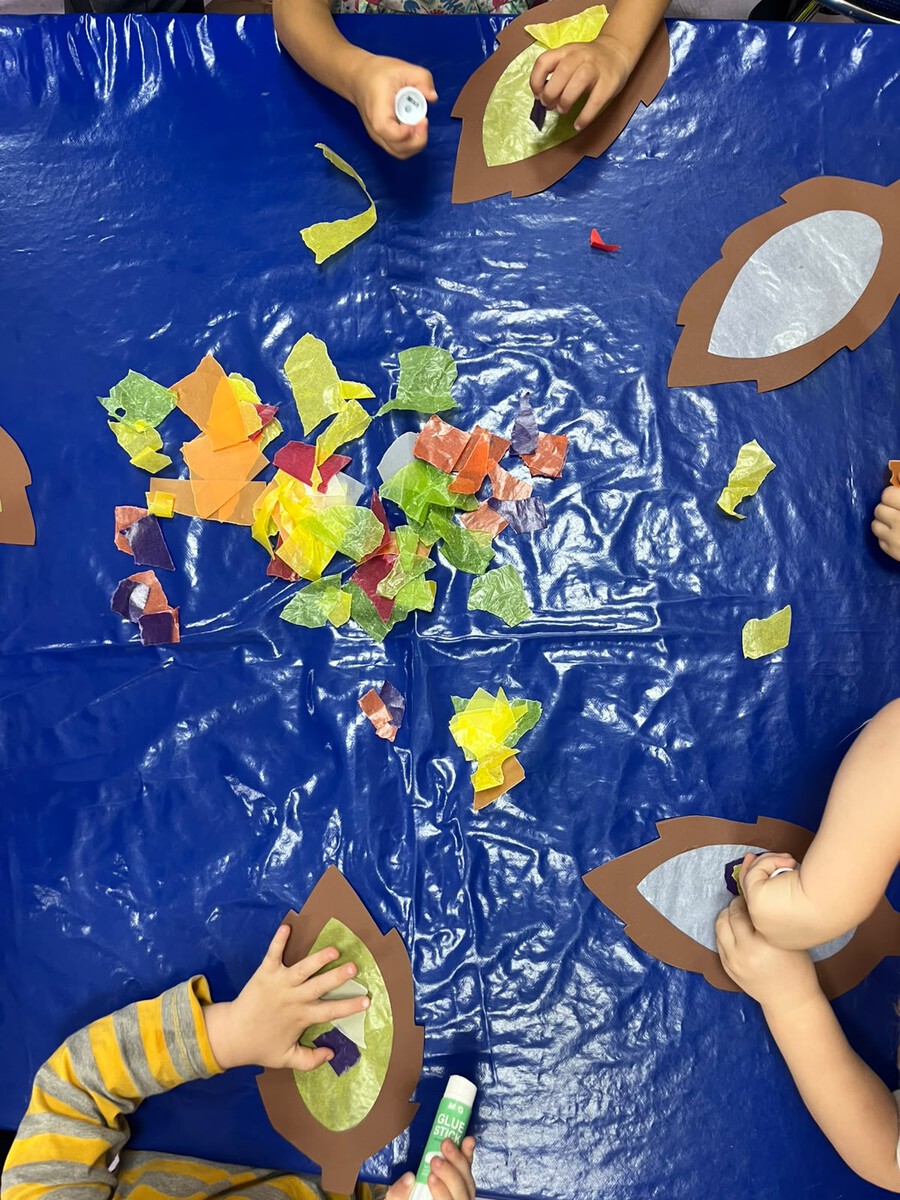
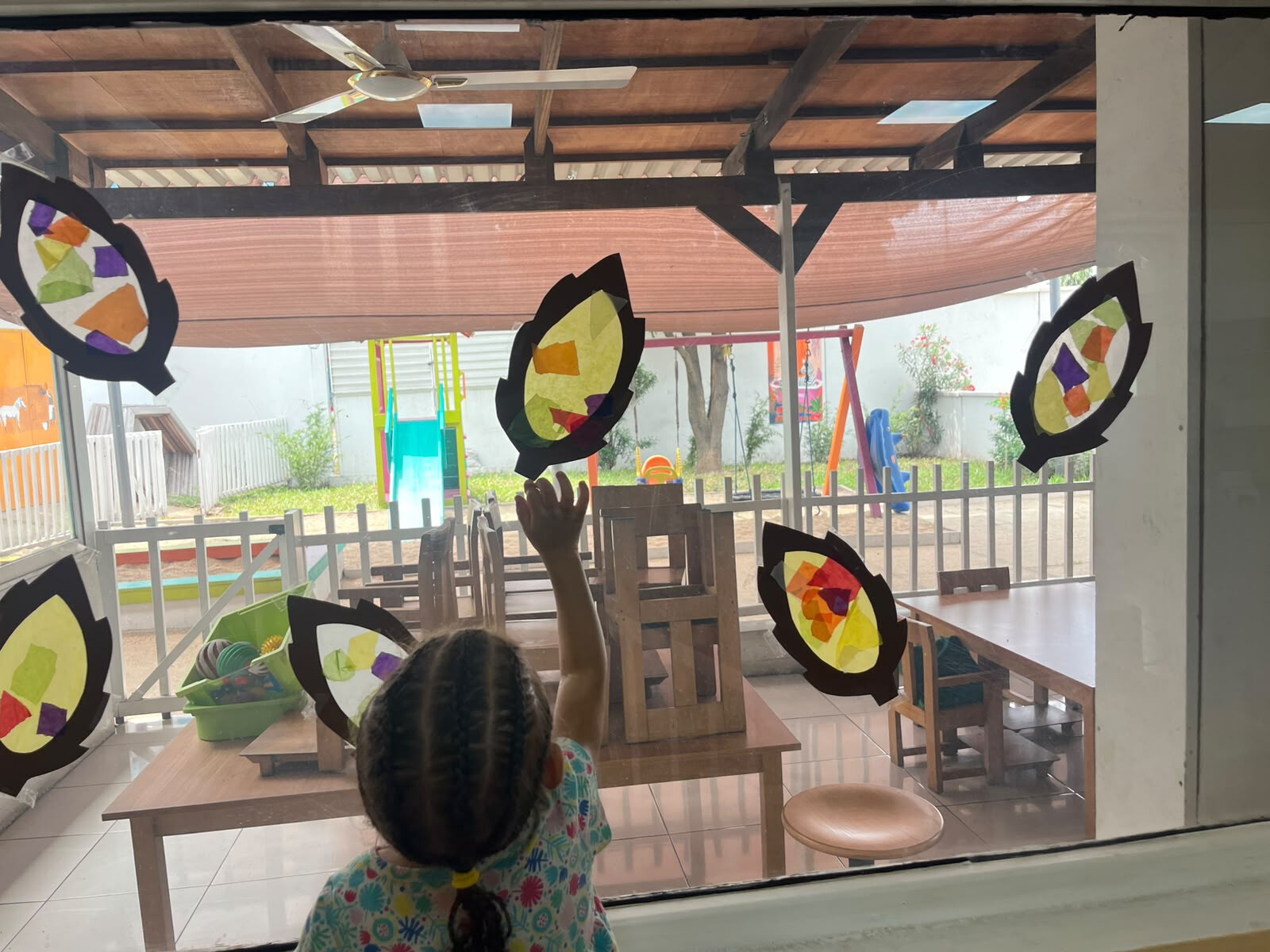 This week, we continued exploring our autumn theme. The children created autumn leaves from colourful transparent paper and used them to decorate our windows. This encouraged creativity, fine motor skills and awareness of colours and materials.
Autumn was also at the centre of our musical activities. We learned the song “Der Herbst ist da” and accompanied it with different instruments such as shakers and jingle rings. In this way, the children discovered new sounds and instruments while experiencing rhythm and making music together.
We were also delighted to welcome a new child to our group. Settling in was supported through shared play, exploration and first contacts with the other children.
A Week in Kindergarten
There was once again plenty to discover, try out and experience together in Kindergarten this week. Whether through varied movement activities, exciting experiments with colours and water, or creative work using different materials, the children were able to contribute their own ideas, discover new things and learn through play.
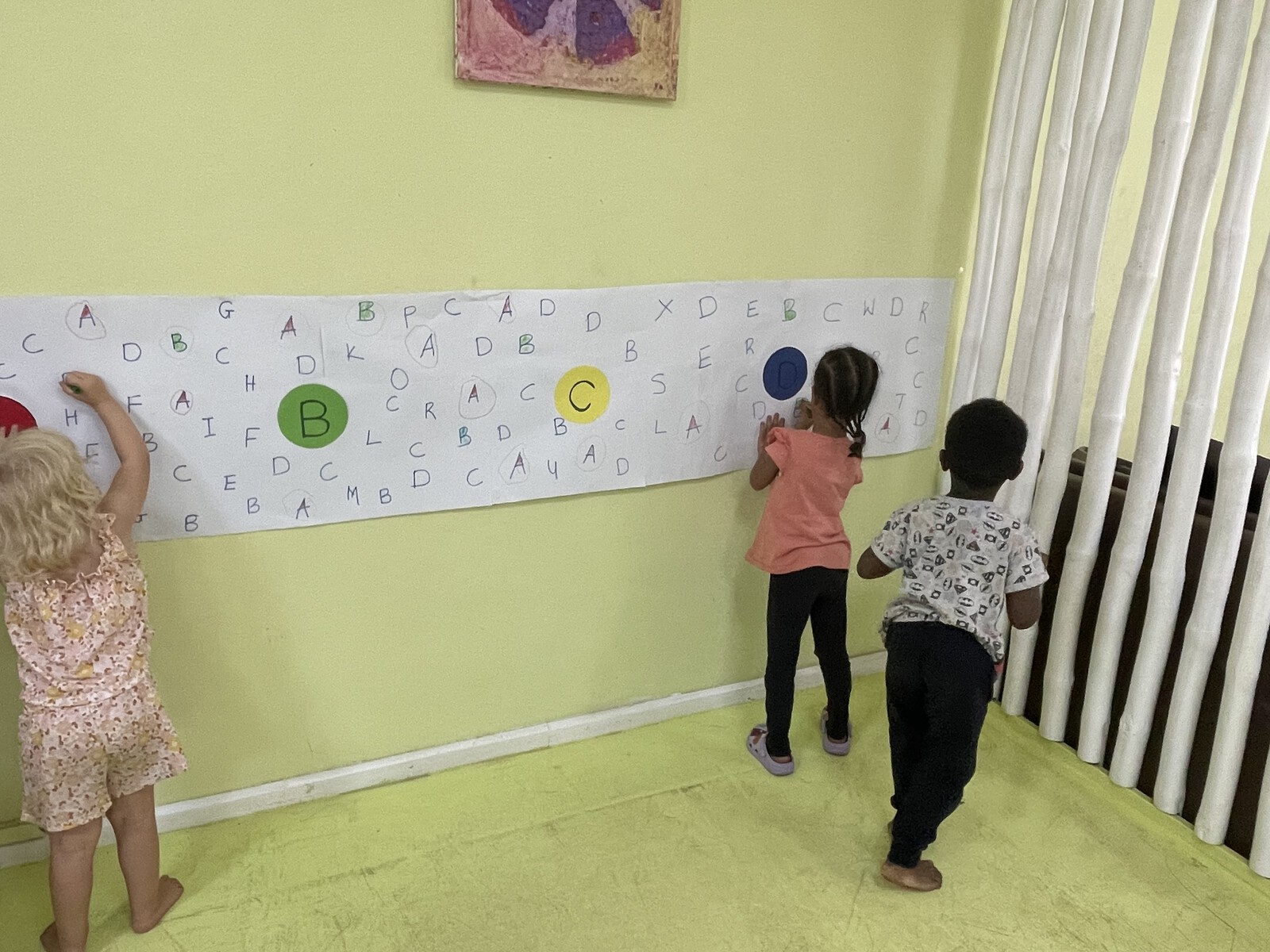
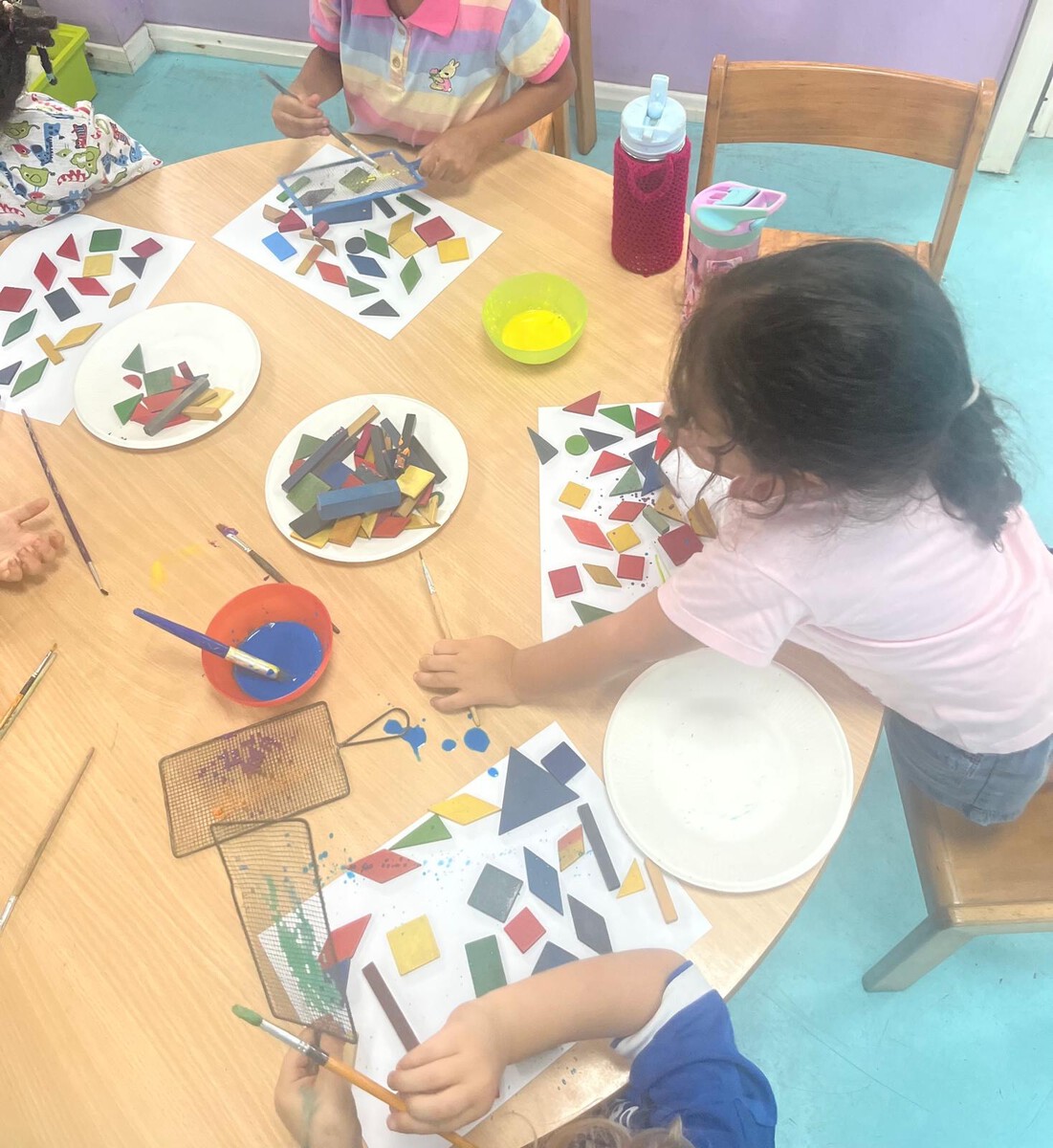
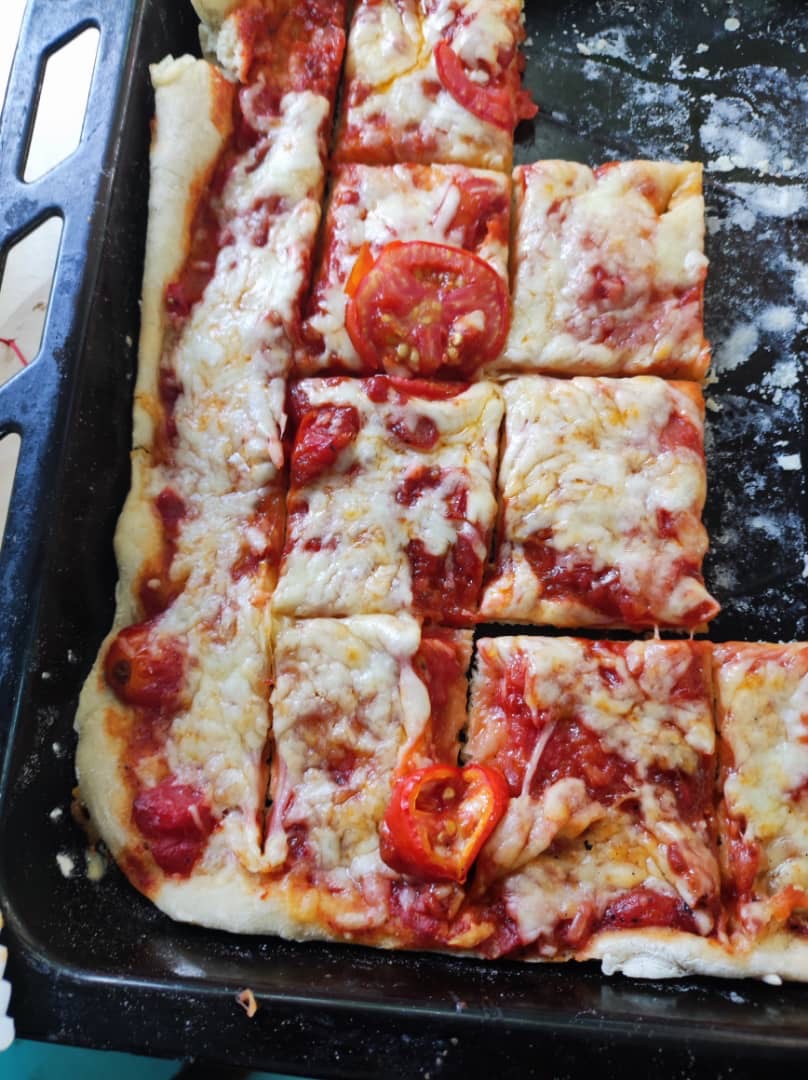
Many enthusiastic young cooks also joined in with our pizza baking. Music played an important role too, with singing and different rhythm games. A current favourite is “Musical Chairs”, where movement, concentration and quick reactions are all required.
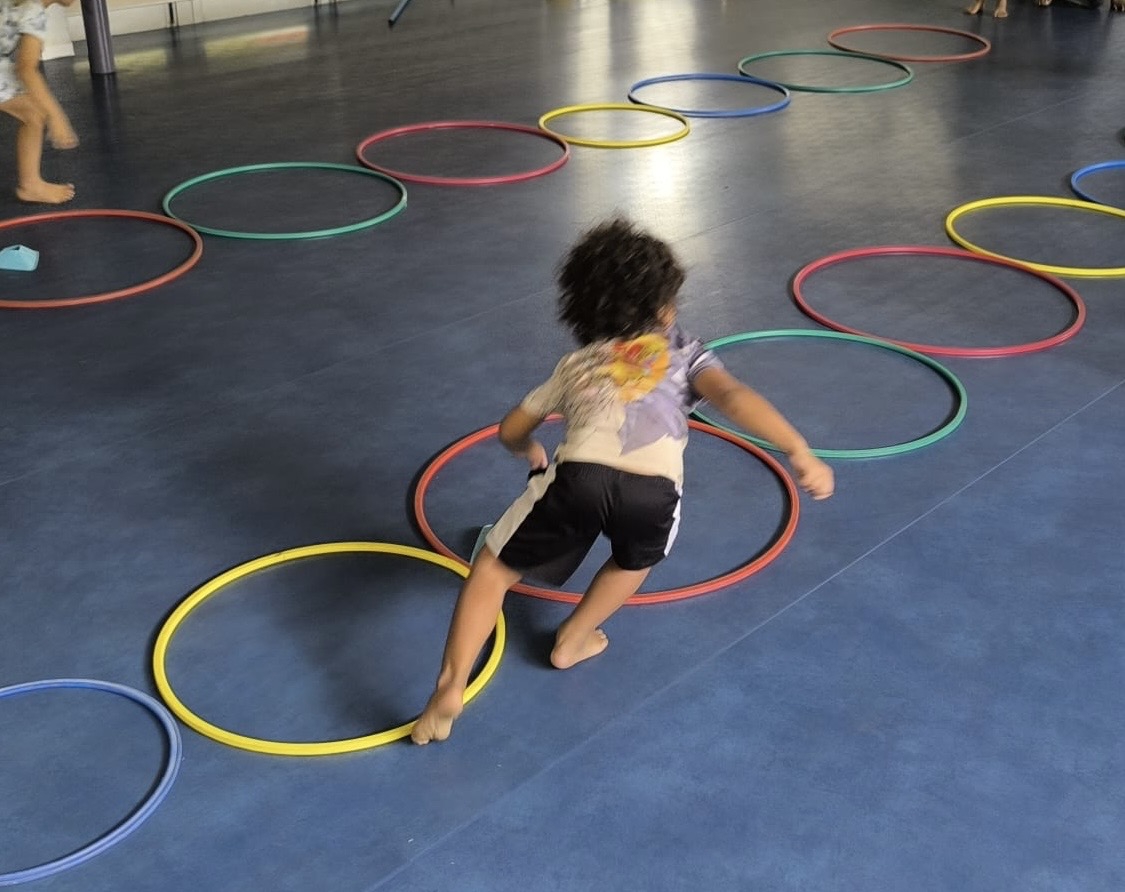
Alongside these special activities, there was of course plenty of time for free play, children’s own ideas and shared discoveries in the garden. In this way, learning, creativity, movement and social experiences come together in many different ways in our Kindergarten.
Primary School
Grade 1/2 – Maths, Language, Coding and Starry Night
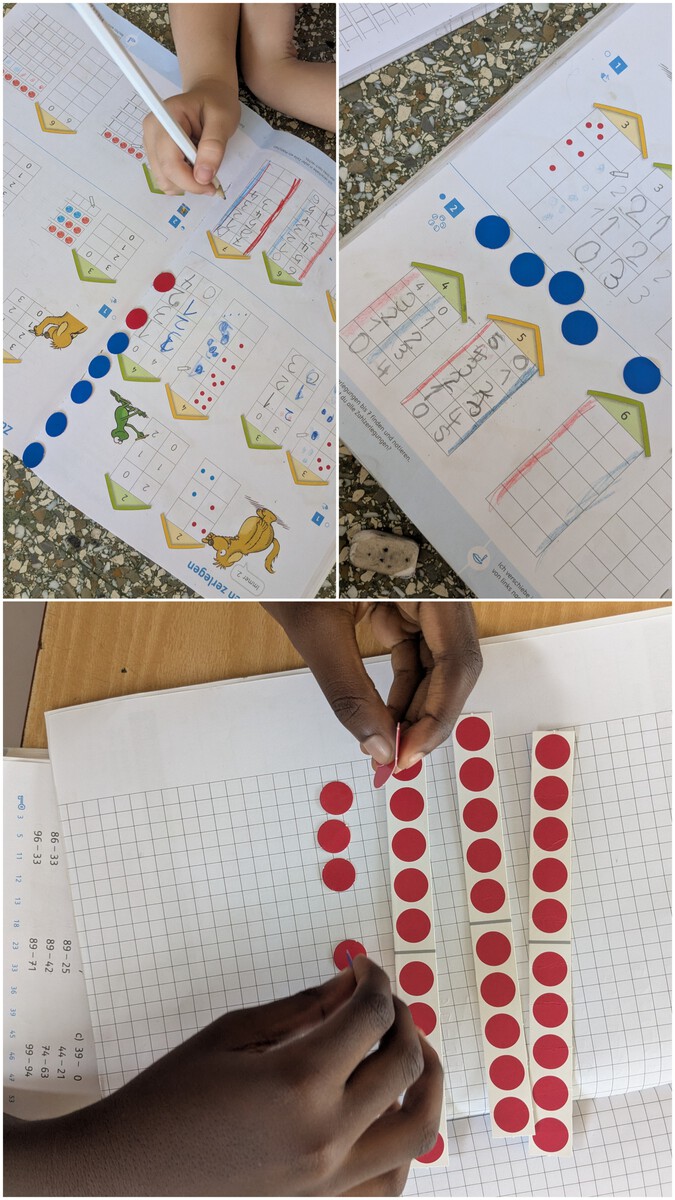
This week, the children in Grade 1/2 worked with a variety of visual materials in Mathematics. Using tens rods and unit counters, they represented quantities and practised breaking numbers apart as well as solving addition and subtraction problems.
In German, the children learned that nouns have articles. They distinguished between definite articles such as der, die and das and indefinite articles such as ein and eine. The word-class story featuring Prince and Princess Noun and their companions helps the children understand these connections in a memorable way.
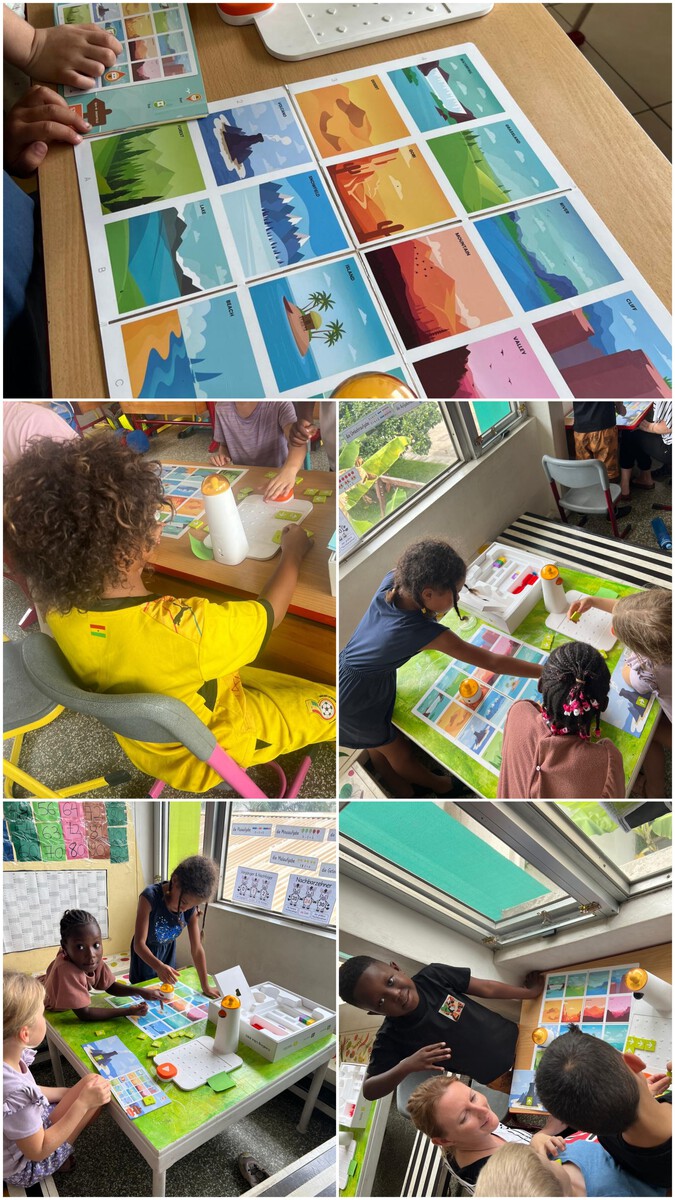
In General Studies, we had a special visitor: Mr Thiems brought along his coding robots and introduced the children to the exciting world of programming. By putting individual commands together like puzzle pieces, the children learned how to control the robot deliberately. Without using a screen, they trained spatial thinking, orientation and the logical planning of movement sequences. This exciting excursion into coding will continue next week.
Our topic of animals and animal groups is also continuing, as we prepare for our class trip to an animal feed factory, which the children are already very excited about.
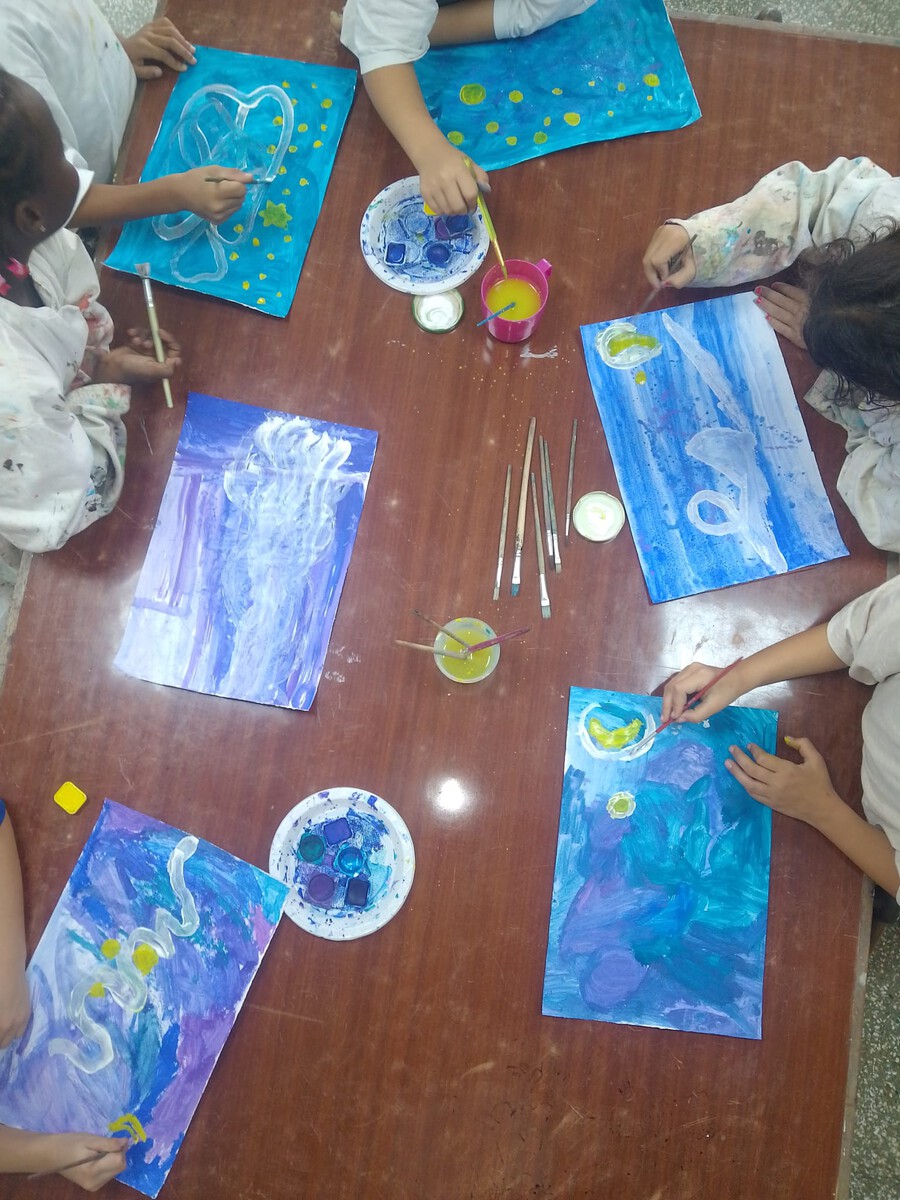
In Art, we continued working with Vincent van Gogh and his famous “Starry Night”. After creating night skies in different shades of blue and violet last week, the children now brought movement into their pictures. With sweeping, circular brushstrokes, they made stars sparkle, clouds dance and their night skies come alive. Our class frog Quak would probably have become quite dizzy with all that swirling!
One thing is certain: there is plenty happening in our night skies!
Grade 3 – Thinking, Creativity and Movement
In Mathematics, the students delved deeper into multiplication this week. Through inquiry-based learning, the focus was not only on memorising times tables, but also on developing mathematical thinking. Concepts such as “double” and “half” were explored more closely, and different multiplication tables – including the 2, 4 and 8 times tables – were compared.
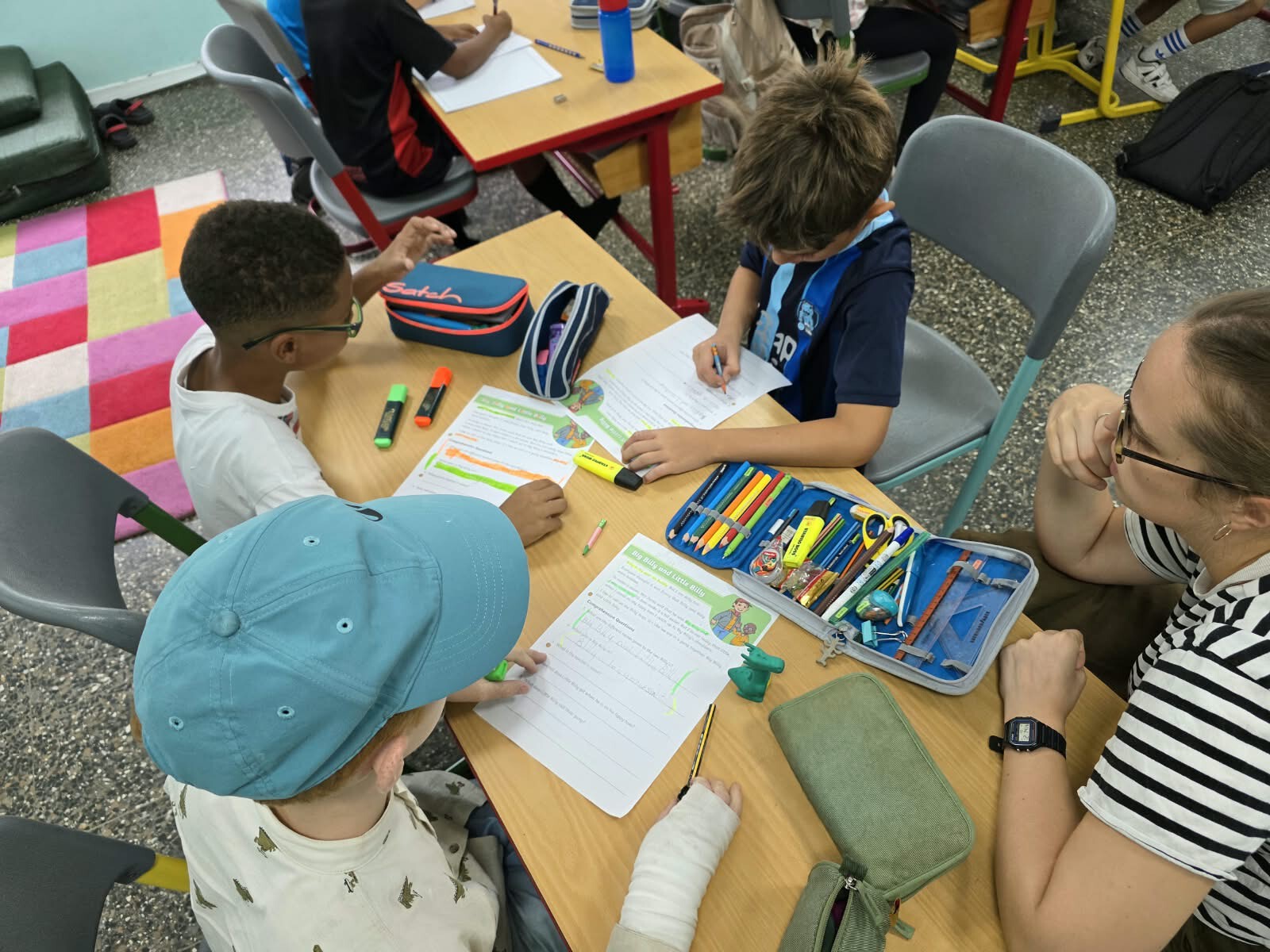
In German, reading for understanding was the main focus. The children practised clarifying unfamiliar words independently and identifying key words in individual paragraphs. Our journey towards confident reading comprehension is now well underway.
In General Studies, the students began creating posters about selected children’s rights. They read attentively, carried out their own research and started designing creative headings and layouts.
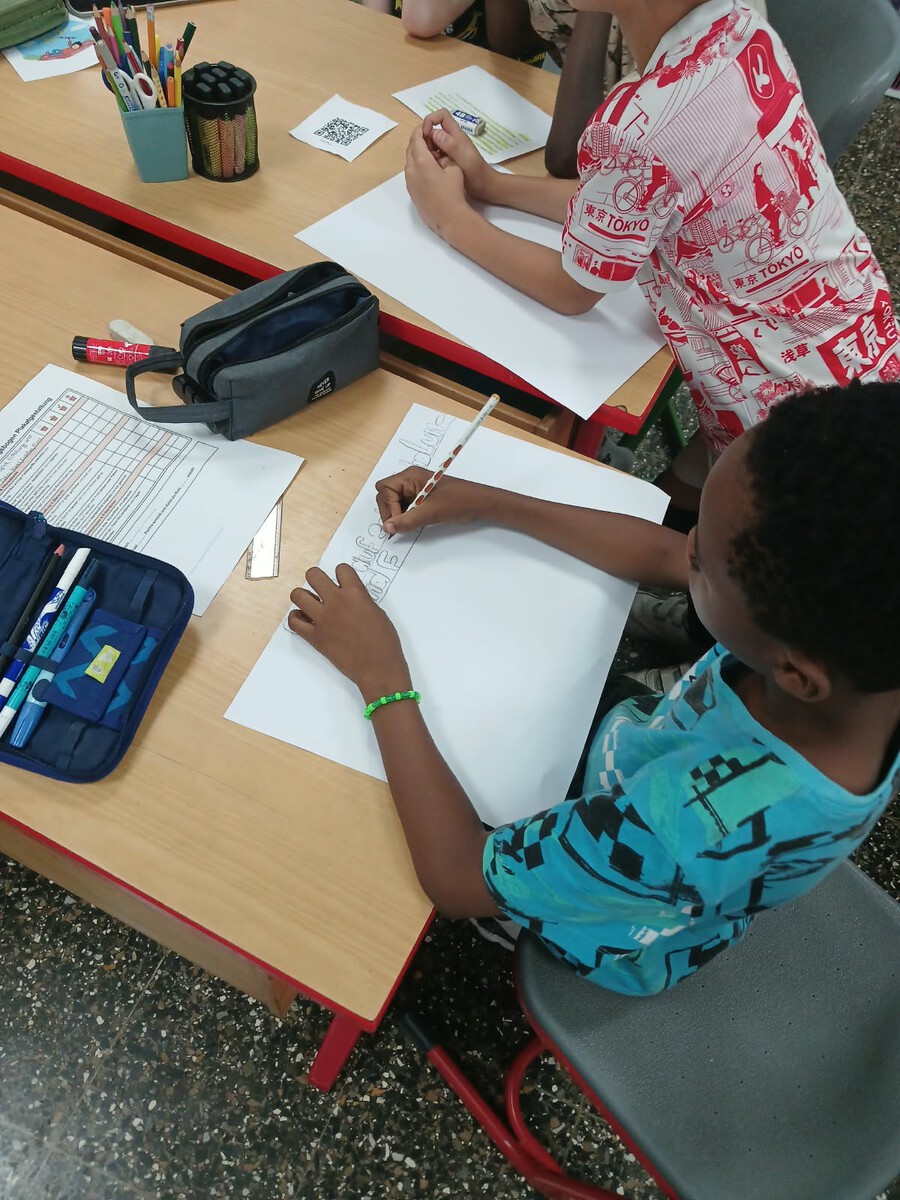
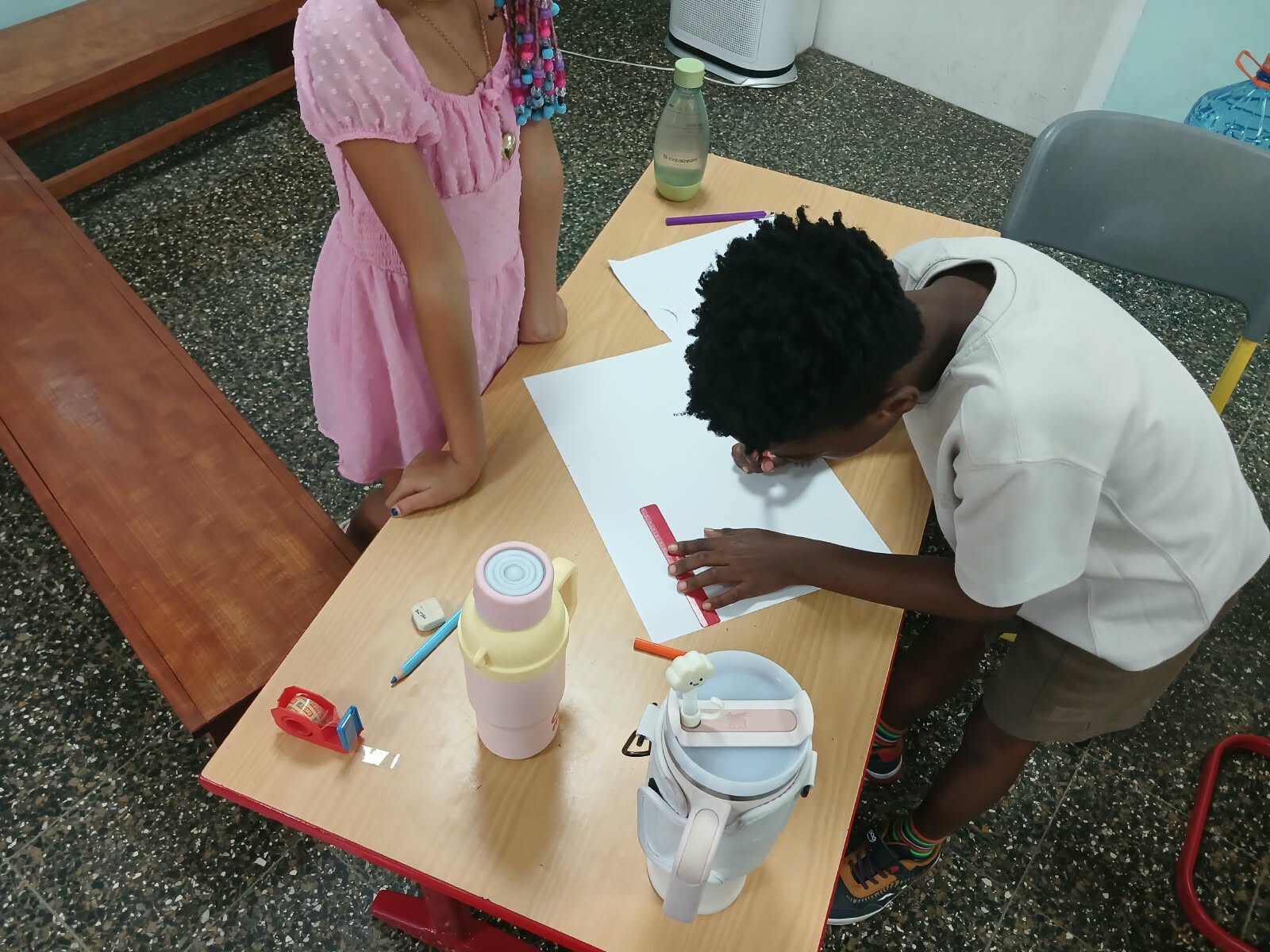
In Art, our aliens are now ready to travel to distant planets. The children considered what might happen when their extraterrestrial characters meet the inhabitants of other worlds: Will an intergalactic friendship begin, will there be a welcome party, or perhaps even a galactic dispute? The first stories were captured in imaginative sketches.
Reading also remains an important focus in English. Supported by our class reading mascot, the giraffe 🦒, the different groups are working enthusiastically towards their individual reading goals. The main emphasis is on reading with understanding and answering questions about texts correctly.
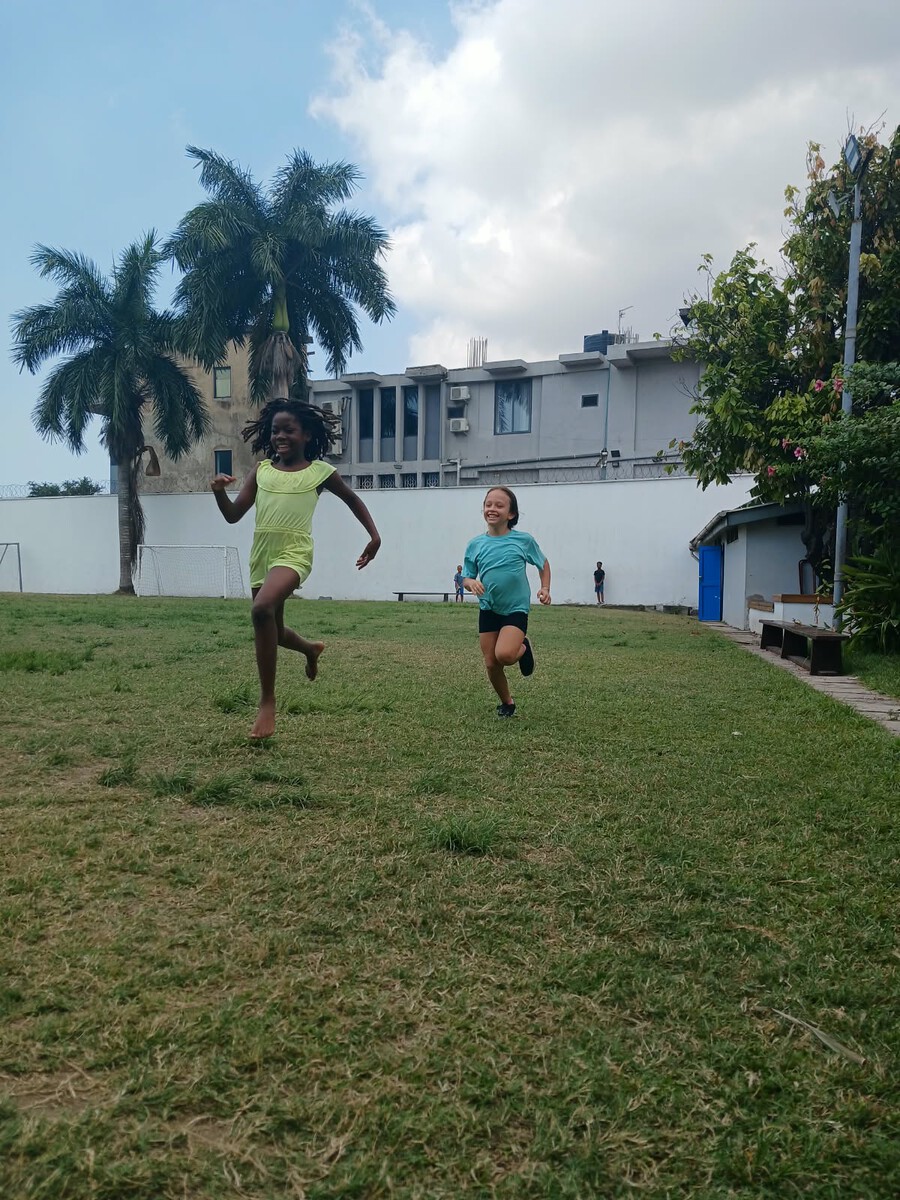
In PE, the children are currently working on both endurance and strength. Sprinting was particularly popular this week.
Grade 4 – Maths, Reading, Writing and Creative Design
In Mathematics, we continued working on orientation within the number range up to 10,000. The children identified neighbouring tens, hundreds and thousands and tackled more challenging tasks to decide which neighbouring number was closer. They also gained initial experience with efficient calculation strategies by completing numbers to the next hundred or thousand.
Another new development was moving from the number line to the empty number line, which will become a useful tool for future calculations.
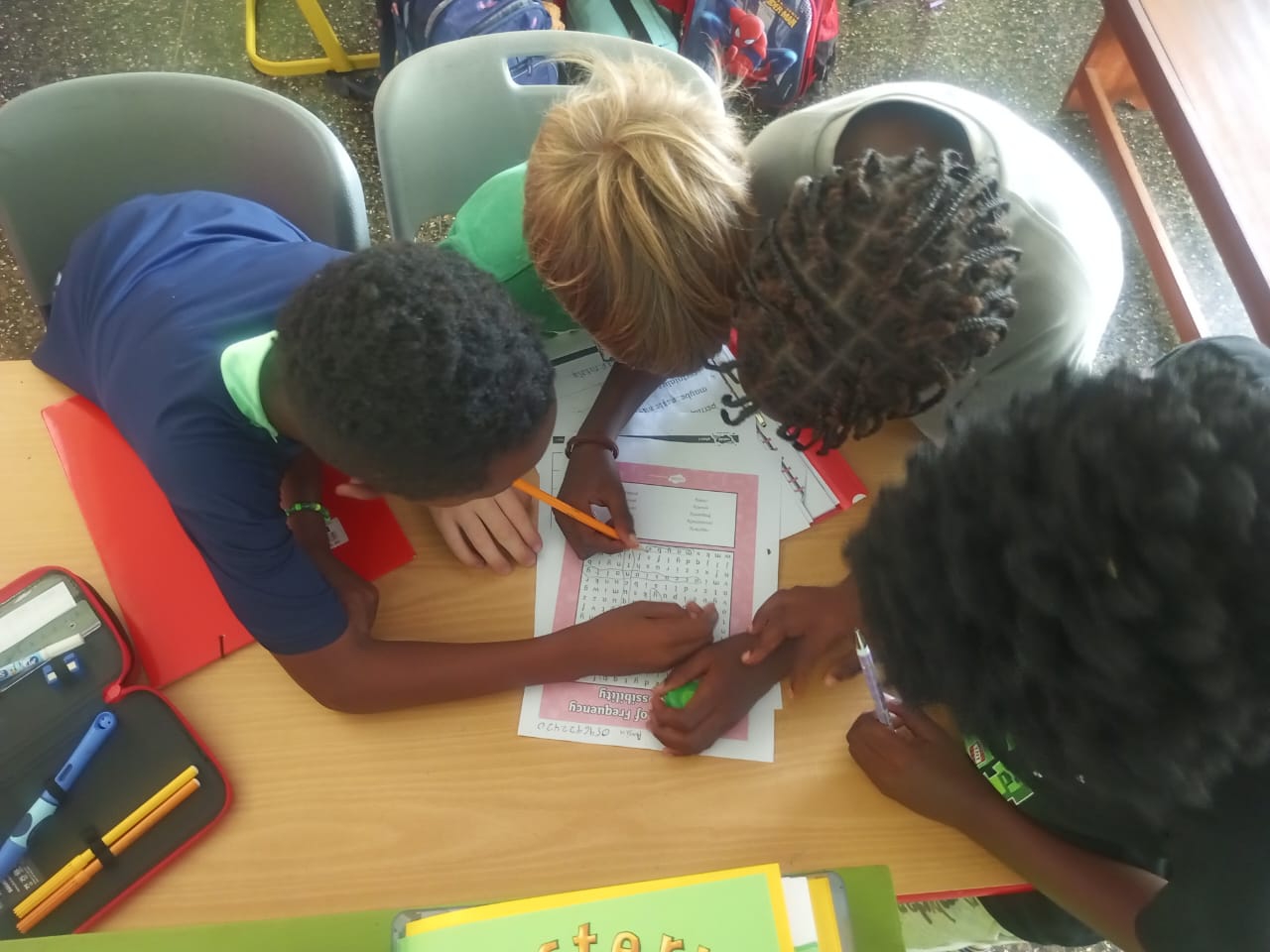
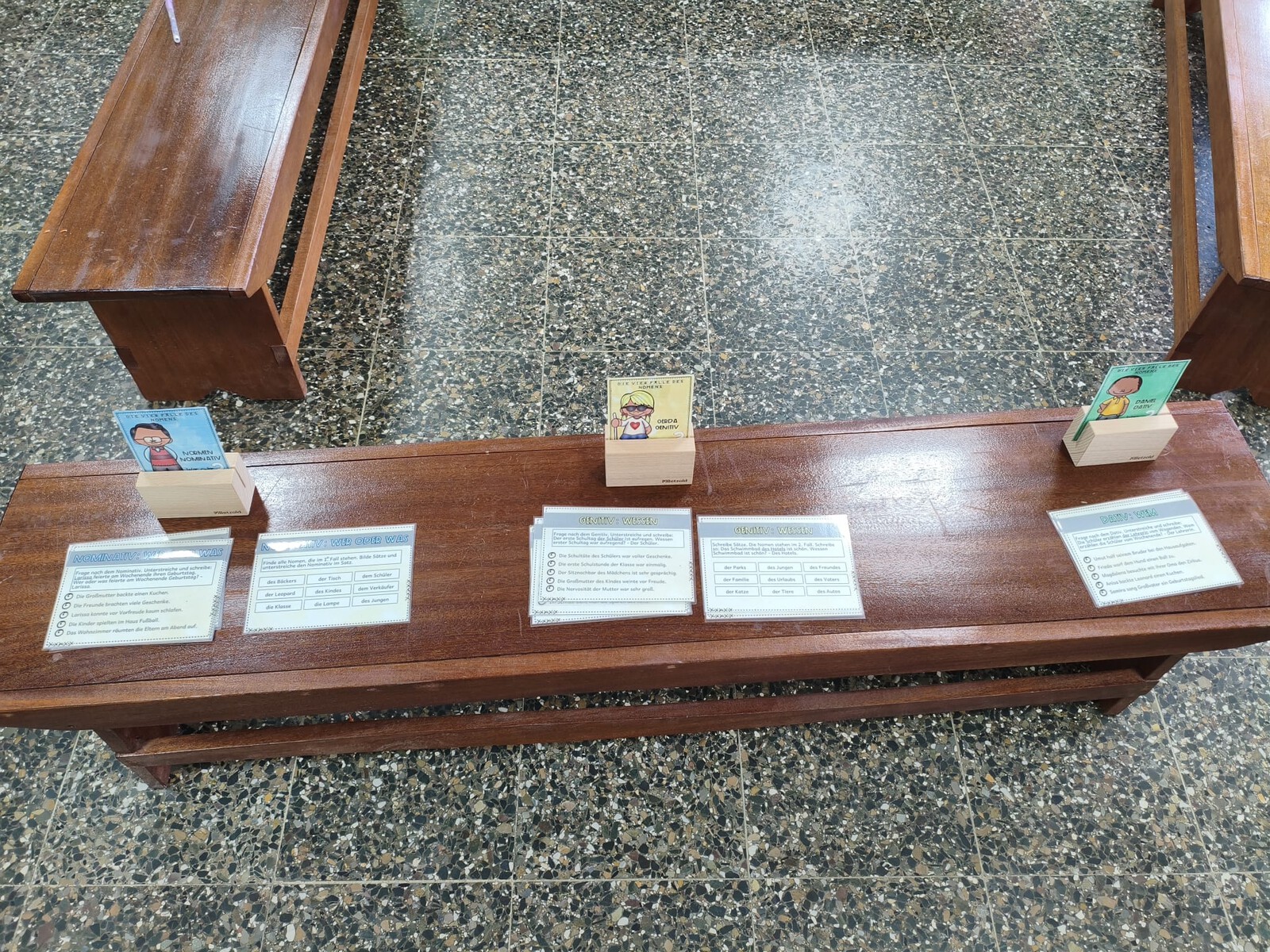
In German, we continued working on the challenging four cases of nouns, with energetic support from our “Noun Gang”. This week, the main focus was on recognising and forming the nominative and genitive cases.
In reading, we explored the fascinating story of Jane Goodall. Using their strategy fans, the children applied all the reading strategies they have learned so far and practised understanding texts more independently and identifying key information.
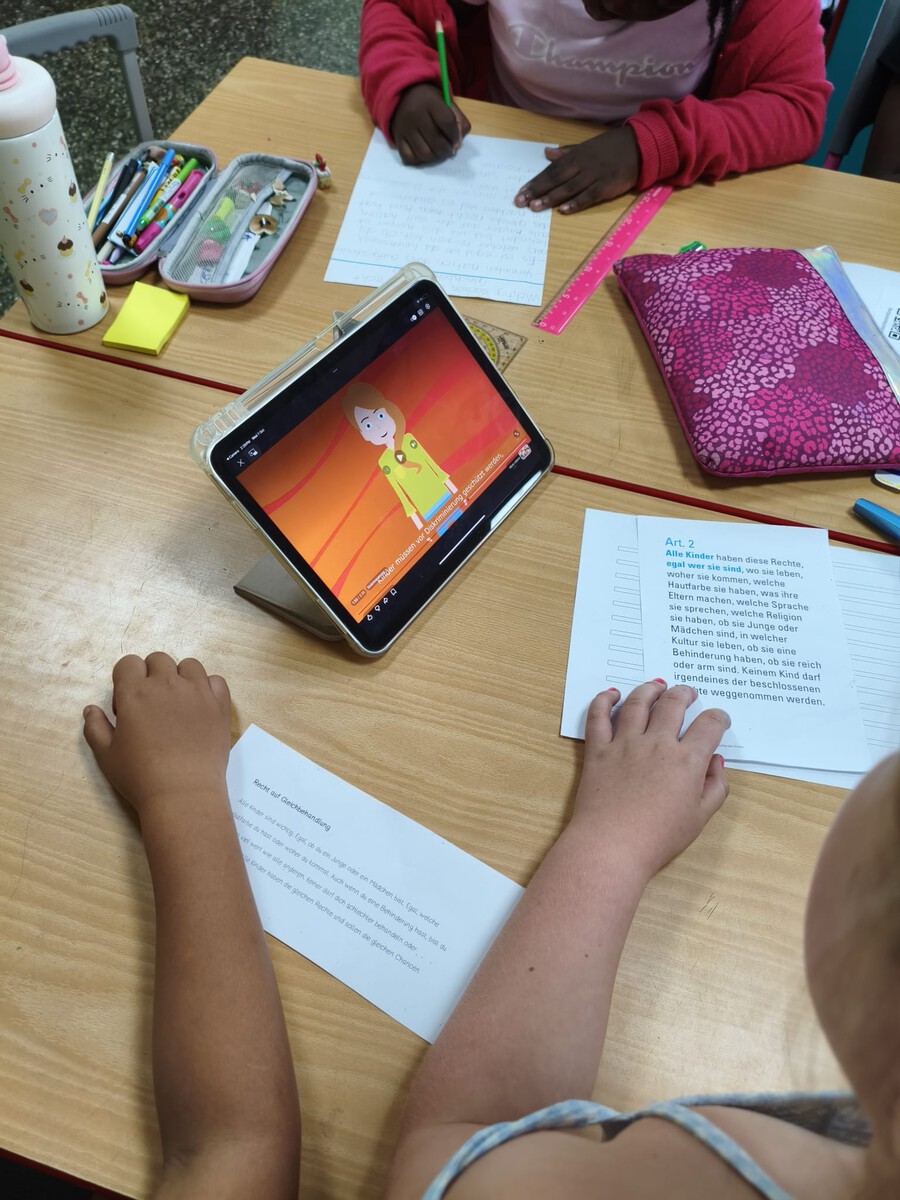 In Creative Writing, the children began planning their contribution to the international AbraPalabra story competition. First, they voted on whether to submit one joint class story or to write individual stories and later choose the best one. The decision was clear: one shared class story.
Working individually and in pairs, the children collected their first creative ideas and recorded them in a planning grid.
In English, Grade 4 explored adverbials and how they can make sentences more precise and interesting. The students learned how to express when, where, how and how often something happens.
In Art, our hands became the focus. The challenge was: How can you make a hand appear in 3D on paper – without any magic?
Using straight and curved lines, a keen eye, a steady hand and plenty of patience, a surprising effect gradually emerged: the drawn hands seemed to rise out of the paper. Strong colours enhanced the optical illusion even further.
Our conclusion: Sometimes all you need for an impressive artwork is a sheet of paper, a few lines, lots of colour – and, of course, a helping hand.
Secondary School
Grade 5 – Calculating, Researching and Discovering
In Mathematics, written subtraction was the main focus. During a maths walk, the students were able to combine movement with mathematical practice. They also used the time to prepare individually for the upcoming test and consolidate their knowledge.
The class test covering data, natural numbers, and addition and subtraction of natural numbers was also completed.
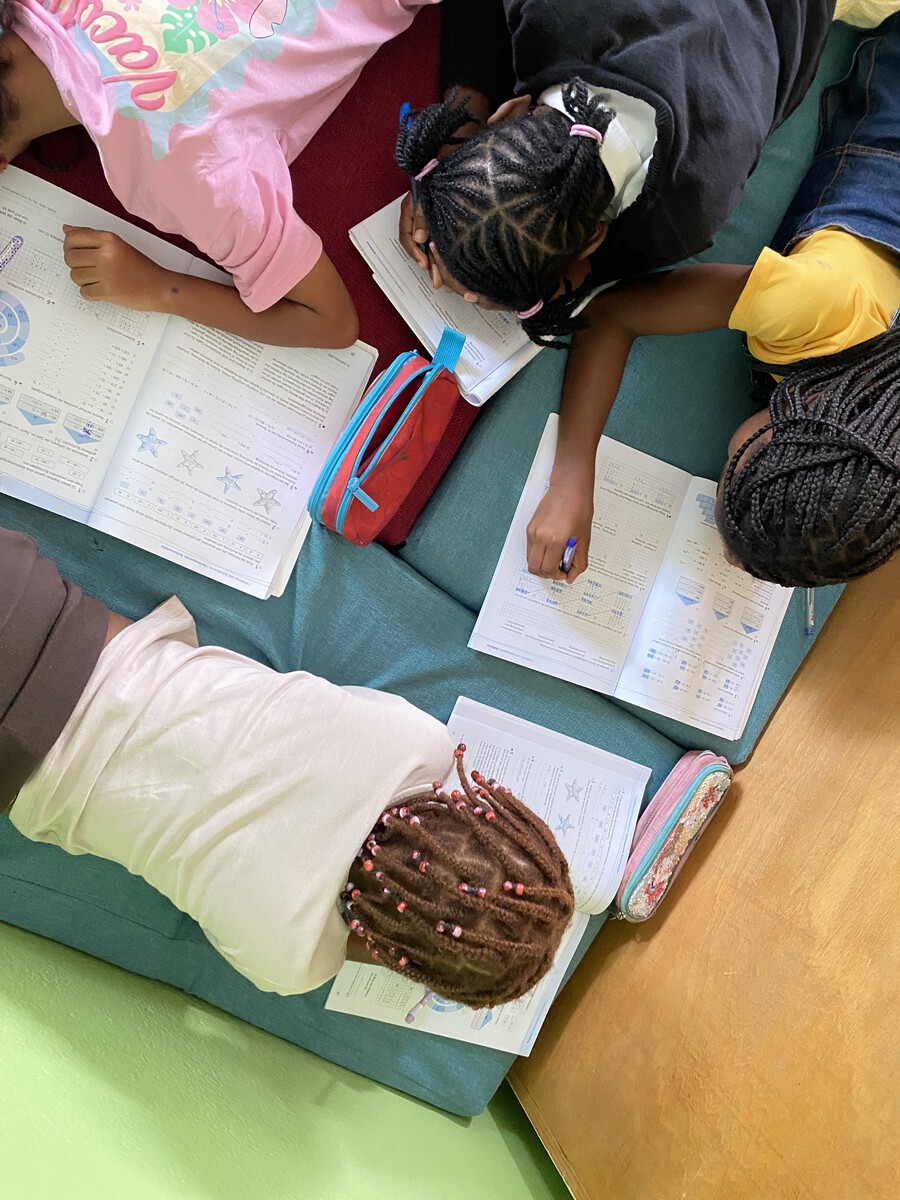
In Geography, the students in Grades 5/6 finished their station work on “Working with an Atlas”. They were able to deepen their skills in using an atlas and complete a range of tasks independently.
In PE, Grades 5/6 focused on coordination, movement and throwing power. During a cone-knocking game, the students tested their accuracy. They also practised the correct step sequence for long throws in order to improve their technique and achieve greater distances.
In the class council, we looked together at the results of our well-being survey and analysed them in more detail. At the same time, excitement about our upcoming class trip continues to grow – we are really looking forward to spending time together, having many wonderful experiences and creating unforgettable memories!
In History, Grade 5 continued its journey into the world of ancient Greece. At different stations, the students explored key aspects of Greek life using images, texts and short tasks.
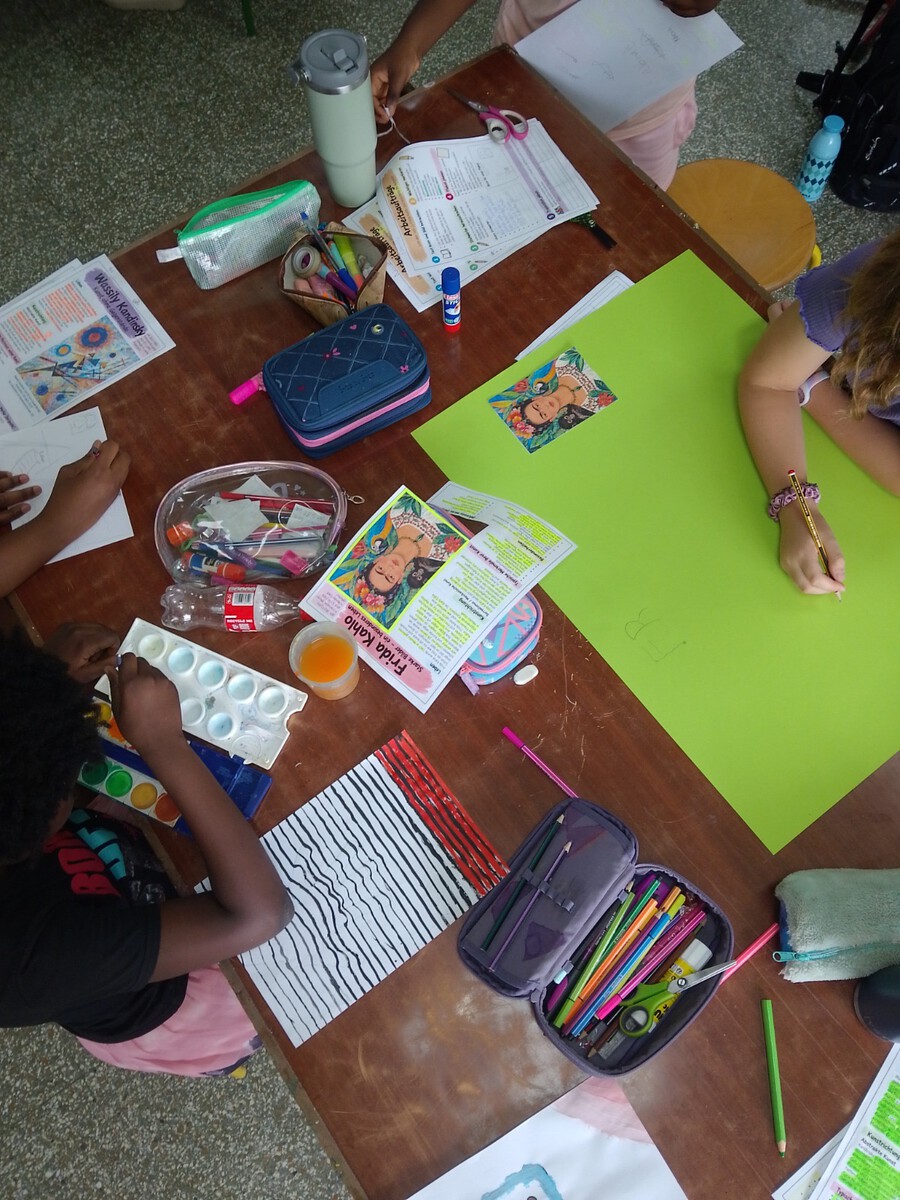 In Art, we went on an artistic journey of discovery and met famous artists. In mixed groups of three, the students read, researched, highlighted information and discussed what made Picasso, Kandinsky & Co. so special.
Then came the next challenge: How do you create an interesting poster? Which information matters? And how can you present an artist without sending the audience to sleep?
This week, it was finally time to put ideas onto paper. Armed with their sketches, the students began creating their first poster drafts. They drew, wrote, experimented and sometimes started again. Plenty of creative ideas are already taking shape.
Our conclusion: The great artists would probably have enjoyed looking over our shoulders in our little art workshop.
In Biology, we continued studying the structure of flowering plants and their flowers. A Kahoot quiz at the end of the lesson showed that we will need to revisit and consolidate the structure of a flower next week before moving on to identifying different plant species.
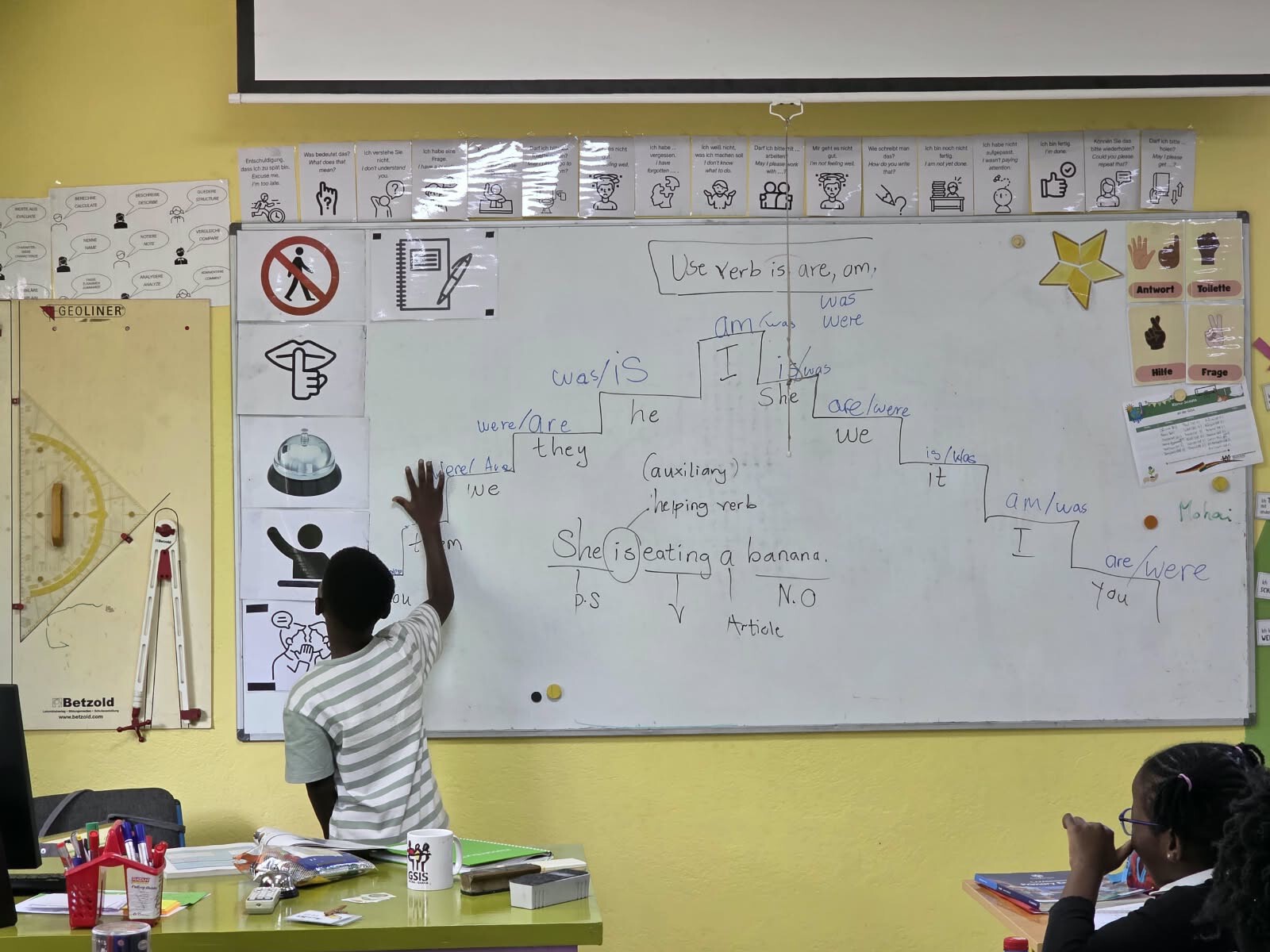
In English, the students learned about personal pronouns, possessive pronouns and possessive determiners using a simple “staircase method”. This method helps them understand and apply grammatical structures more effectively.
Grade 6 – Plants, Texts, Art and Ancient Greece
In Biology, we continued studying the structure of flowering plants and their flowers. At the end, the students were able to test their knowledge in a Kahoot quiz. This showed that we will revisit the structure of a flower next week and consolidate it together before moving on to our next topic: identifying different plant species.
In English, we continued working on narrative paragraph writing. The students explored the features of long and short sentences and discussed the different effects they can have on a text. We also looked at what a phrase is and how it can be used in writing.
In Art, we have spent the past few weeks exploring the fascinating world of famous artists. In mixed groups of three, the students read, researched, discussed and searched for interesting information. After all, we wanted to find out what made Picasso, Kandinsky & Co. so famous.
This week, it was finally time to move from theory to practice. Our drafts were transferred onto poster paper. The students drew, designed, wrote, experimented and occasionally started again from scratch.
Our conclusion: Creativity needs good ideas, a little patience and sometimes a second attempt.
In History, Grade 6 also continued its journey through ancient Greece. In station work, the students explored different aspects of Greek life using a variety of materials and representations. Alongside historical knowledge, the focus was on careful reading, comparison and explaining ideas together.
German as a Foreign Language – Grades 5/6: When Words Paint Pictures
After exploring the world of poetry last week, it was time to get creative. Under the theme “Everything That Matters”, the students collected words that were personally important to them. From these, they developed sentences, experimented with word order and discovered the effect of comparisons and metaphors.
From the thought “Friends are important because life would be boring without them”, Karsten created the following poem:
“When I am bored,
friends are my television.
When I am sad,
friends are my umbrella.
When I am angry,
friends are my therapist.”
(Karsten, Grade 6)
The students discovered with great enthusiasm how they can use their grammatical knowledge creatively and give everyday thoughts a poetic form.
In addition, they revised and practised grammatical features in a lesson with our intern and future German teacher Ms Patience Amankwah and independently at a range of learning stations.
Grade 7 – Arguing, Calculating, Filming and Presenting
In German, this week marked the final round of training before our first class test. We collected arguments, formulated our points of view and refined our texts. Our three Bs – Behauptung, Begründung and Beispiel, or claim, reason and example – were always on hand. After all, a simple “That’s just how it was!” was not going to convince anyone.
With plenty of concentration, good ideas and mutual support, we brought order to our thoughts. We wrote, checked and improved until an opinion became a convincing argument.
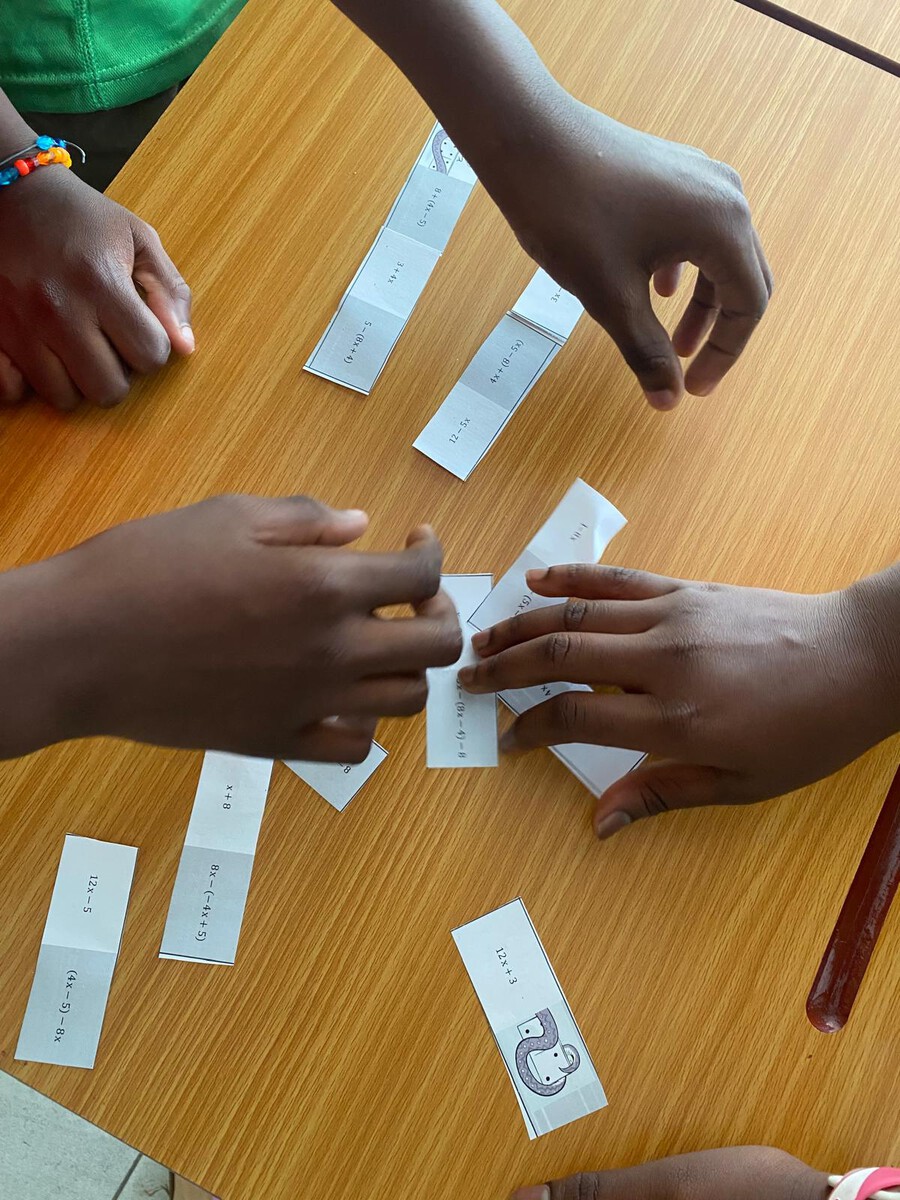 In Mathematics, letters also took centre stage. We worked with variables in expressions and practised adding, subtracting, multiplying and dividing algebraic expressions. We also opened plus and minus brackets and practised the relevant calculation rules.
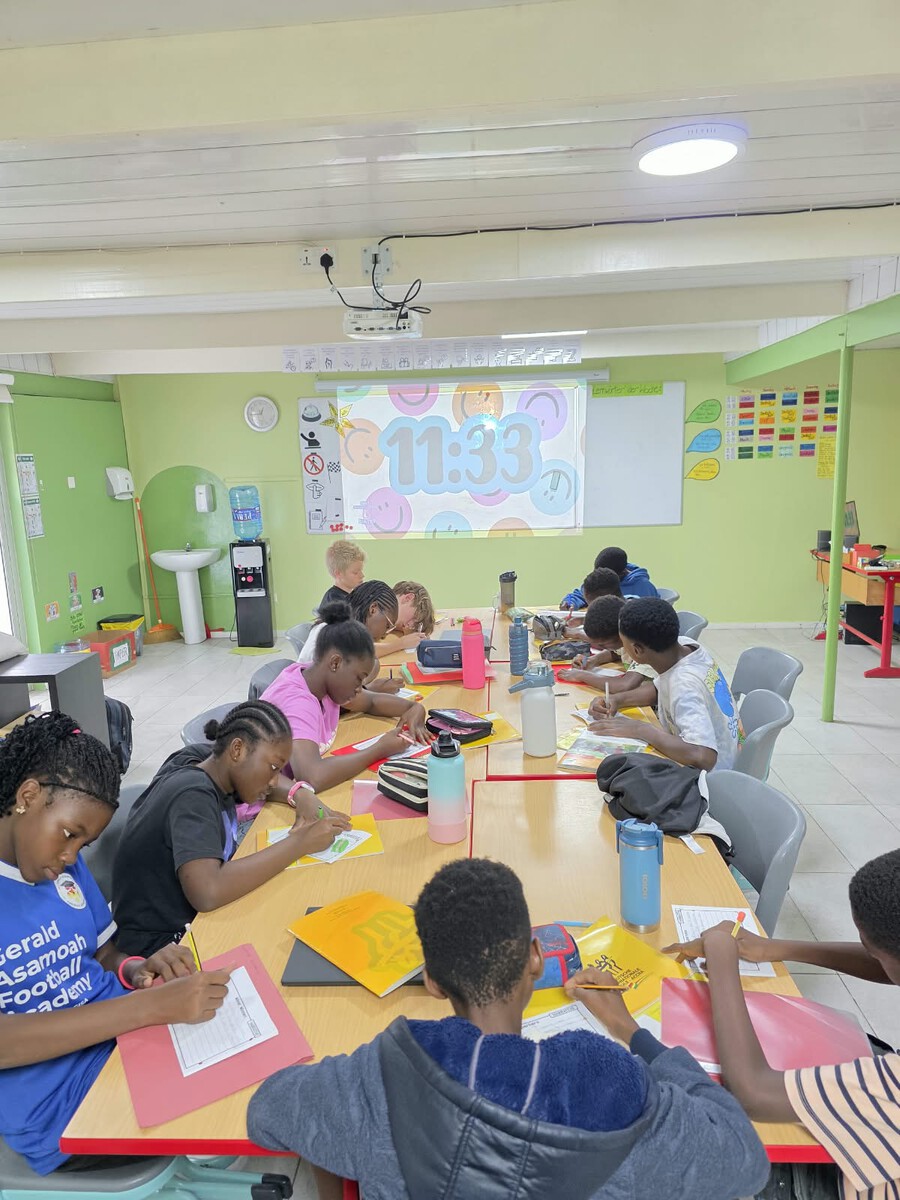 In English, our superheroes made their final appearances. We completed the presentations and received constructive feedback from Grade 8. Then the roles were reversed, and Grade 8 explained different sentence types that can support us when writing essays. For a change of pace, we also wrote a narrative paragraph on a topic of our choice.
In French, we explored the question of who owns what. With mon, ma, mes and ton, ta, tes, we learned possessive determiners and practised how they change depending on the gender and number of the noun.
History took us on a journey back to the Middle Ages. Together with our intern Benno Gerks from the University of Potsdam, we explored how strongly the Church influenced people’s lives. We worked with different historical representations, examined links between the medieval estates system and religion, and explored life in a monastery.
We also considered whether we ourselves could imagine living in a medieval monastery.
In Geography, together with Grade 8, we became a film crew. We created our own explainer videos about life in the tropical climate zone and watched the results together. Through peer feedback, we recognised successful ideas and collected suggestions for improvement.
In Biology, together with Grade 8, we continued studying invertebrates. Two classmates introduced us to the black widow as a representative of spiders and to bees as another example of a social insect.
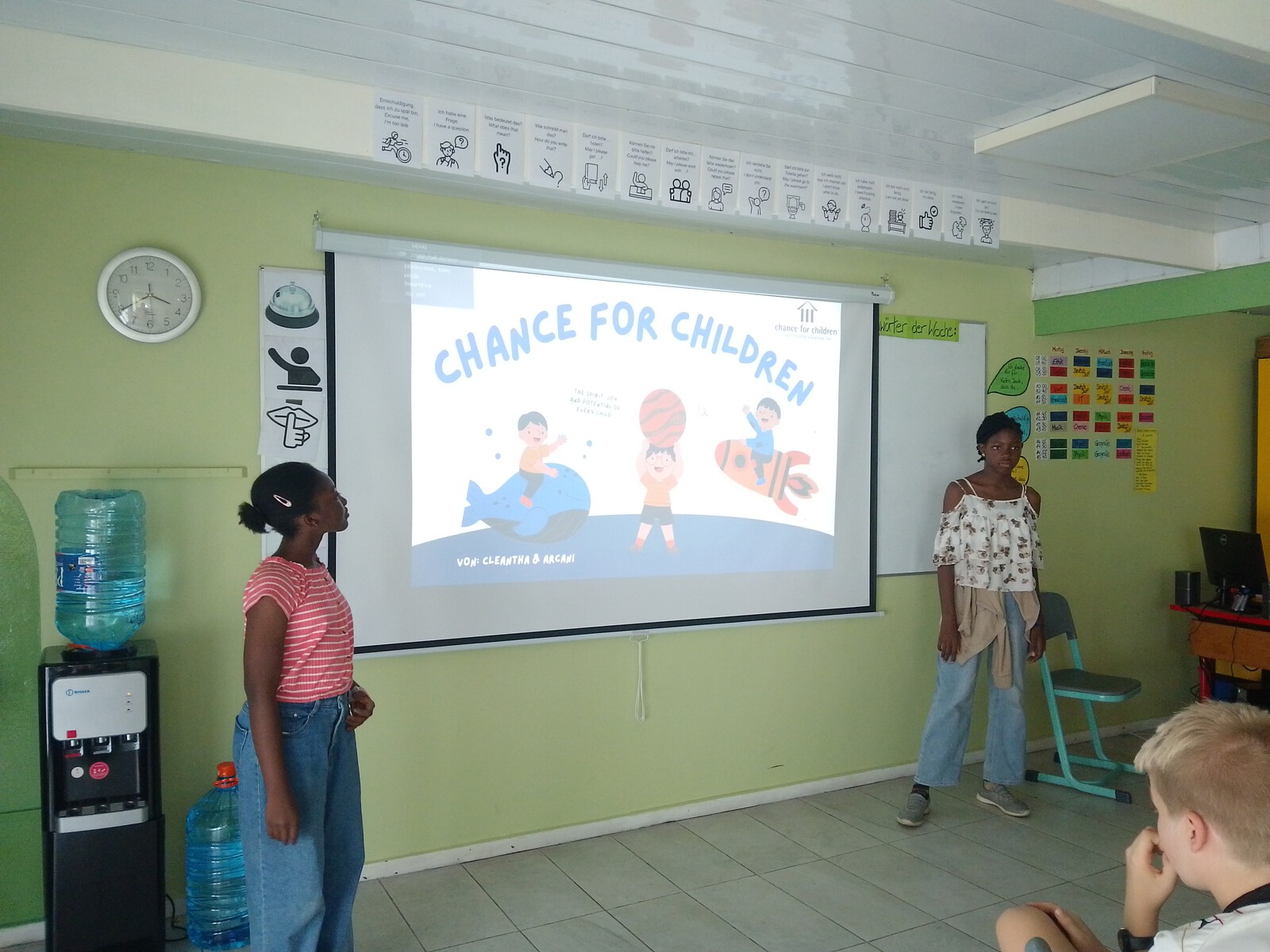 In Social Studies, we brought together our final results and listened to the first interesting presentations on different ideas for our “Chance for Children” project workshop. Possible forms of cooperation with CfC began to take more concrete shape.
In Ethics, the value of helpfulness was at the centre of our work. We explored what helpfulness means and in which situations we can support others – at home, at school or as part of our project workshop with Chance for Children.
Finally, we considered how helpfulness can be put into practice in everyday life – because a good intention alone will not carry a heavy bag.
This brought an eventful week to an end in which we argued, calculated, filmed and presented – travelling in our minds from the tropics all the way to a medieval monastery.
Grade 8 – Projects, Arguments and Learning from One Another
In Ethics and Social Studies, the students continued planning their project for children with heart conditions. One team created a flyer or information poster, another put together an overview of what will be needed for catering, while others focused on planned outings and events.
A meeting with tour guide Gerald is planned for next week. In addition, two project days are expected to be used to move the preparations forward in a focused way.
In Biology, Grades 7 and 8 continued working on invertebrates. Two students presented the black widow as an example of a spider and bees as another social insect. After the successful presentations, the class gave feedback.
How can polluted water be cleaned again? And what role can chemistry play in solving global environmental problems?
These exciting and highly relevant questions were at the centre of Grade 8 Chemistry this week. The students explored different methods for separating mixtures and examined their importance for environmental protection and the sustainable use of resources.
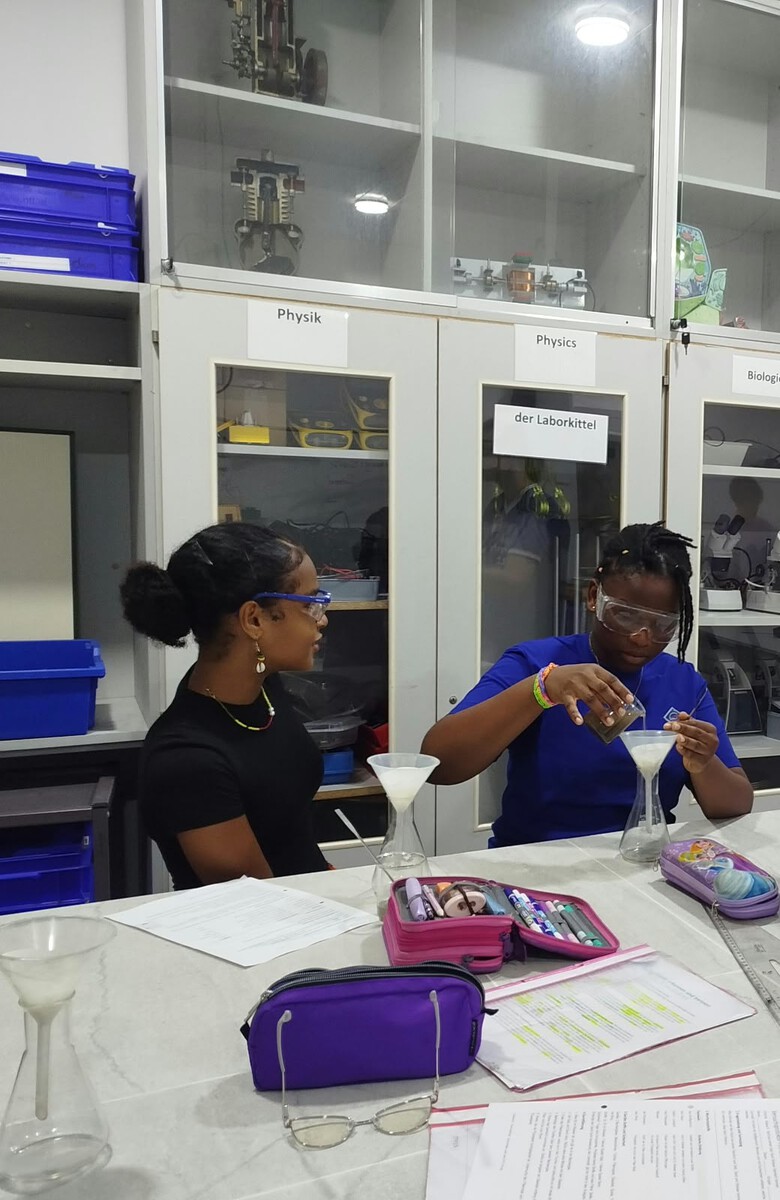
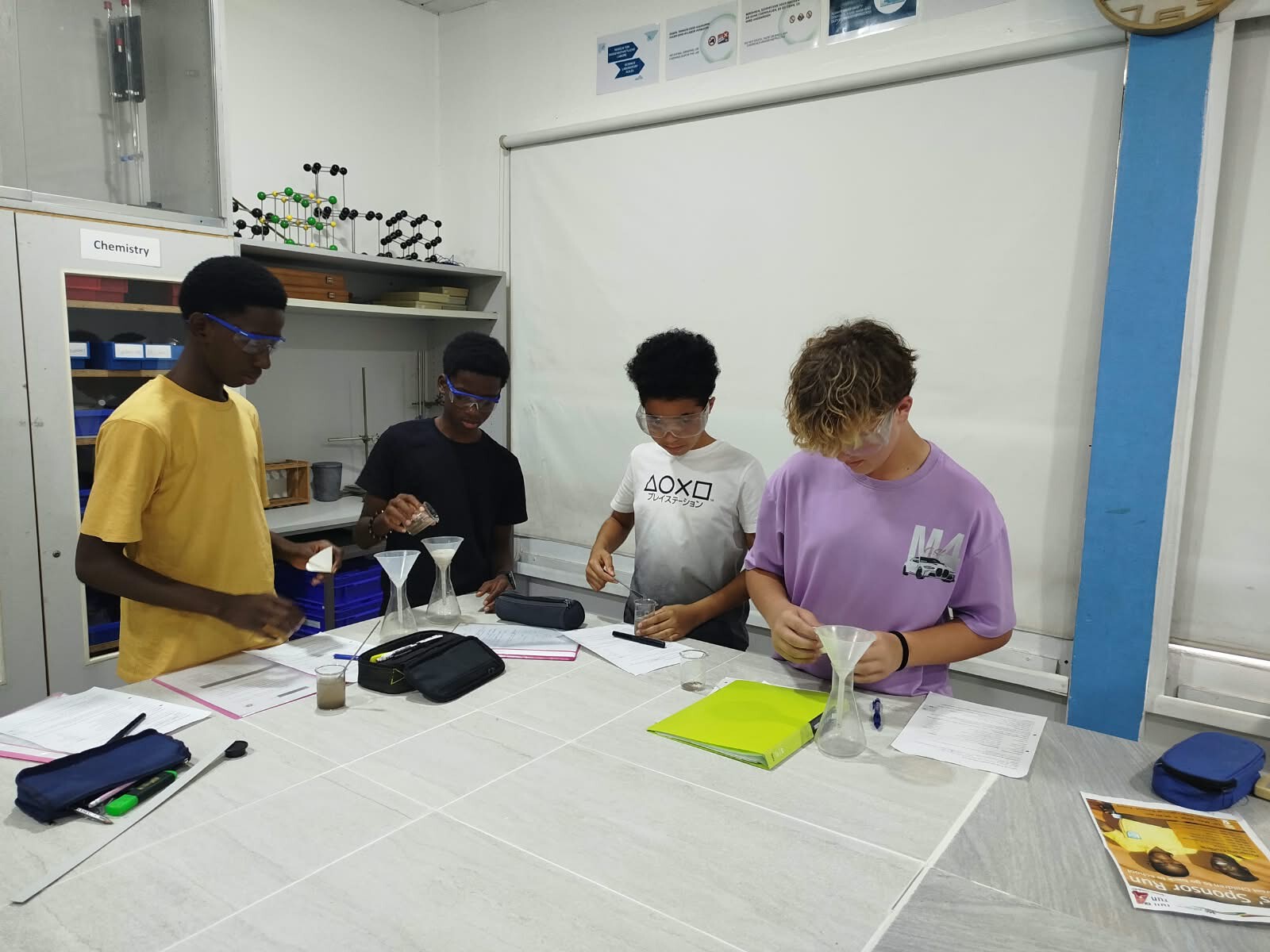
Through simple experiments, the students investigated how substances can be separated based on their different properties and particle sizes. The connection to drinking water treatment was particularly interesting, especially in regions where access to clean drinking water is limited.
The lesson made one thing clear: Chemistry is far more than theory – it helps us understand everyday challenges and develop solutions for a more sustainable future.
Over the coming weeks, we will explore further separation techniques and deepen our knowledge through more advanced experiments in the chemistry laboratory.
In Mathematics, the students had another opportunity to practise factorising using binomial formulae. The next Mathematics test was also announced for 30 October.
History became particularly hands-on this week. In the “GISA Monastery School” planned by our intern Benno Gerks, the students deciphered and translated medieval script and worked with Latin terms. They then explored Roman numerals and applied historical number symbols to concrete examples.
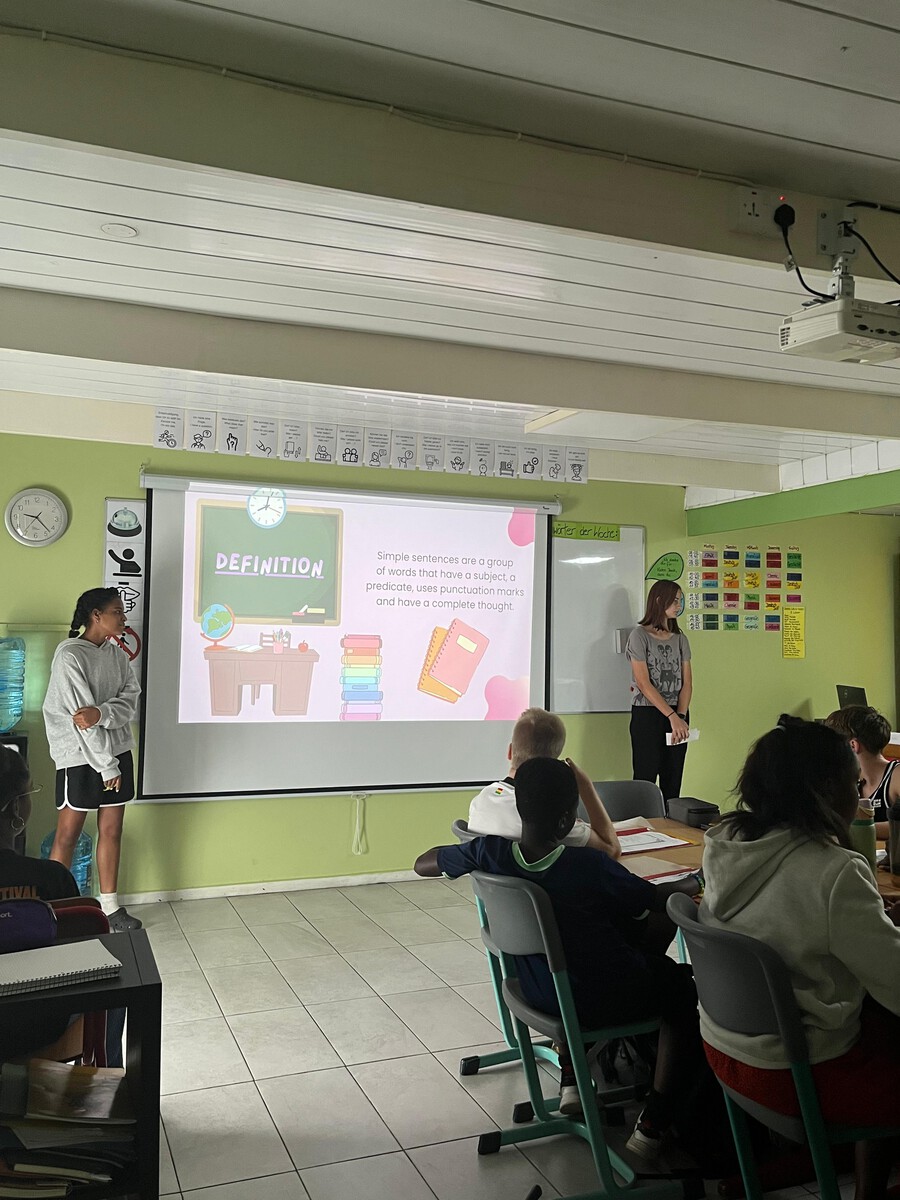 In English, the students worked in pairs on different sentence types. The aim was first to learn from one another and then to pass on their knowledge to Grade 7. This peer-learning approach strengthened not only their understanding of the topic, but also confidence and teamwork.
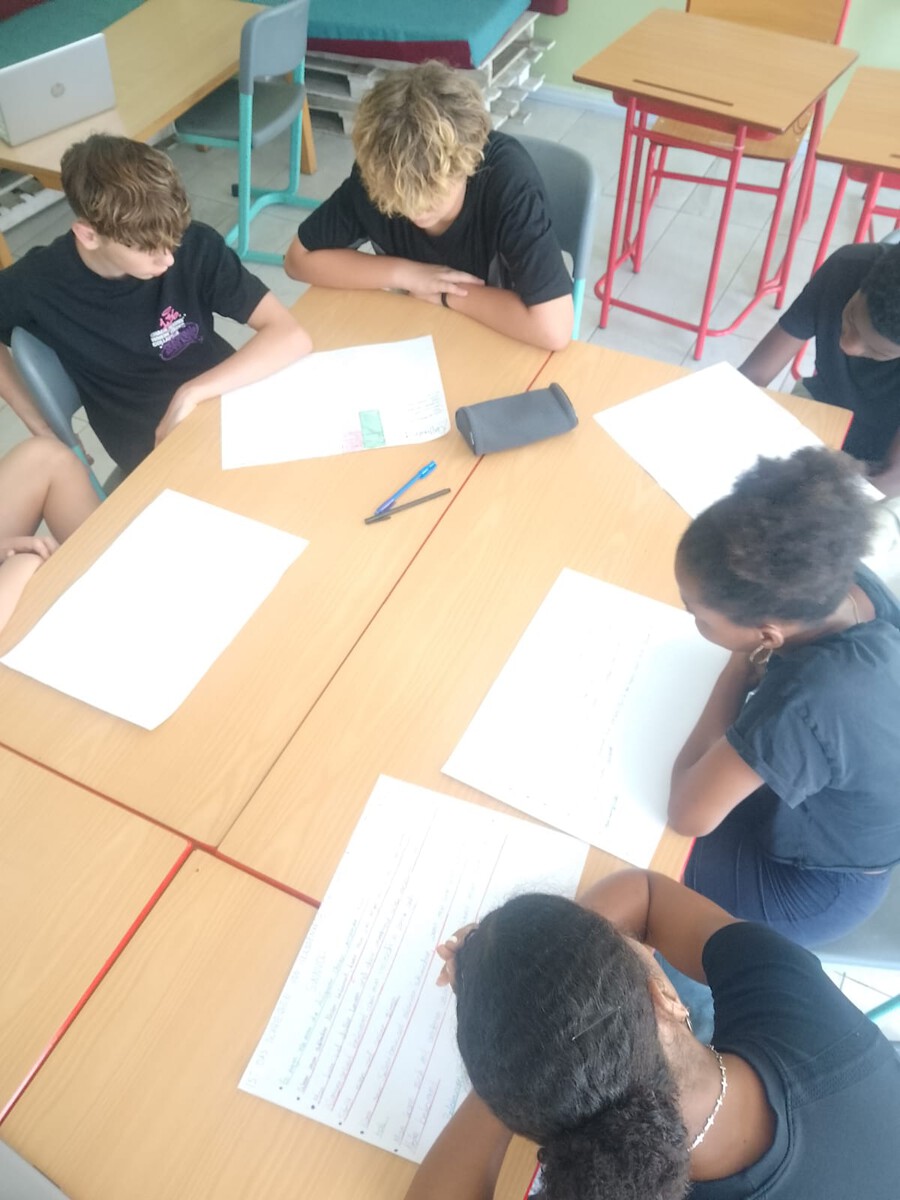 German also became serious this week, with the first class test of the school year. Beforehand, the students used a practice test to work intensively once more on argumentative writing. How do you create a strong introduction? What makes an argument convincing? And how can claim, reason and example be connected effectively?
Then it was time for individual work. Heads were thinking hard, pens moved quickly across the page – and now we are curious to see whether the essays managed to convince the German teacher too.
In French, the class learned the demonstrative adjectives ce, cet, cette and ces. Using practical examples, the students practised how these words change depending on the gender and number of the noun.
German as a Foreign Language – Grades 7/8: Everything That Matters – Turning Words into Poetry
Under the theme “Everything That Matters”, the students spent this week searching for words and thoughts that are personally important to them. From simple sentences, they developed their own poetic expressions using comparisons and metaphors.
Nii Dromo shows how a factual thought can become a special message. His sentence, “For me, happiness, money and food matter, and I need money to buy things,” became the poetic insight: “Some things are expensive, but happiness is priceless.”
Alongside their creativity, the students practised grammatical features at learning stations. They also presented their class in short videos and practised speaking freely.
Through peer feedback, they were able to develop their language skills further and learn from one another.
Grade 9 – Learning, Discovering and Growing Together
There was once again plenty happening in Grade 9 this week – academically, practically and as a class community.
In Mathematics, linear systems of equations remained the main focus. After learning the substitution and equalisation methods, the students now worked intensively with the elimination method and learned how to transform equations strategically.
In Chemistry, our journey through the world of atoms continued. The students explored the origin and structure of the periodic table and learned how an element’s position can be derived from its atomic structure – and vice versa.
In Physics, the focus was on the digital representation of motion. Students used digital tools to represent motion data in diagrams and make physical relationships visible.
During the class council, the students once again had the opportunity to openly share their wishes, ideas and concerns. The discussion included both positive experiences and areas we would like to improve together.
In History, the class approached the end of the First World War and its political consequences. A particular focus was the question of how the post-1918 peace settlement should be assessed. The students examined different perspectives and discussed concrete provisions.
In Ethics, the topic of Buddhism is gradually coming to an end. Three more students presented key principles, including Samsara, Karma and the concept of “awakening” and Nirvana.
In Social Studies, the class continued exploring the characteristics of democracy, with the separation of powers once again at the centre.
In Music, the students explored traditional music, popular music and art music. Using excerpts from live performances, they examined typical characteristics and discussed how the different types of music can be distinguished.
In German, it was time for the first class test of the school year. Beforehand, we used a practice test to focus once more on argumentative writing. Together, we revised the most important rules, refined formulations and put our arguments into a clear order.
On Thursday, it was time to get started: pens out, minds switched on, and off we went. The students could now show what they had learned and practised over the past few weeks.
In French, learning went beyond the textbook. In a research project, the class explored different herbs. The students researched their French names and compared them with the corresponding words in English and German.
Learning German with Flavour – Grade 9 Cooks German Dishes
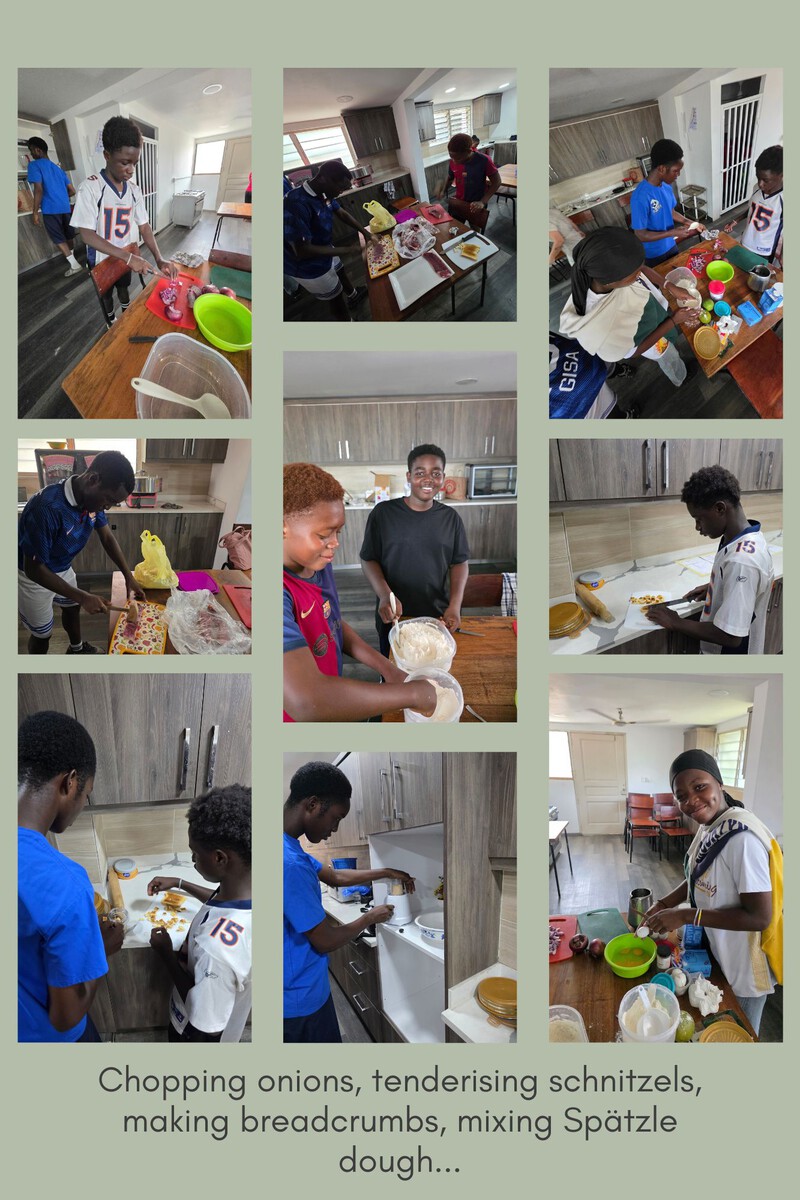 With the 2027 Germany trip in mind, Grade 9 is working intensively on speaking, reading and writing in German – increasingly using German exclusively. This time, the language lesson moved into the kitchen: after researching, planning the menu and shopping for ingredients, the students prepared Wiener Schnitzel, Käsespätzle and Rote Grütze.
And, of course, they did not just cook – they also spoke German throughout.
➡️ Read more: Learning German with Flavour – Grade 9 Cooks German Dishes
Dates & Outlook
⛪ 11 October 2026
Family Harvest Thanksgiving service of the Protestant Church Community in Accra
🏎️ 17 October 2026, 1:00–5:00 p.m.
Teen Club – Go-Karting at House Party
🍂 19–23 October 2026
Autumn Break
🏫 26 October 2026
First school day after the autumn break
🇩🇪 31 October 2026
German Language Day at GISA
🗳️ 4 November 2026, 6:00 p.m.
GISA Annual General Meeting
❤️ 7–14 November 2026
Heart surgeries of the Gerald Asamoah Foundation in Ghana
⛪ 8 November 2026
Communion service of the Protestant Church Community in Accra with Pastor Heidi Hafner
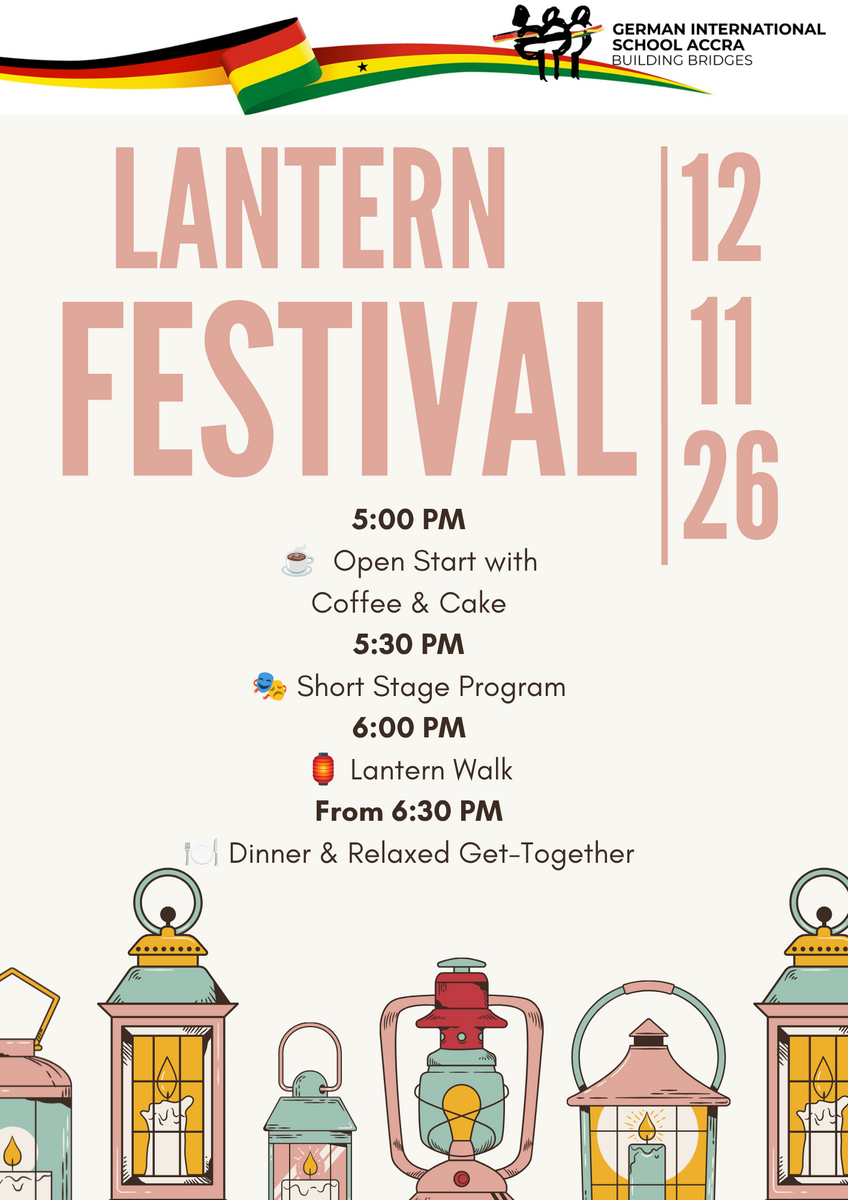
🏮 12 November 2026
Lantern Festival at GISA
🎭 13 November 2026
Cultural Festival of the Goethe-Institut Accra
📚➗ 20 November 2026
Reading Day and Long Night of Mathematics
🤝 23–25 November 2026
German-African Business Summit (GABS 2026) – GISA participates in the Team Germany Lounge
🎬 25 November 2026
EducataGhana Pre-Evening featuring the “Team Germany Content Creator Video Contest”
🎄 28 November 2026
Christmas Market at GISA
⛪ 29 November 2026
First Advent service of the Protestant Church Community in Accra, followed by an Advent buffet
🇬🇭 4 December 2026
Farmers’ Day – national public holiday, no school
🎒 18 December 2026
Last school day before the Christmas break
🎄 21 December 2026 – 8 January 2027
Christmas Break
⛪ 24 December 2026
Christmas Eve service of the Protestant Church Community in Accra; afternoon service, exact time to be announced
🏫 11 January 2027
First school day after the Christmas break
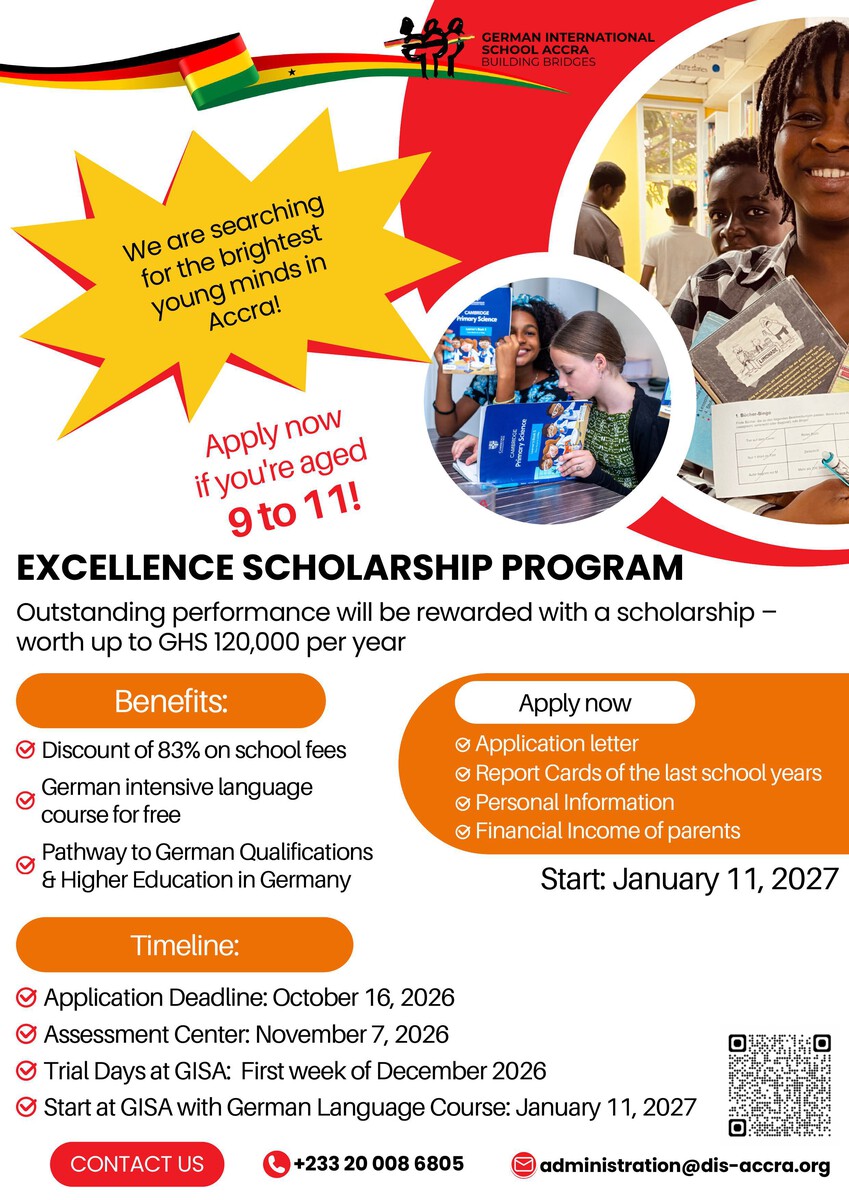
Excellence Scholarship Programme 2027
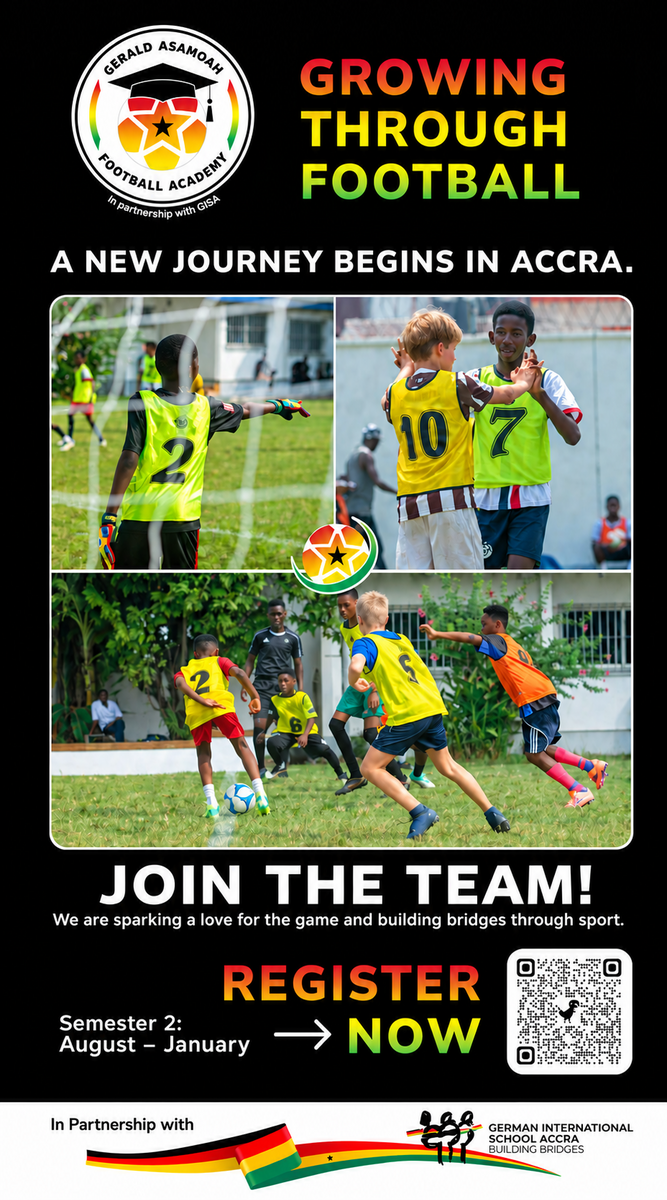
⚽Gerald Asamoah Football Academy
Lantern Festival
🇩🇪 German Language Day

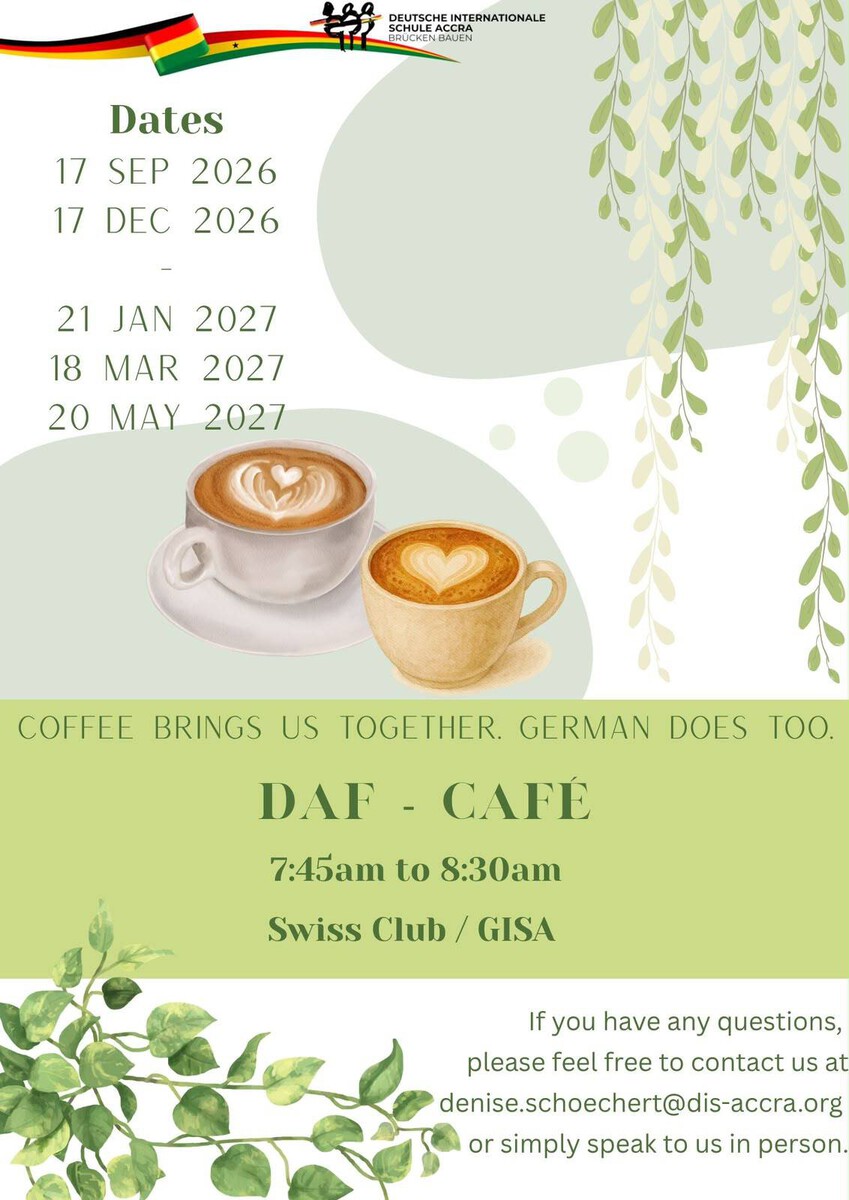
☕ DaF Café: Speaking German and Connecting Through Conversation
GISA Teen Club