Schnitzel, Spätzle and Speaking German – Grade 9 Cooks Up a Storm


Listening, reading, writing – and above all, speaking, speaking, speaking! With our trip to Germany in 2027 on the horizon, Grade 9 has been working hard in German lessons. And not just in any way – we are increasingly communicating entirely in German. What initially led to puzzled looks, raised eyebrows and the occasional desperate attempt at translation is now working remarkably well. And that certainly deserved a reward!
And how do you reward a class that has been working so hard to learn German? With a generous helping of German cuisine, of course!
But before we could get anywhere near the cooking pots, there was some research to be done. Each of us presented two typical German dishes, including their ingredients, recipes and origins. This quickly raised some very practical questions: Where can we find all these “German” ingredients here in Ghana? Are they even available? And how much will everything cost? After all, we not only had to put together a delicious menu but also figure out where to buy the ingredients and whether our culinary adventure would fit our budget. Not quite as easy as it sounds – sometimes tracking down the right ingredients is an adventure in itself!
Next came a democratic vote on our menu. The winners: Wiener Schnitzel, Käsespätzle (German cheese noodles) and Rote Grütze (a traditional red berry dessert). All that remained was to buy the ingredients – and then the chopping could begin!
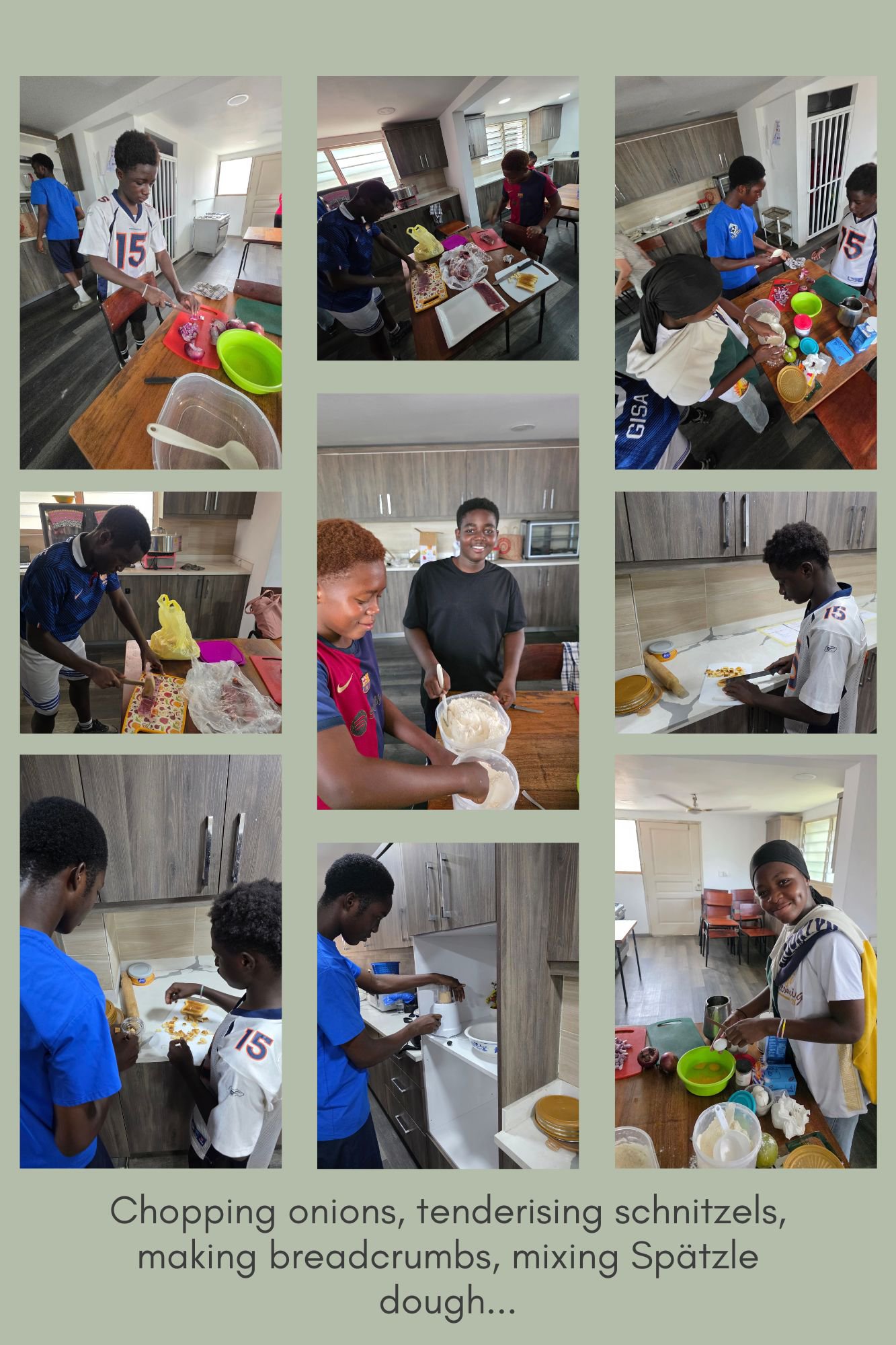
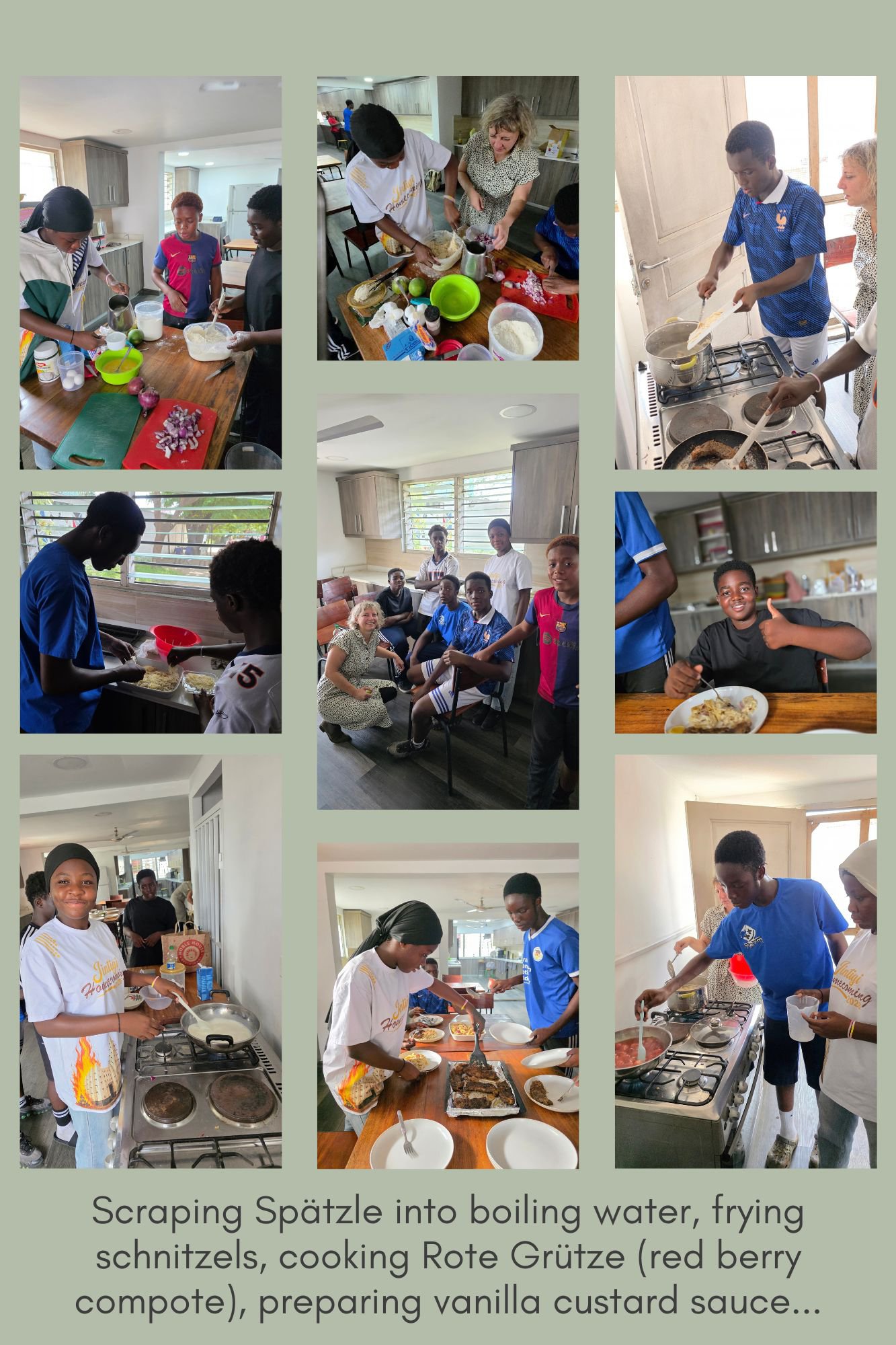
So we swapped our pens for wooden spoons and transformed the Swiss Club kitchen into our very own little German restaurant kitchen. There was chopping, pounding, stirring, cooking and plenty of sweating. Schnitzels were breaded, cheese was melted and the Rote Grütze was lovingly prepared. Along the way, there was a fair amount of creative kitchen chaos – but all in German, of course!
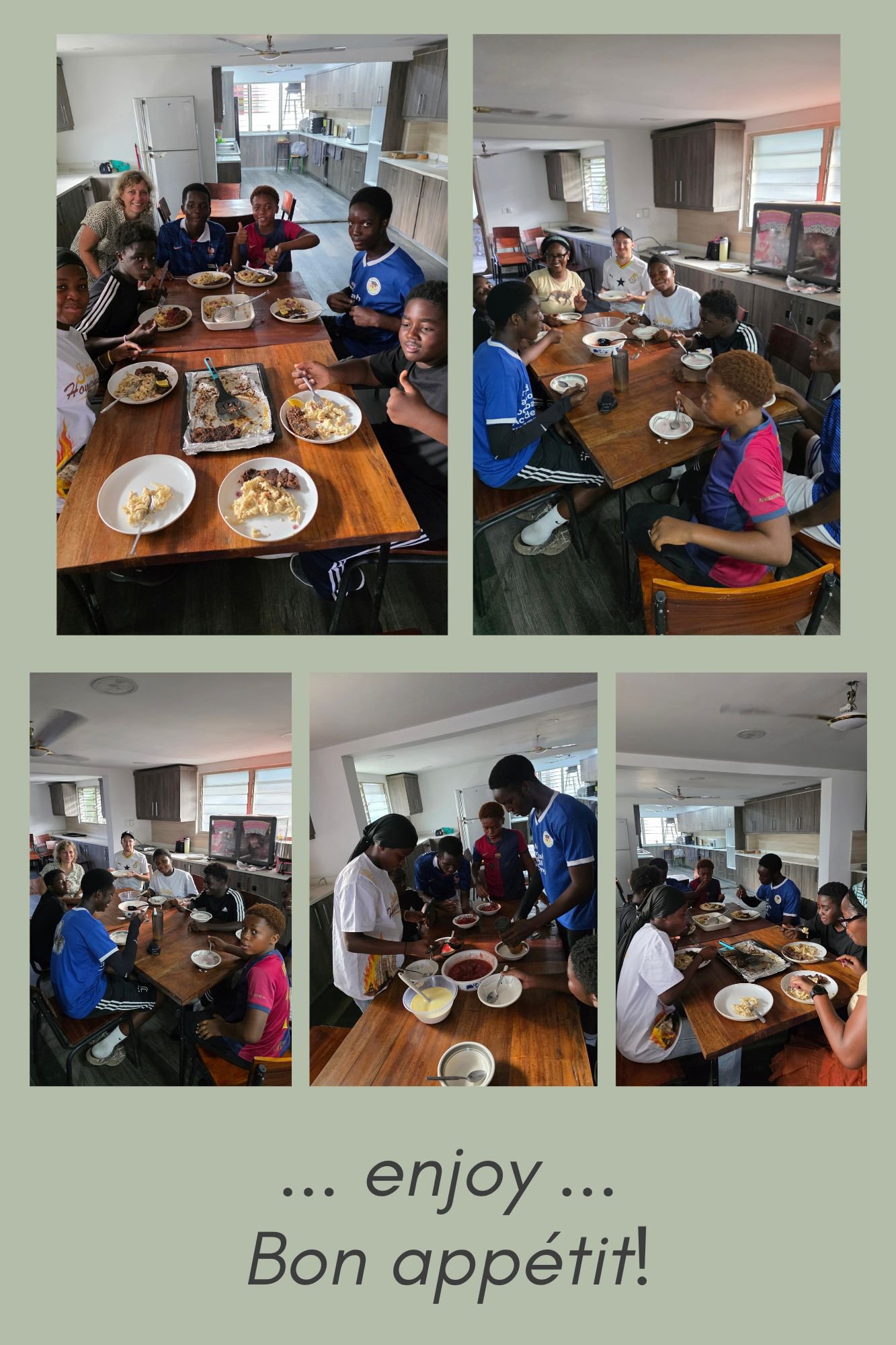
And the result? A proper feast! We enjoyed our homemade delicacies together and took the opportunity to learn more about German table manners and eating habits. What culinary surprises await us in Germany? How should you behave at a German dinner table? And why do Germans wish each other “Guten Appetit” before anyone has even picked up a fork?
By the end, not only were our stomachs full, but our German vocabulary had also gained quite a few delicious new expressions.
Our conclusion: Learning German can be surprisingly tasty! And one thing is certain: By the time we set off on our trip to Germany in 2027, we hope to be well prepared – both linguistically and culinarily.
We are already looking forward to our next cooking adventure – because after this success, we definitely have an appetite for more!
Excellence Scholarship Programme 2027

⚽Gerald Asamoah Football Academy

Lantern Festival

🇩🇪 German Language Day

☕ DaF Café: Speaking German and Connecting Through Conversation

GISA Teen Club