Newsletter 24.09.2026


The past two weeks have been very different: an eventful full school week was followed by an unusually short one, with Founder’s Day on Monday and our Professional Development Day tomorrow, Friday. All the more reason to take a look back at everything that has happened over the past two weeks.
And there is plenty to discover: from our Beach Clean-Up on World Cleanup Day and new impulses from the Regional Network Conference in Cairo to the first steps on our path towards the GIB and many exciting learning experiences in Nursery, Kindergarten, Primary and Secondary School.
Our students have experimented, debated, written, calculated, researched and created. At the same time, our GISA community continues to grow: new colleagues are joining our team, new projects are taking shape, and many small and large developments are moving our school forward.
We hope you enjoy looking back at two varied and exciting weeks at GISA!
News from GISA
Together for a Cleaner Environment – World Cleanup Day
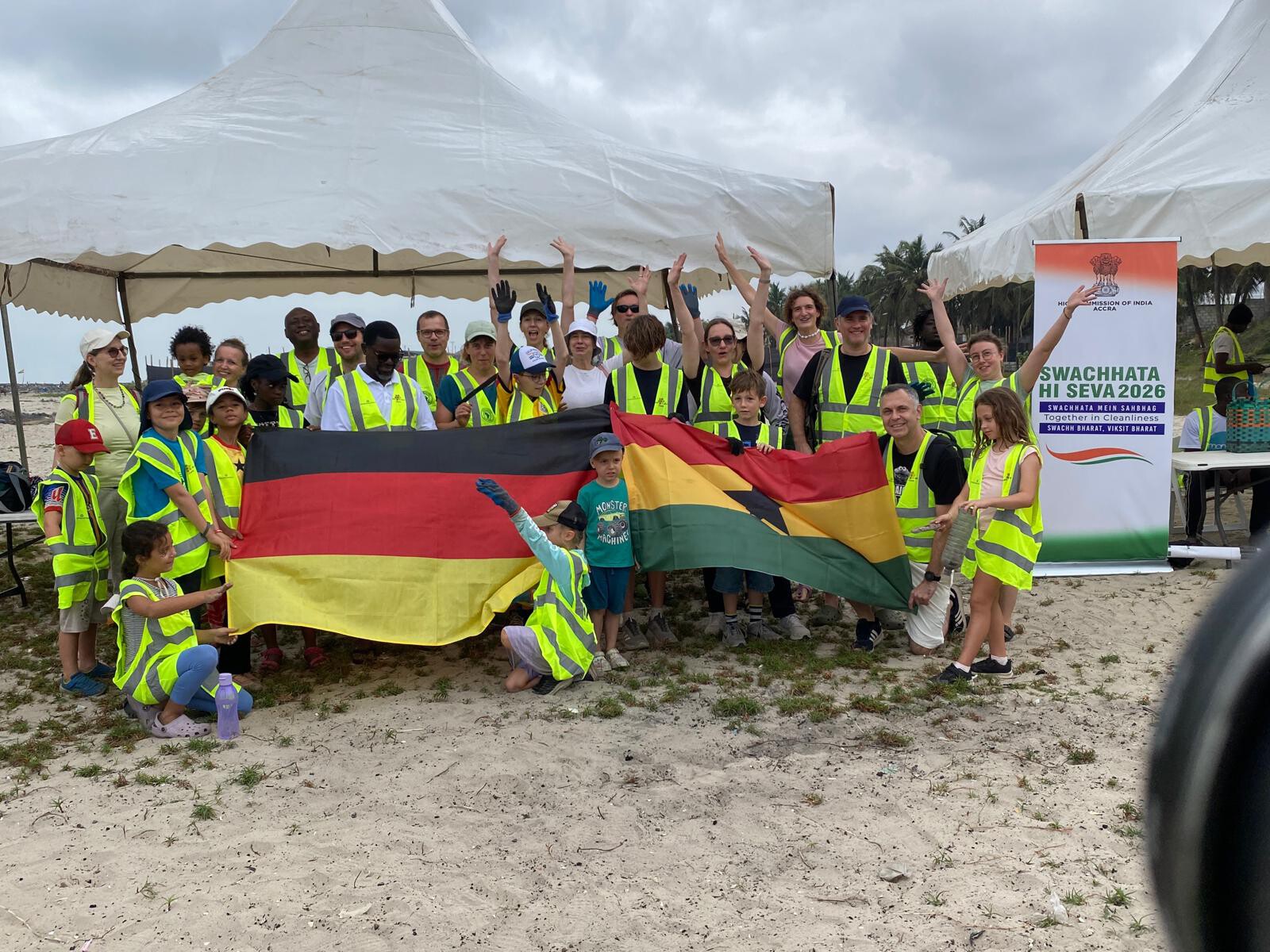 On World Cleanup Day, GISA showed what environmental protection and collective action can look like in practice. More than 30 members of our school community took part in the large Beach Clean-Up at Ananse Beach. Together, they collected and sorted waste, sending a visible message about responsibility and sustainability. Special thanks go to our teacher Ve Fredrich for organising and coordinating GISA’s participation.
➡️ Learn more: Together for a Cleaner Environment – Beach Clean-Up on World Cleanup Day
GISA at the Regional Network Conference in Cairo
From 14 to 16 September, GISA participated in the Regional Network Conference of German Schools Abroad in Cairo. The conference focused on the targeted use of Artificial Intelligence in schools and administration, exchange with other German Schools Abroad and new impulses for further school development.
Welcome to GISA
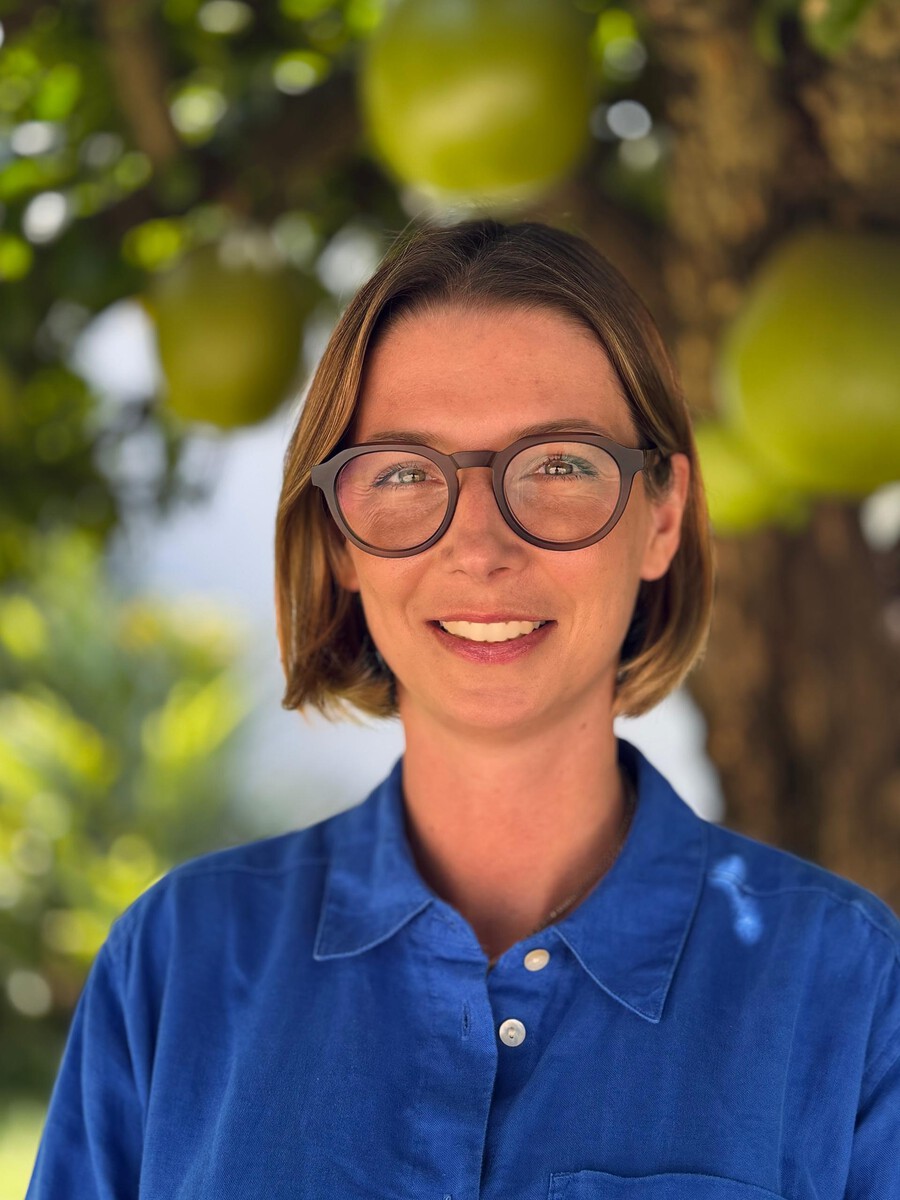 Ada Kulakowska-Harrak is very happy to join the GISA community as our new Head of Administration and will soon take over from Katrin.
Together with her family, she recently moved to Accra and is looking forward to beginning a new chapter here – her two children also attend GISA. Before moving to Ghana, Ada worked in finance at BASF Services Europe in Germany, most recently as Functional Team Leader in Accounts Payable.
She is looking forward to getting to know our school, our students, parents and colleagues and to becoming part of the GISA community.
New Members of Our Cleaning Team
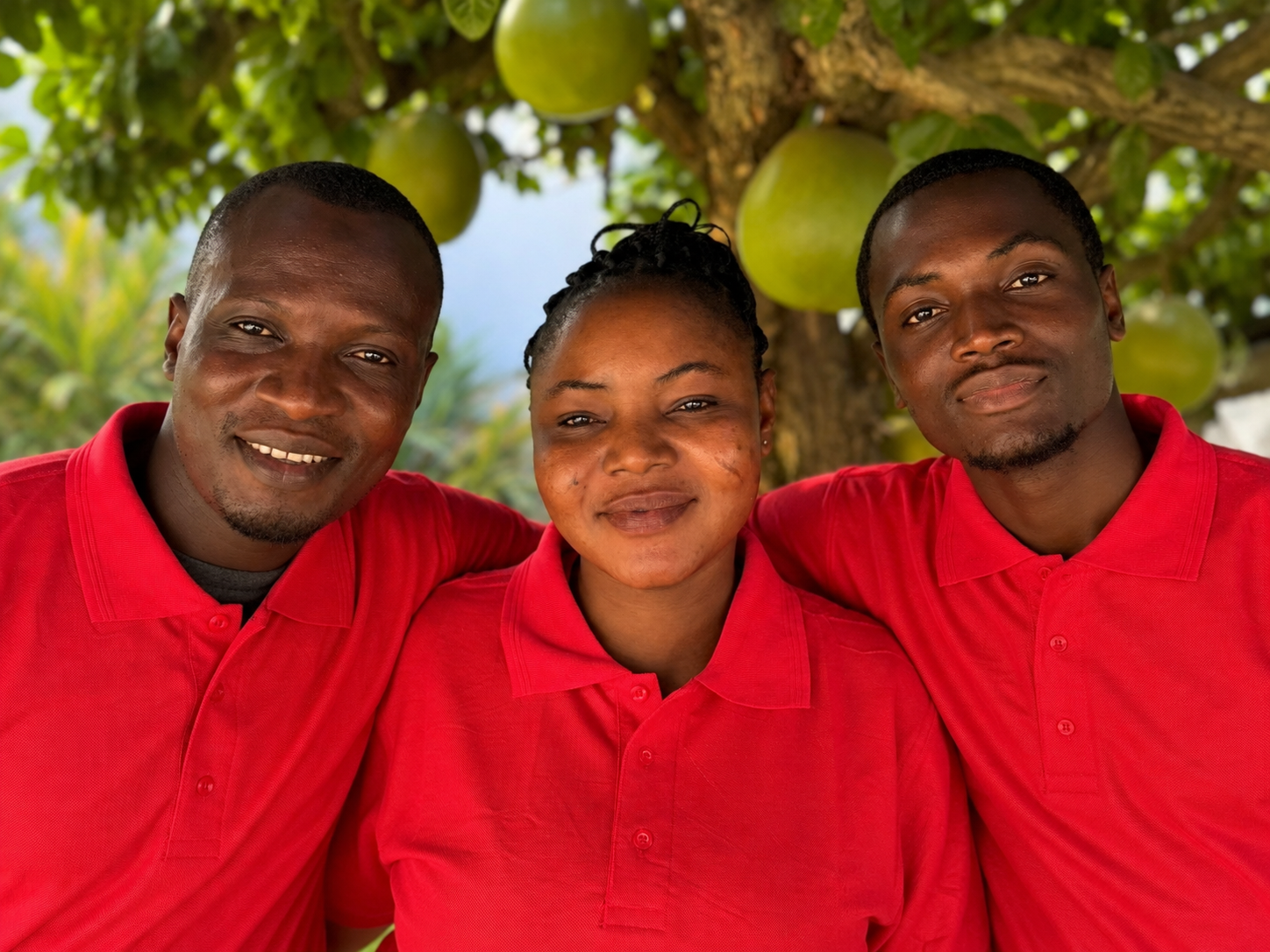 Our cleaning team has welcomed three new members: Fuad Seidu, Selina Ayarika and Prosper Donkurah will support us in keeping our classrooms, facilities and campus clean and well maintained.
We warmly welcome all three to the GISA community and look forward to working with them!
Project Time – Learning, Creating, Discovering
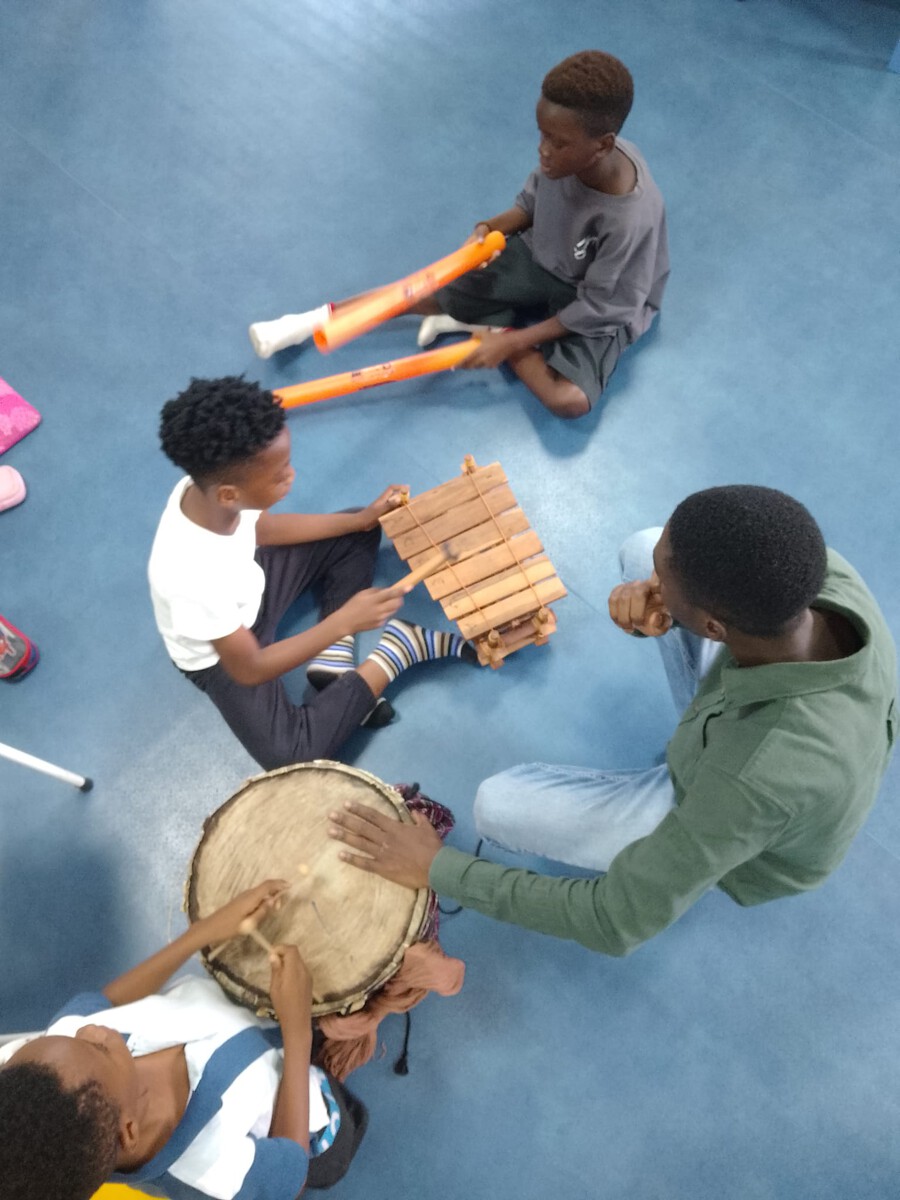
Our Project Time provides space for creative and independent learning. From making films and working with clay to a musical journey through Germany, art, migration and digital calendars, a wide variety of projects are currently taking shape in Primary and Secondary School. Many of the results will also play a role at our German Language Day on 31 October, demonstrating how closely language, culture and learning are connected at GISA.
➡️ Learn more: Project Time at GISA – Learning, Creating, Discovering
Eating Together, Learning Together
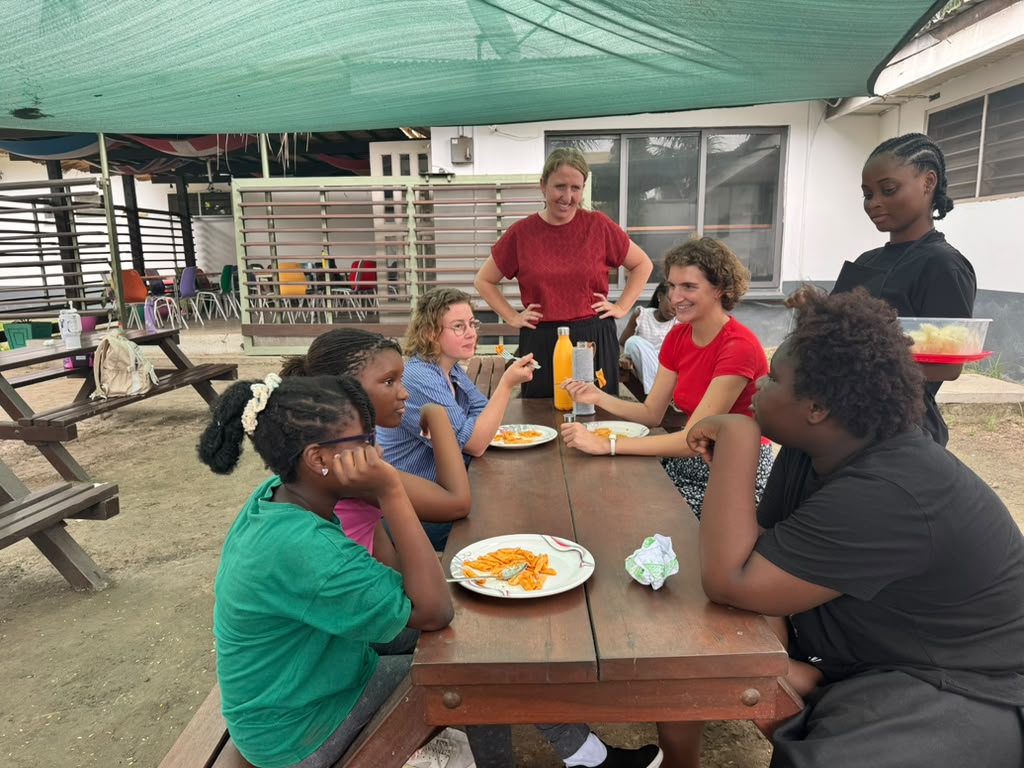 Lunch breaks at GISA are more than just a break. Our “Pedagogical Plate” creates additional opportunities for interaction, conversation and social learning as part of everyday school life.
➡️ Learn more: Eating Together, Learning Together – The Pedagogical Plate at GISA
DaF Café – Discovering Language Together
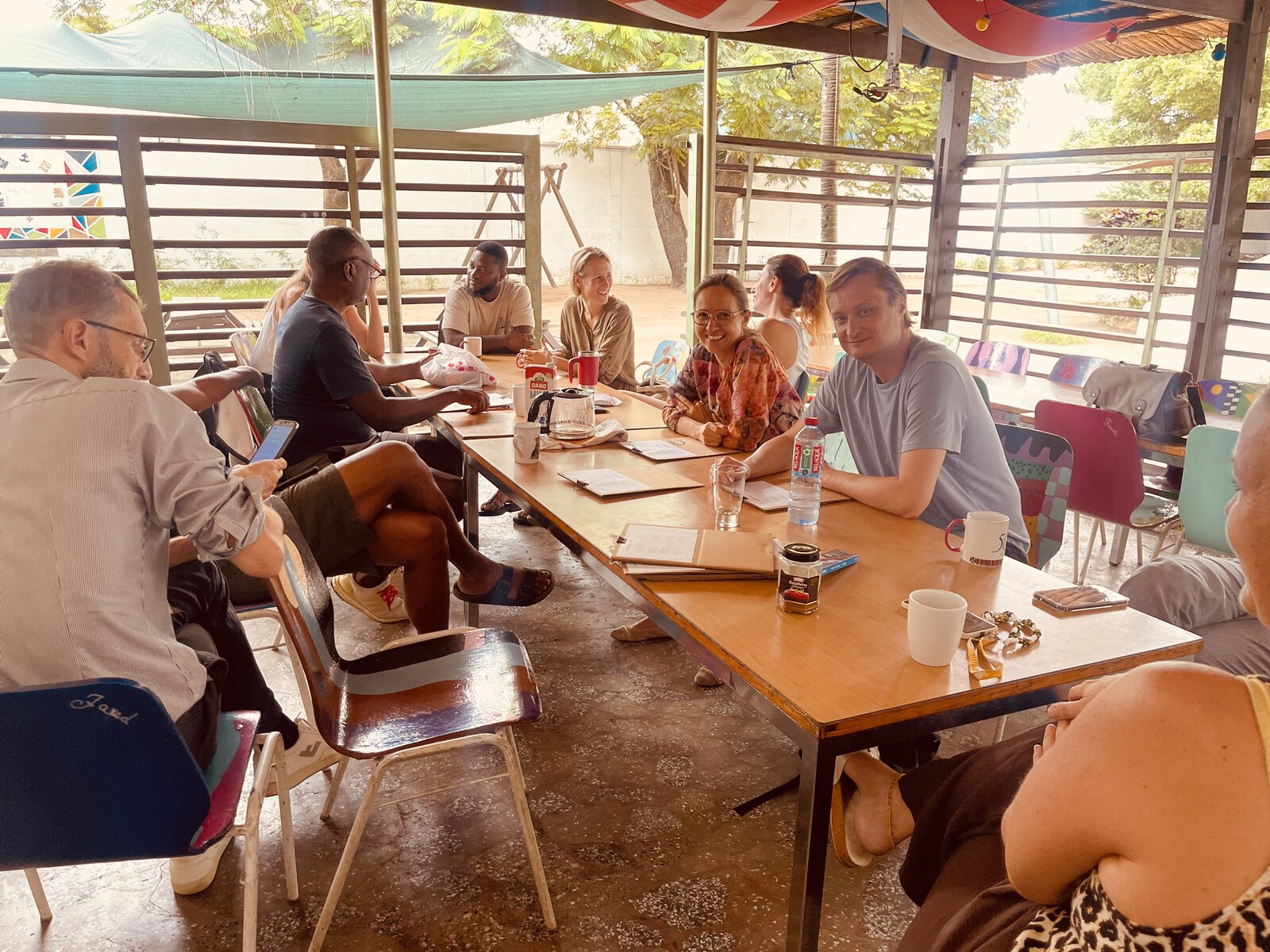 At our DaF Café, parents gained insights into foreign-language acquisition and practical ideas for supporting their children in learning German – even if they do not speak German themselves. German expressions and idioms from different mother tongues provided plenty of material for a lively intercultural exchange.
➡️ Learn more: DaF Café – Learning German Together
Our New Swap Shelf
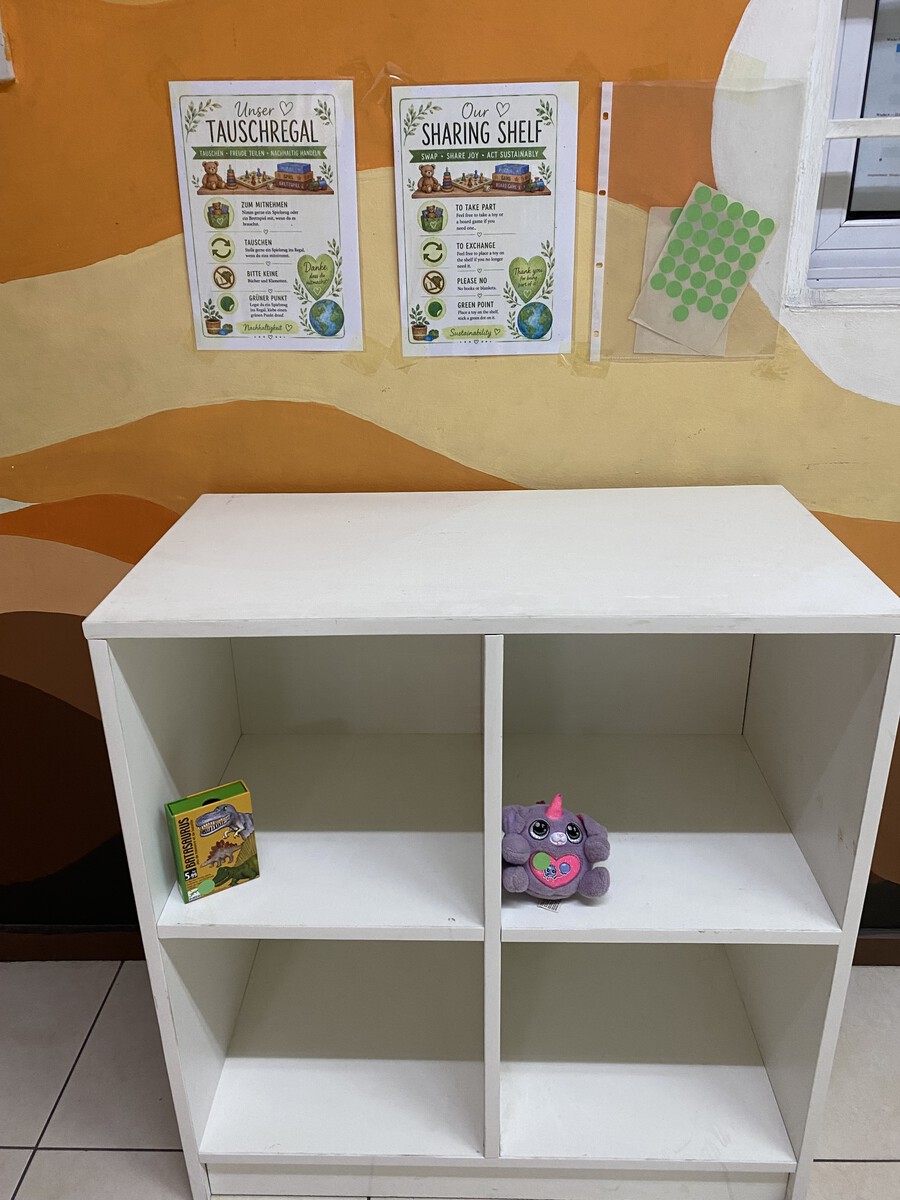
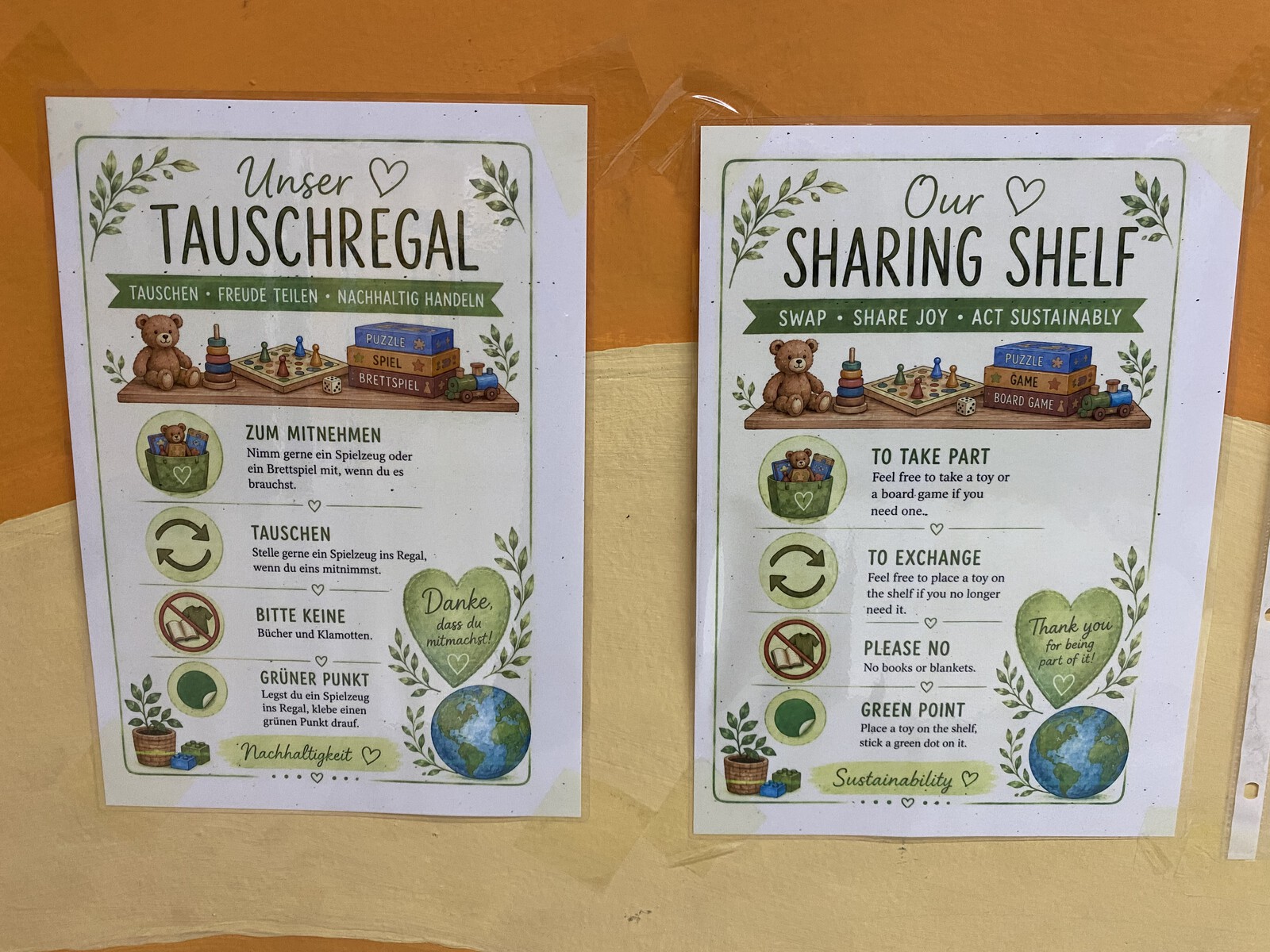 There is now a swap shelf outside Sara’s office! Toys, board games, books and other nice items that are no longer needed at home can be given a second chance here. Anyone who brings something can exchange it for another item from the shelf – following the simple idea: out with the old, in with something new!
The shelf is still a little empty, so we would be delighted to see it fill up with items that can find a new home while making a small contribution to sustainability.
On the Road to the GIB – Perspectives up to Grade 12
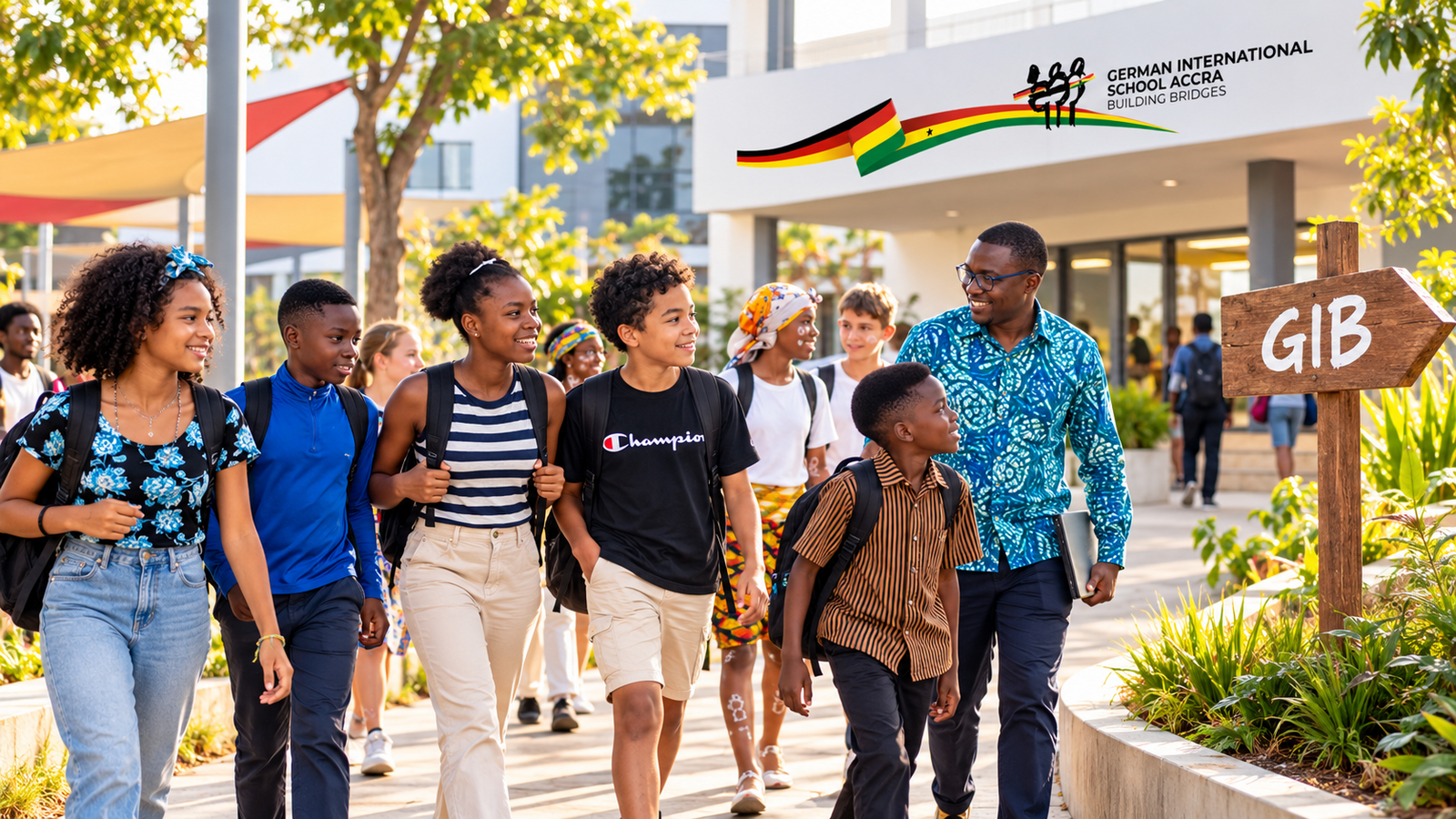 GISA is continuing to develop its Secondary School step by step. An important long-term goal is the bilingual International Baccalaureate, or GIB, creating a continuous educational pathway through Grade 12. The plan is to open Grade 11 in the 2028/29 school year. Until then, subject provision, language support, staffing and educational structures will be developed step by step.
➡️ Learn more: On the Road to the GIB – GISA Develops Perspectives up to Grade 12
ESP Next Content Creator – The Final Round Is Underway
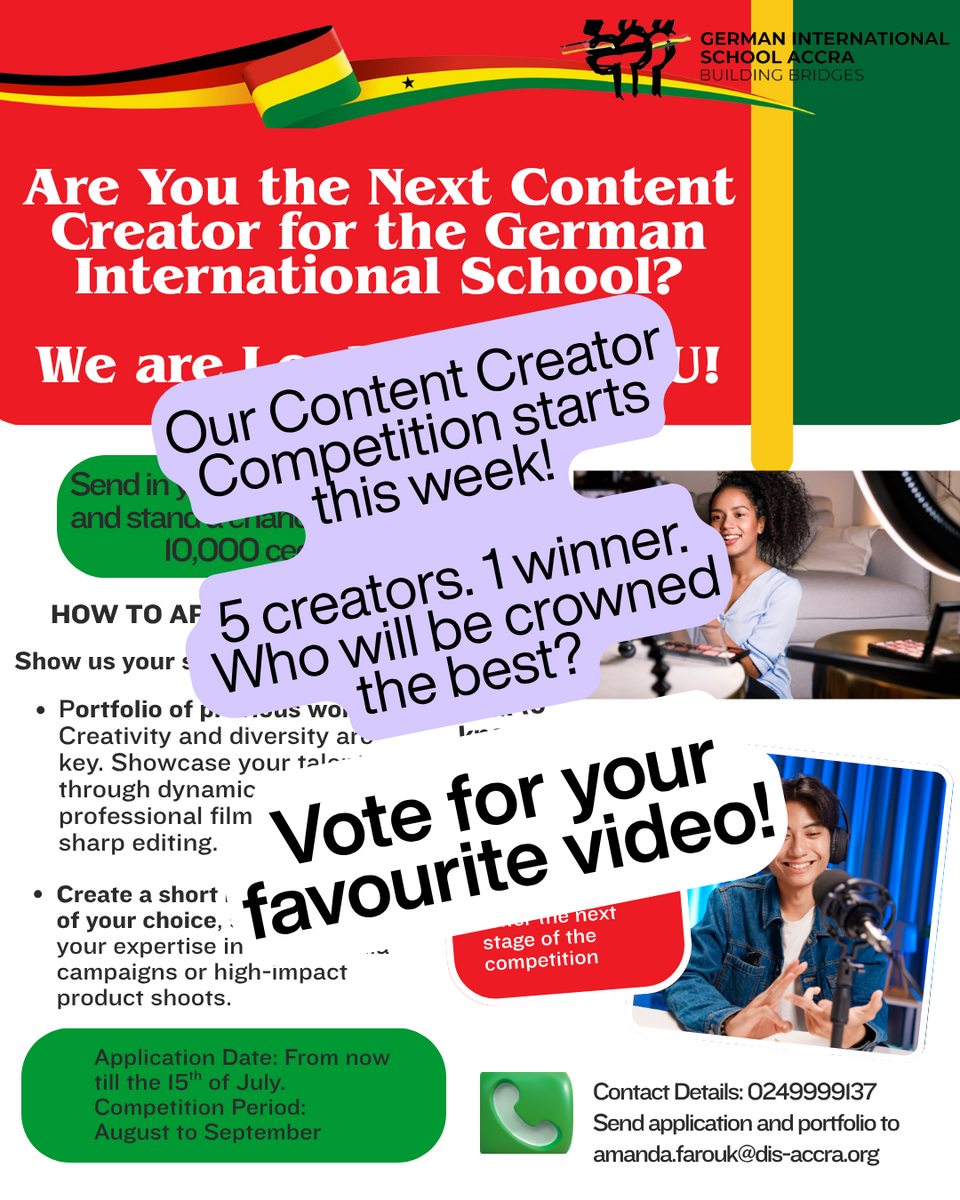 The five finalists have been selected and are competing for the title of “ESP Next Content Creator” and prize money of GHS 10,000. The current campaign can be followed on Instagram, with new creative contributions being presented throughout the week.
➡️ Learn more: ESP Next Content Creator – Meet the Five Finalists
Volunteers Wanted – Supporting Our Partner UWSA
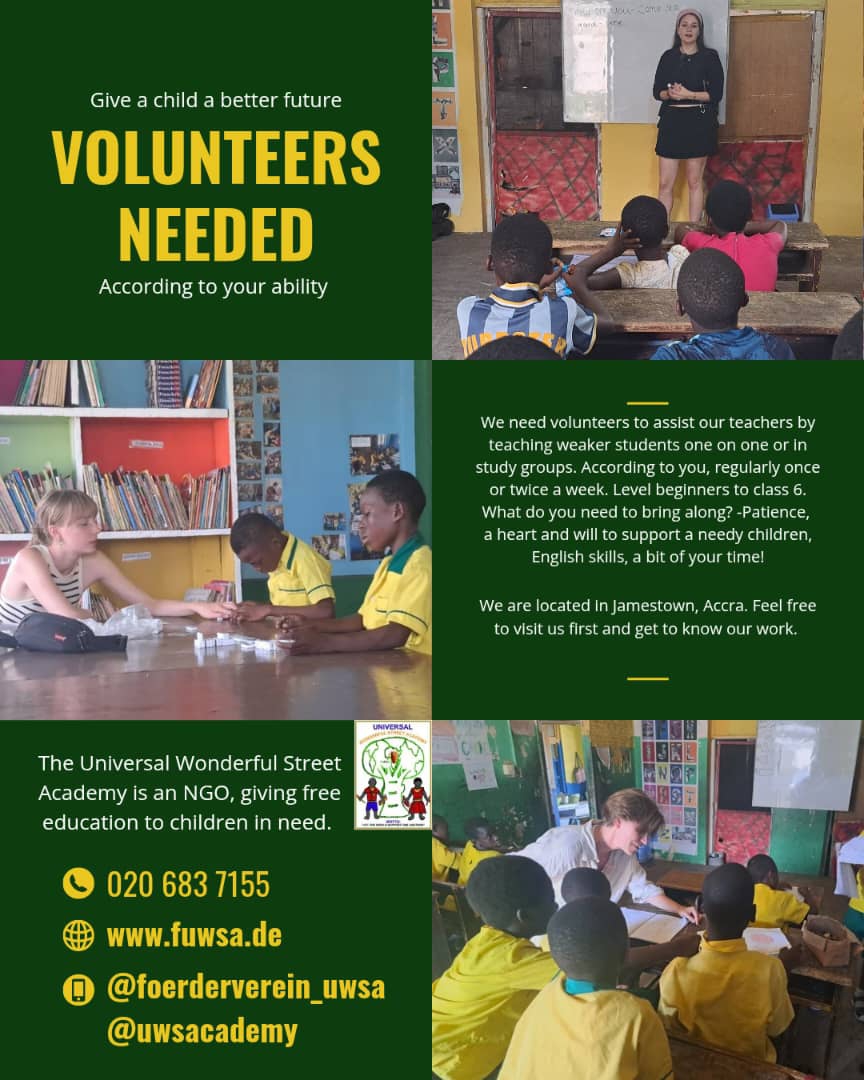 Our partner, Universal Wonderful Street Academy in Jamestown, is looking for volunteers to support children with their learning once or twice a week. Further information and contact details can be found on the flyer.
MTN Heroes of Change – Support GISA!
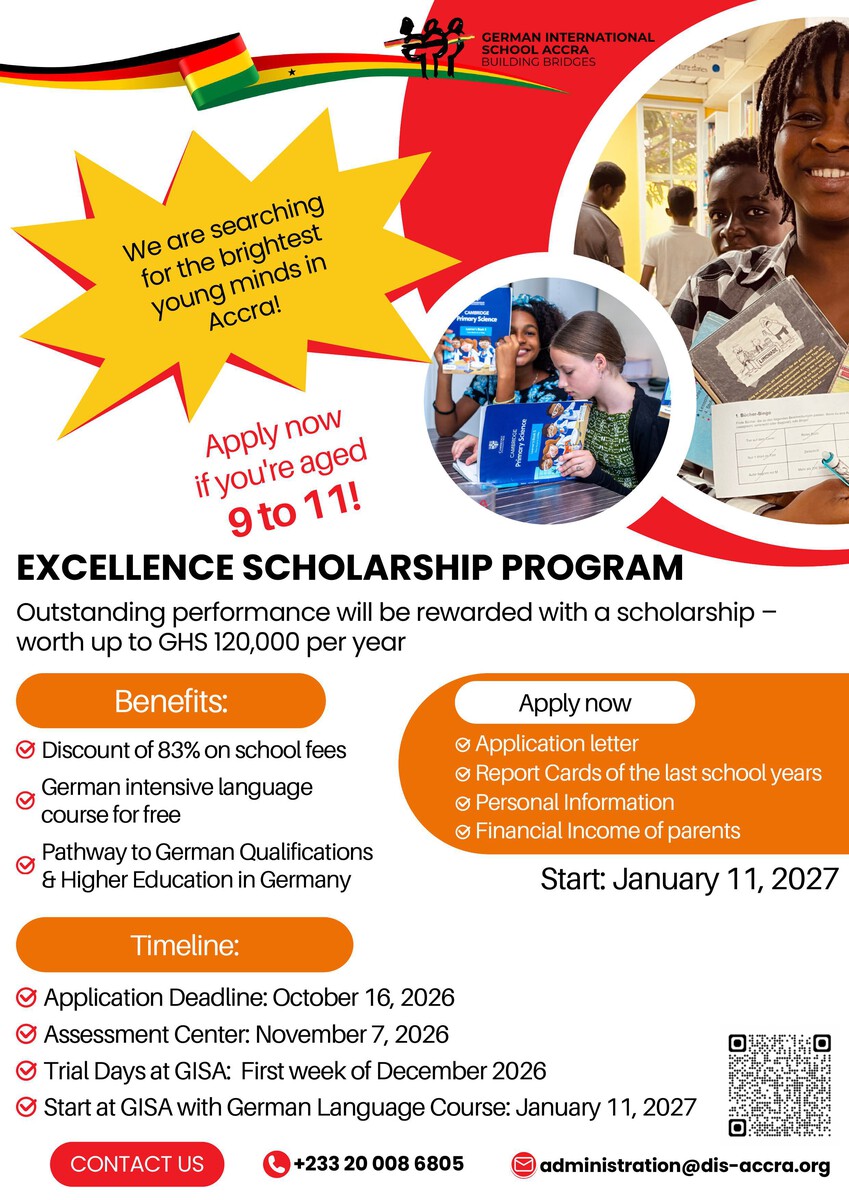
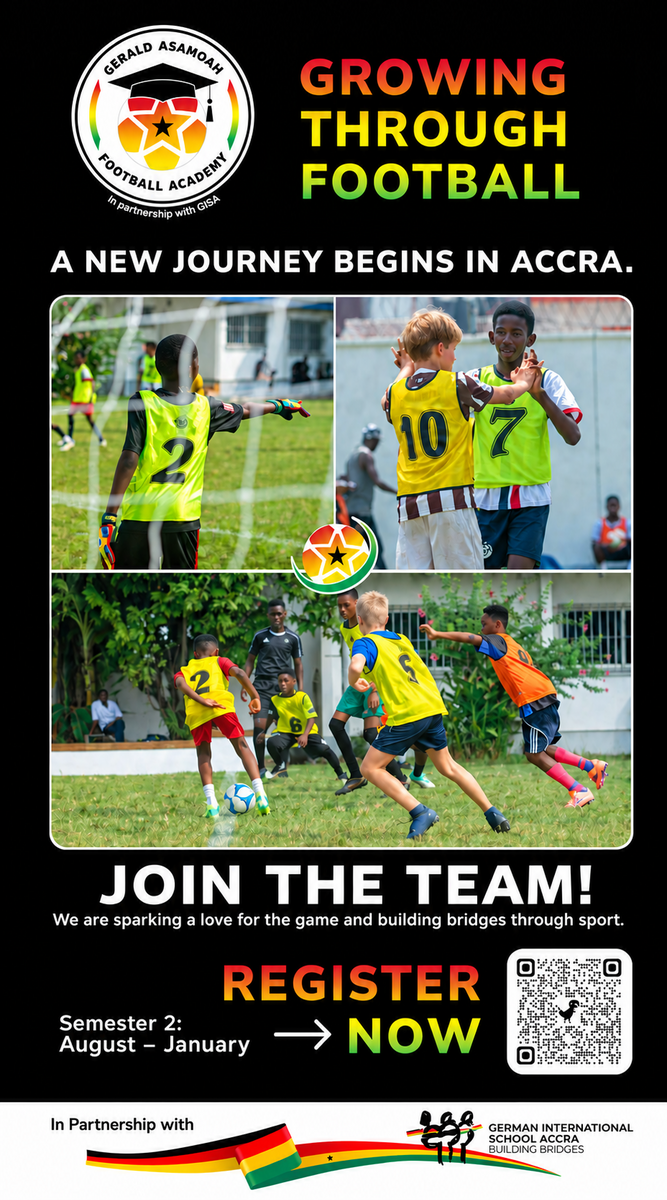
Parents and friends of GISA can nominate our school for the “MTN Heroes of Change” recognition until 5 October. Our Excellence Scholarship Programme, our cooperation with the Gerald Asamoah Foundation and our partnership with CHANCE FOR CHILDREN are among the initiatives through which GISA seeks to create educational opportunities and take social responsibility.
➡️ Nominate GISA for MTN Heroes of Change
From Nursery and Kindergarten
Nursery – My Body, My Health
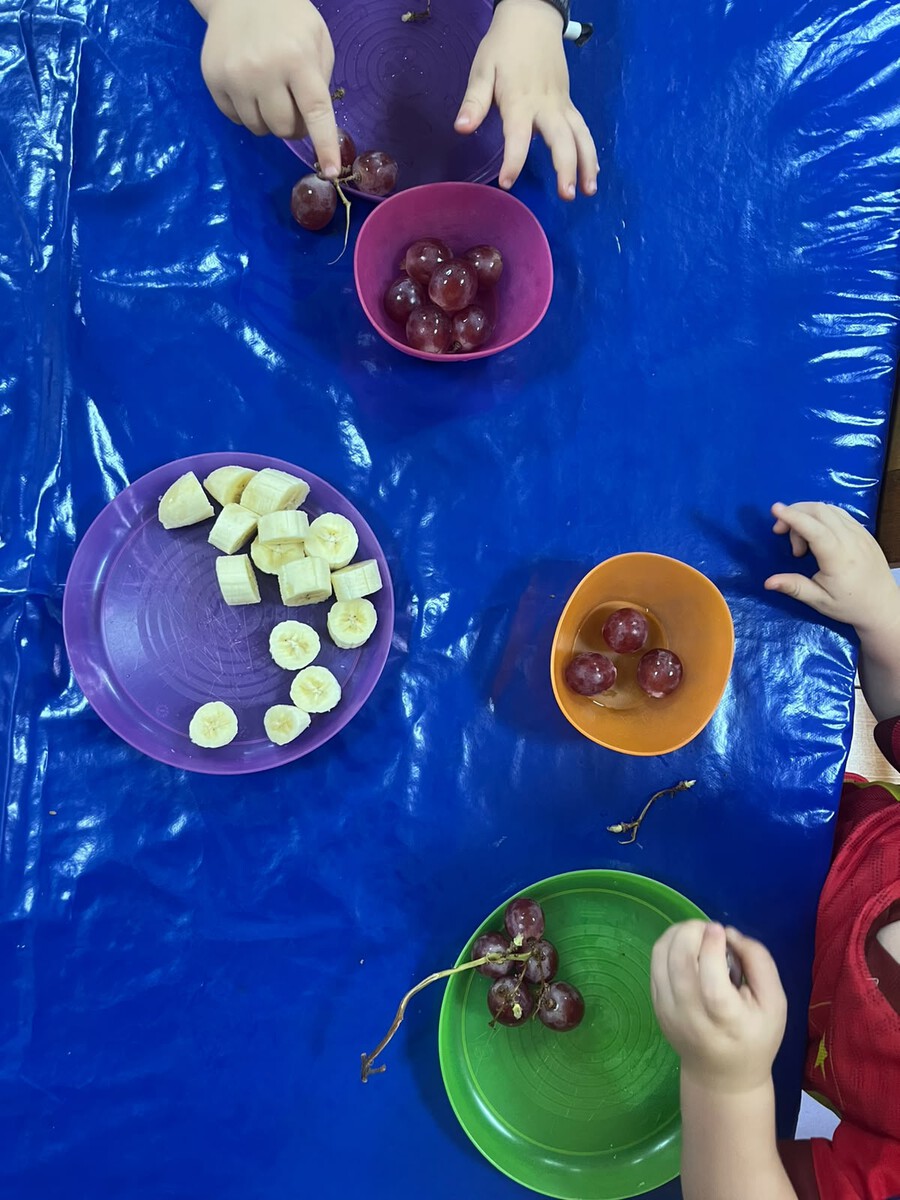
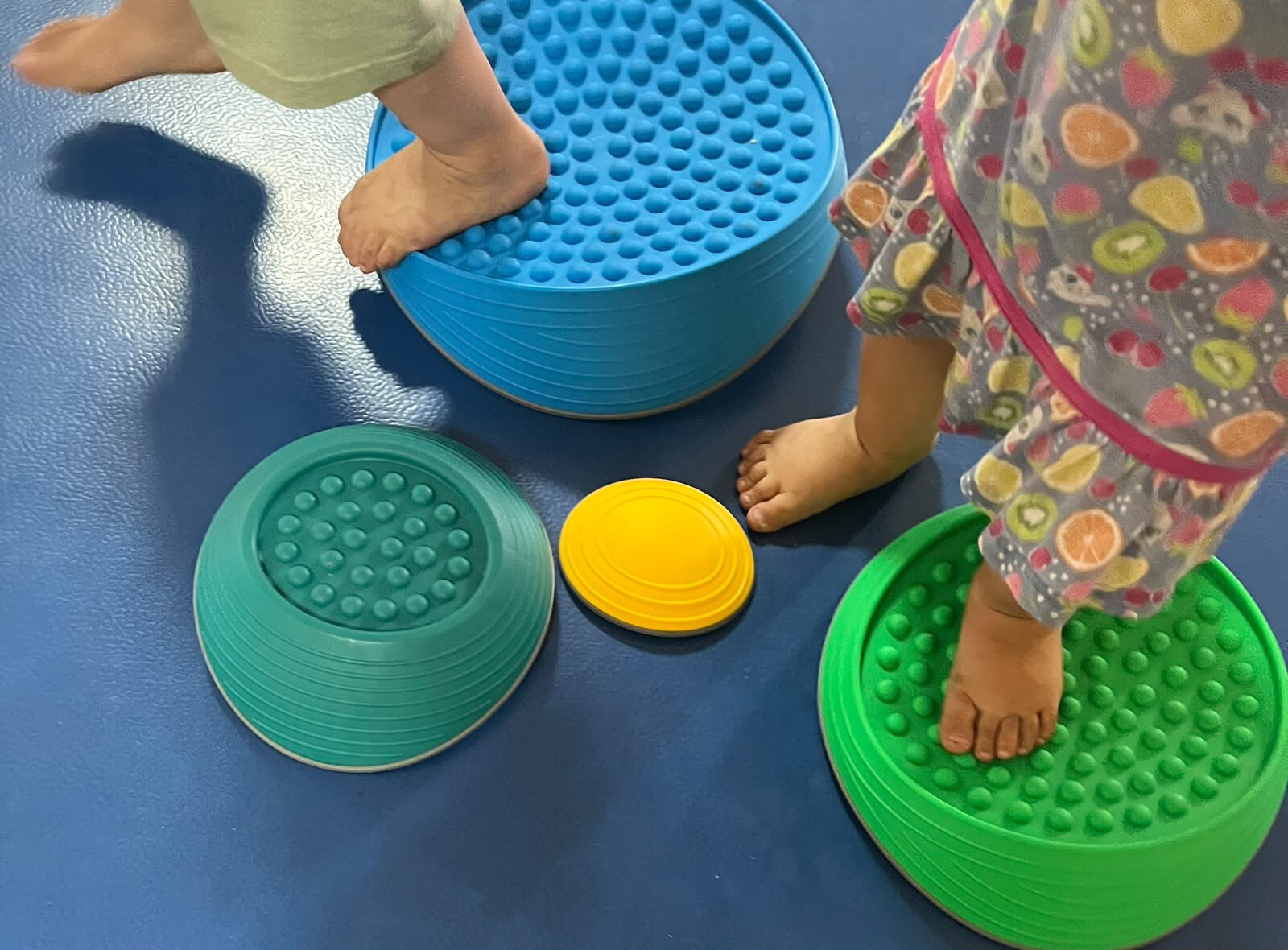 Over the past two weeks, our Nursery children have been exploring the topic “My Body, My Health”. Through playful activities, they learned about healthy eating, movement, dental care and their own bodies.
Together, the children discovered and prepared different kinds of fruit and vegetables. An obstacle course and balancing stones supported their motor skills, coordination and balance. Baby yoga focused on relaxation, body awareness and calm.
Brushing teeth was also explored through practical activities, helping the children understand in a playful way why dental care is important for their health.
In this way, the children gained a wide range of experiences related to their bodies, health and well-being.
Kindergarten – A Look Back at the Past Two Weeks
The past two weeks have once again been full of small discoveries, new experiences and shared moments. Alongside our regular activities, the children enjoyed special opportunities to learn through play, experimentation and their own experiences.
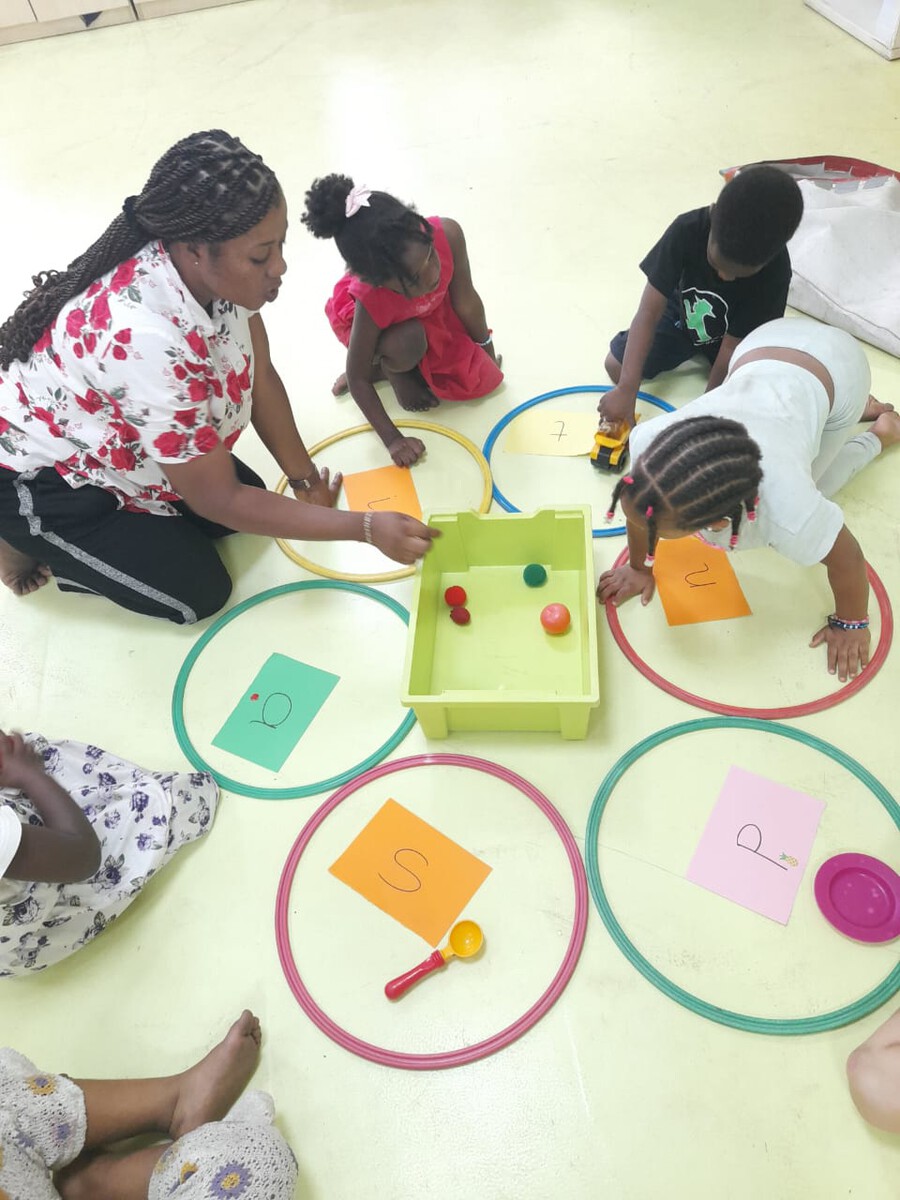
Last week, our Science activities focused on light and shadow. The children then went on their own journey of discovery in a darkened room, observing and experimenting with how light and shadows are created. In our Book Club, a monster book generated plenty of interest and excitement.
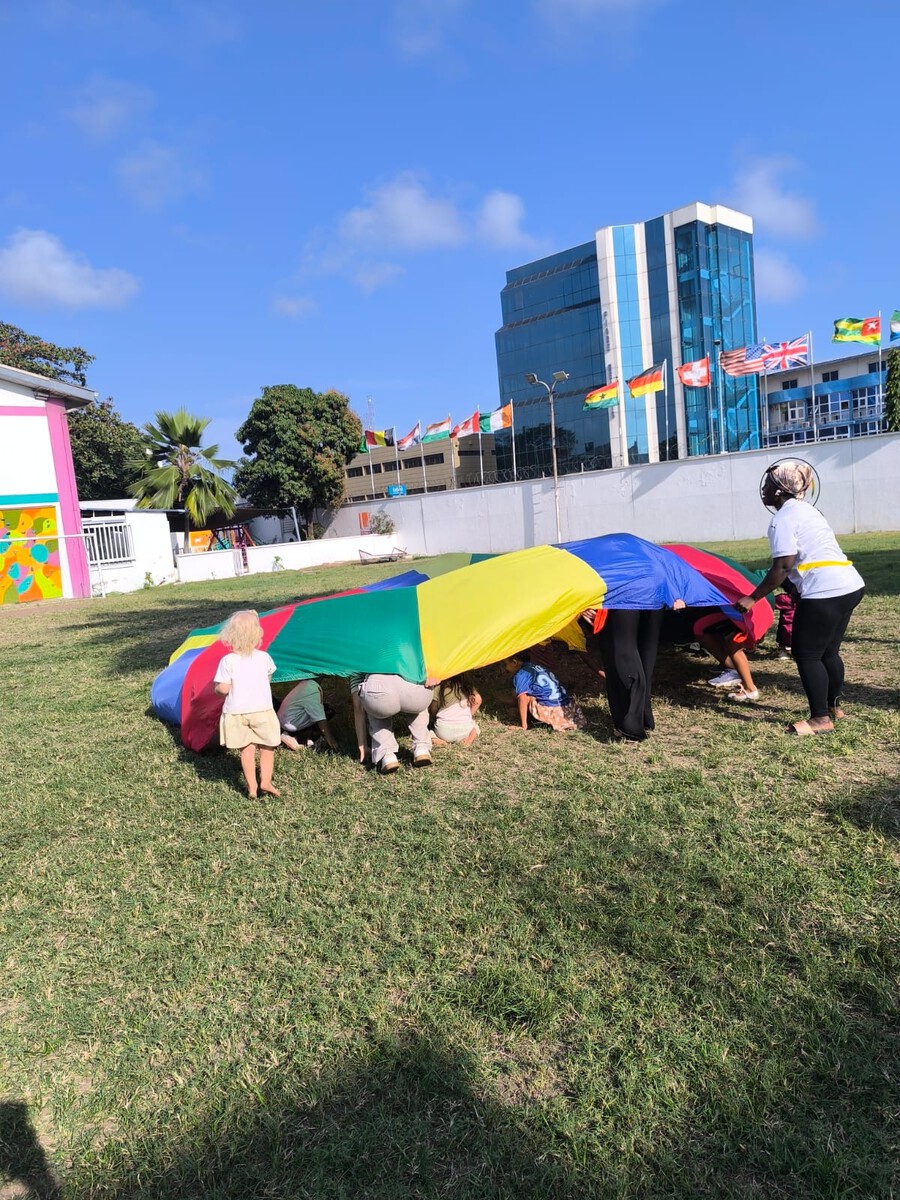
Another highlight was our parent-child movement activity, “Journey Around the World”, using a parachute on the GISA football field. The focus was not only on the joy of movement but also on shared experiences, cooperation and strengthening the connection between children and parents.
This week, we continued exploring light and shadow. The children experimented with creating animal and hand shadows using flour on black paper, creatively developing what they had observed during their Science activities.
We also cooked delicious Koose together. Fruit and vegetables took centre stage as different varieties were explored, compared and identified in a small guessing game. Our new “Fruits & Veggies Day” celebrated its premiere and is another element of our gradual concept development.
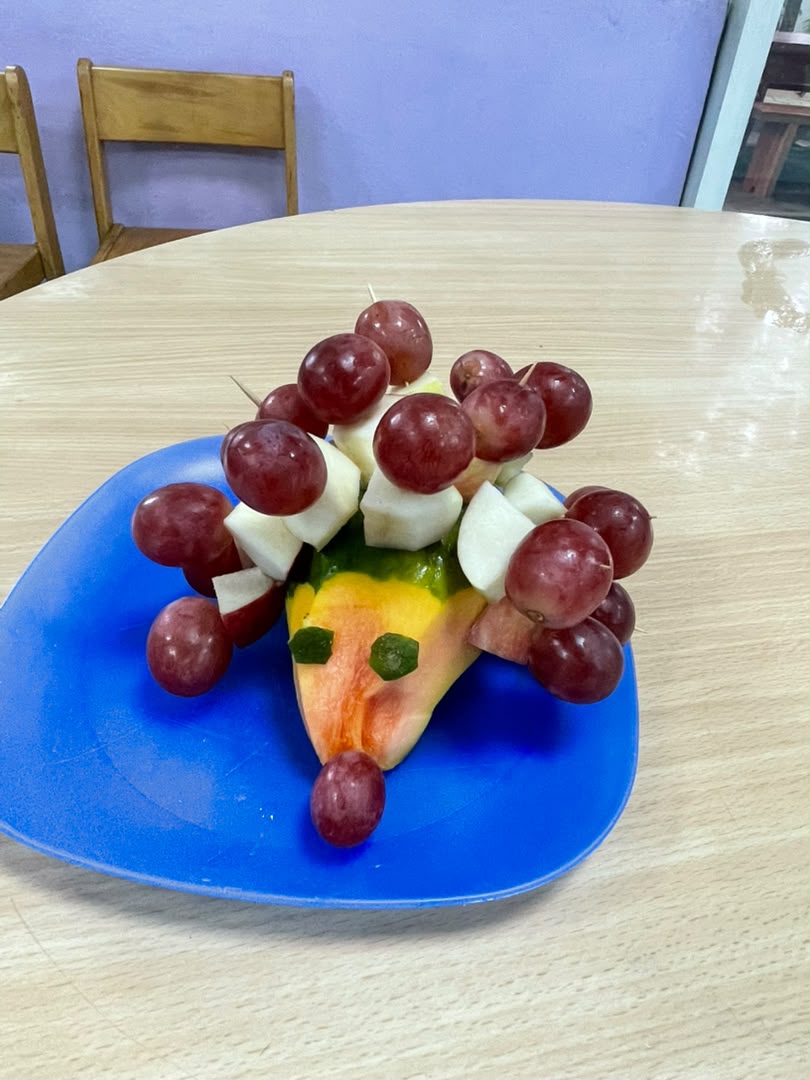
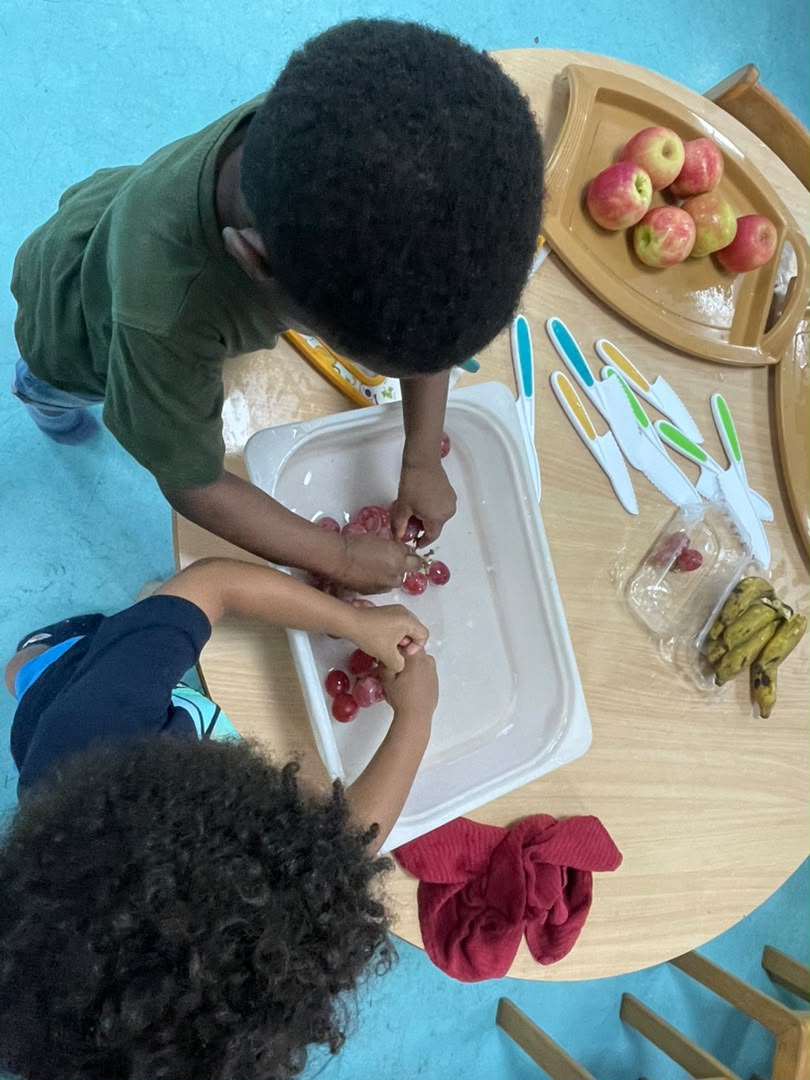
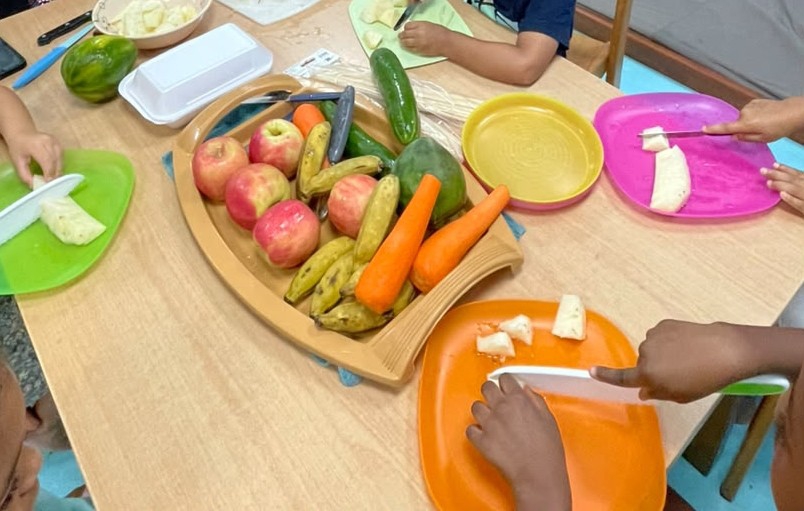
The “Fruits & Veggies Day” is part of a series of special themed days and activities that take place on alternating Fridays. These include Reading Day, Sports Day, Water Day – once the weather allows – and Bring & Tell. As another part of our concept development, our Junior Parliament will also meet for the first time in the coming weeks. This will give the children an opportunity to contribute their own ideas, take responsibility and actively participate in shaping everyday life in our Kindergarten.
The week was rounded off with singing, finger games and plenty of time in the garden, where the beautiful weather provided opportunities to play, move and explore.
Moving Together – A Journey Around the World
During our Kindergarten parent-child movement activity, the GISA football field became a departure point for a journey around the world. With the parachute, children and parents travelled together from Germany to Greenland, South America, Mexico and France. Movement, coordination and agility were just as important as enjoying valuable time together.
➡️ Learn more: Moving Together – A Journey Around the World
From Primary School
Grade 1/2
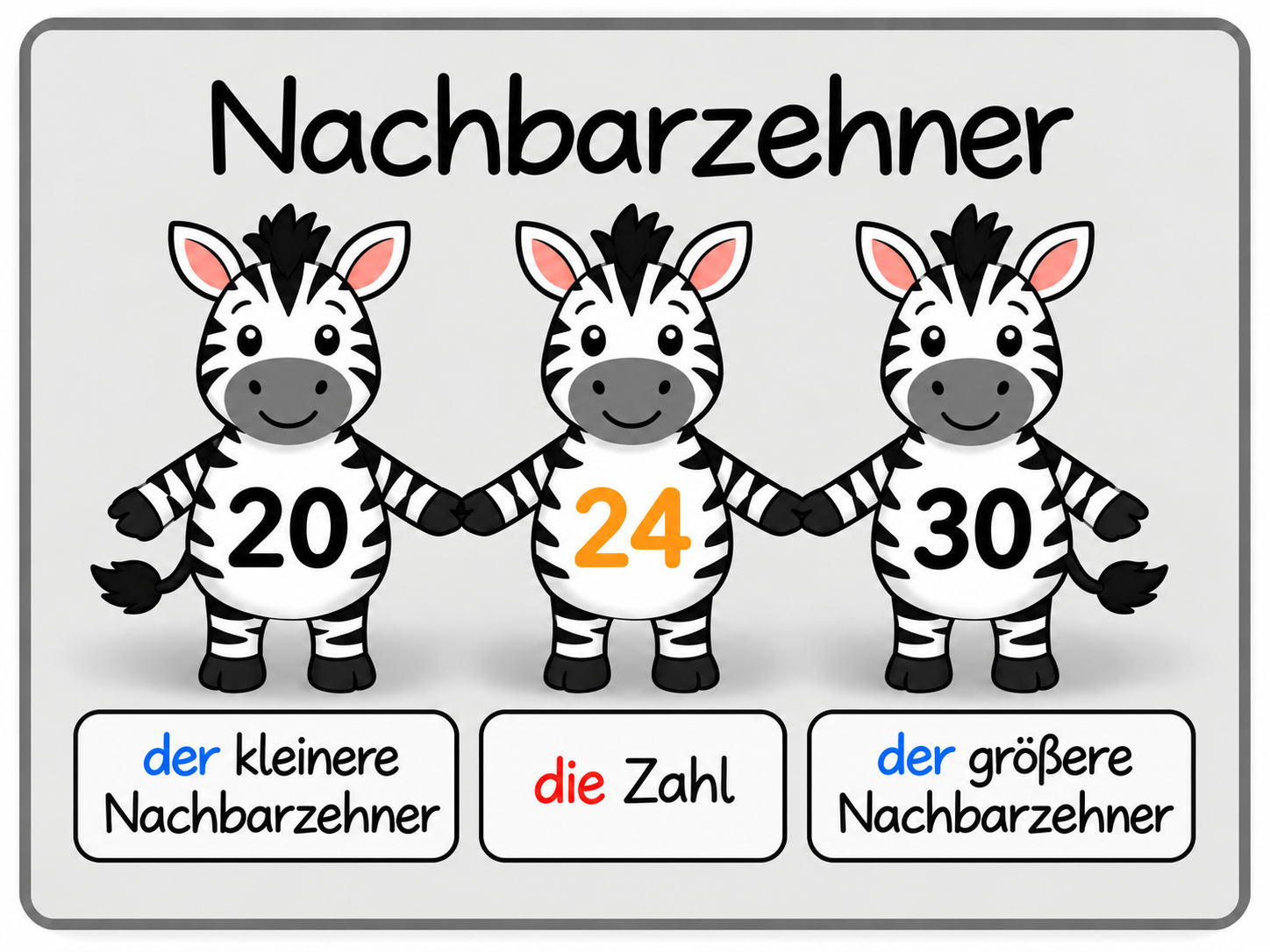
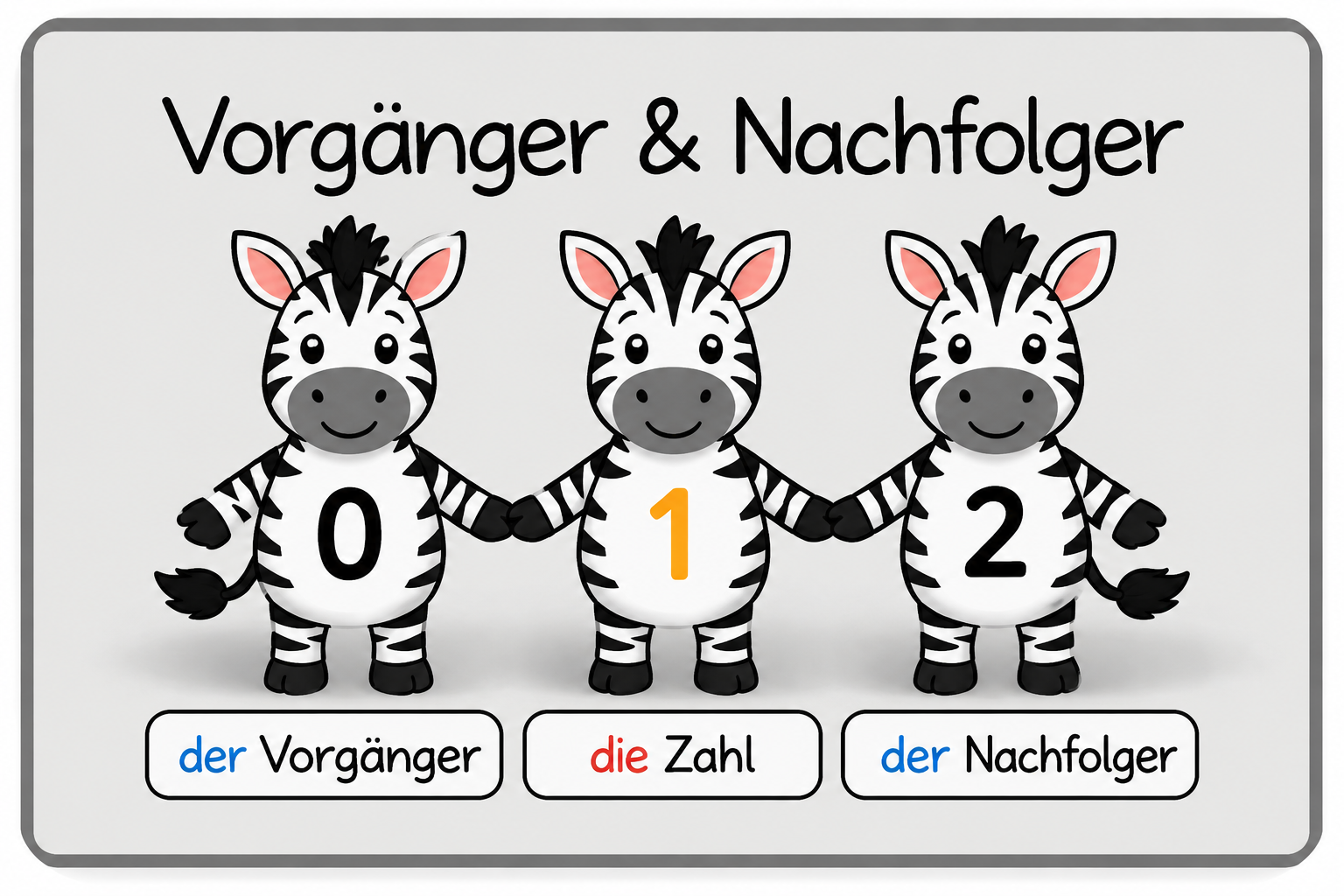
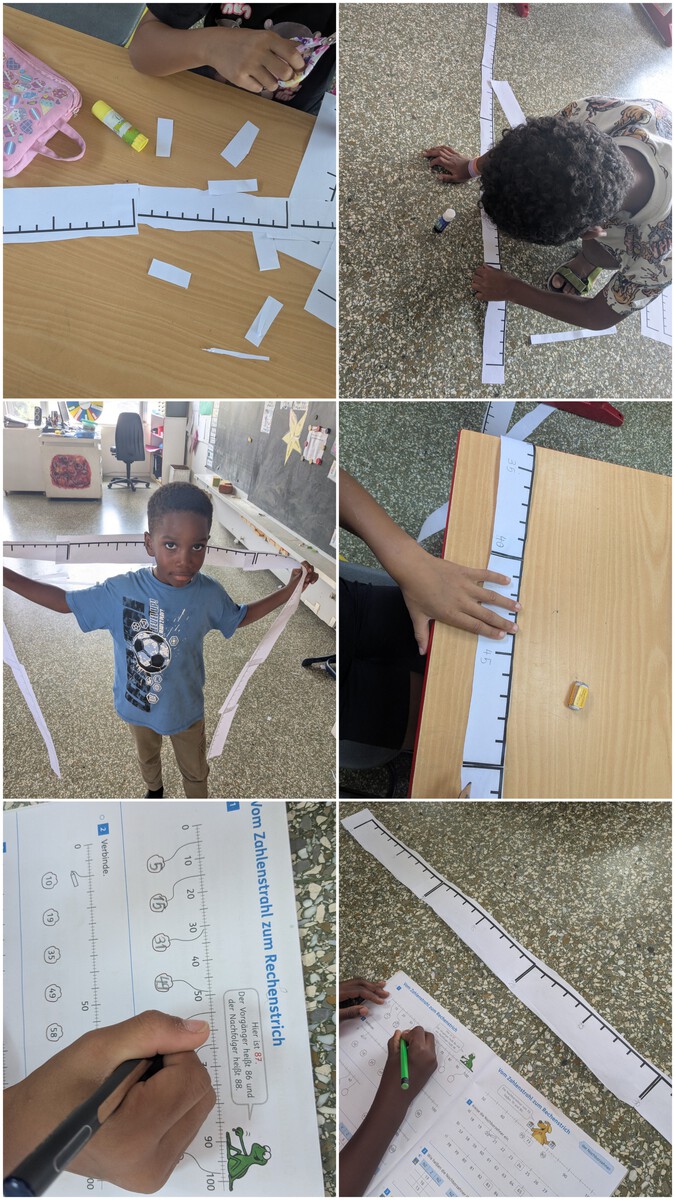
In Mathematics, Grade 1 has been working hard on writing numbers and has now reached 10. The children also playfully revised the concepts of “right” and “left”. Grade 2 is currently working with the number line up to 100. To make this more visual, the children created their own number lines and reinforced the concepts of predecessor, successor and neighbouring tens.
There has also been excellent progress in German. The Grade 1 students have already completed their first workbook. They are now familiar with the letters M, L, O, I, S, A and T, allowing them to read and write an increasing number of syllables and first words.
Grade 2 practised organising information clearly in lists, including lists of children wearing glasses, boys and girls, and even wish lists.
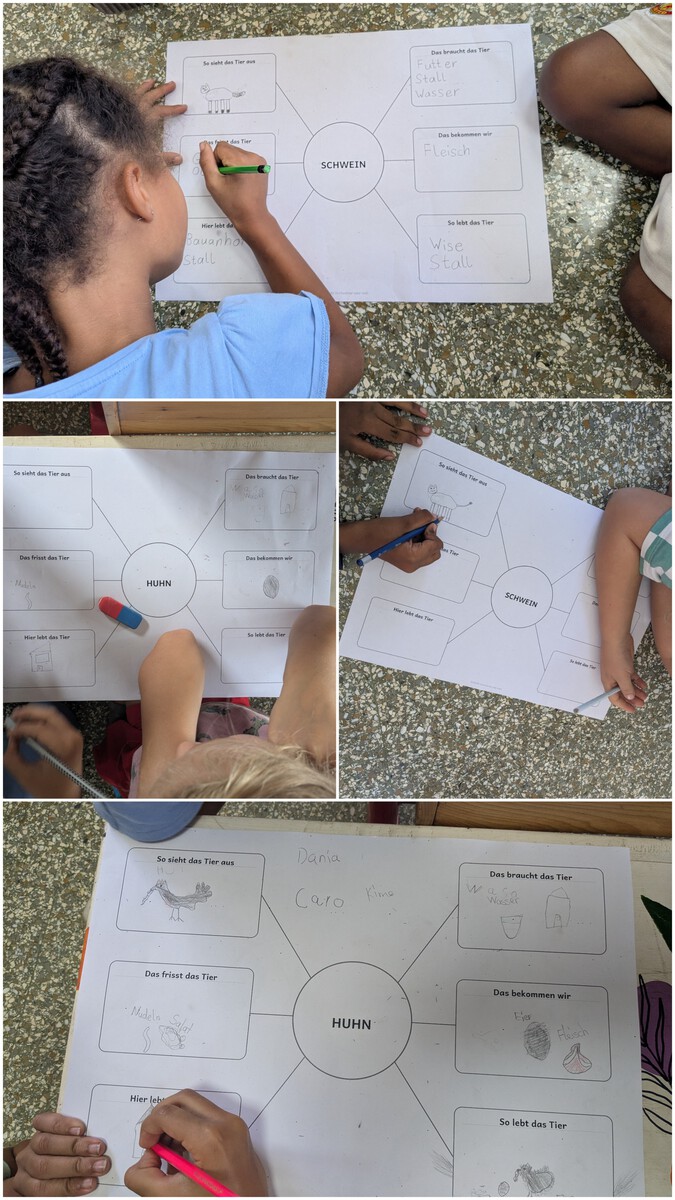
In General Studies, we explored pets, farm animals and wild animals and discussed the differences between them. Information was also organised in a mind map, with a particular focus on different farm animals.
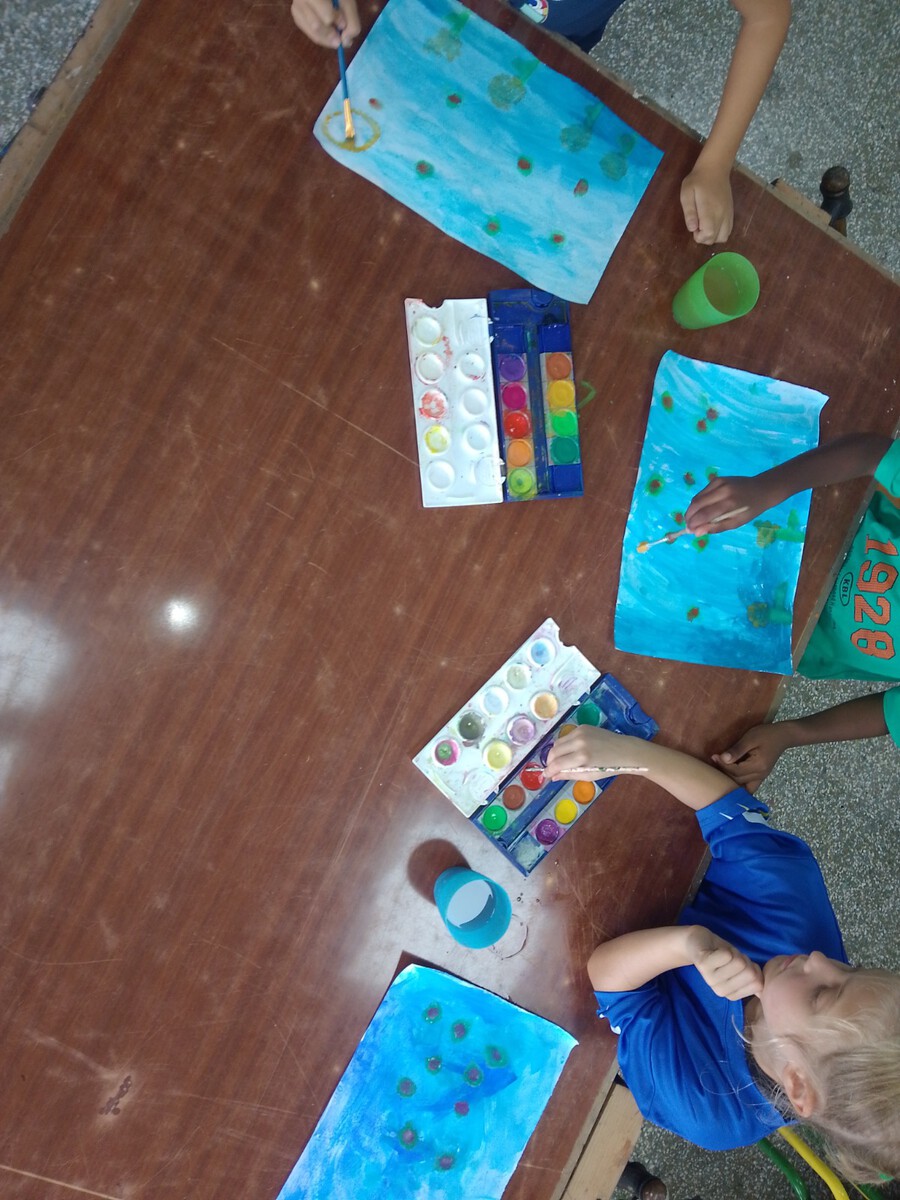
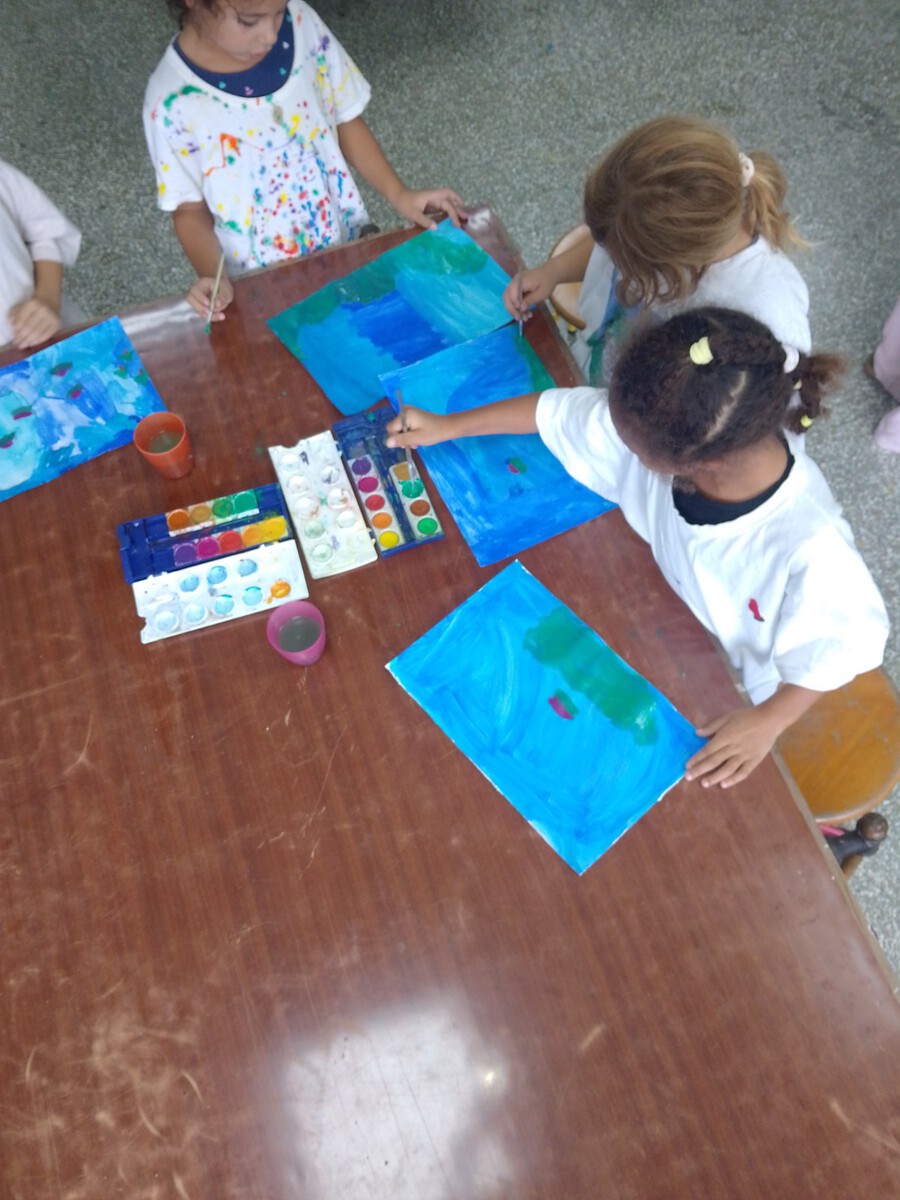
Over the past two weeks, Art has involved plenty of dabbing – quite literally: dab, dab, dab! Inspired by Claude Monet, the children discovered that water does not always have to be blue. Depending on the light, it can also appear green, pink or even purple. Little by little, their blue backgrounds were transformed into colourful ponds, complete with Monet’s famous water lilies.
There was also plenty of creativity in our “Strengthening Strengths” support programme. The children created paper figures and brought them to life using stop-motion technology. The result was an imaginative story about a snowman who plays football through the power of magic, drinks cocoa and finally welcomes spring.
➡️ Learn more: Stop Motion in “Strengthening Strengths” – When Paper Figures Come to Life
Grade 3
There has been a special kind of magic in the air in Grade 3 over the past few weeks. Our name aliens from Art have been on quite an adventure! After receiving their final coat of colour, they left their home and worked in groups to design new planets. The children discussed, planned and created colourful landscapes and special places. But then an important question arose: How would our aliens actually travel from one planet to another? Walking or cycling would be rather difficult in space!
So the children imagined, drew and constructed. From classic UFOs to super-fast rockets, a wide variety of spacecraft emerged. Our name aliens are now fully equipped to travel between their planets and discover new worlds.
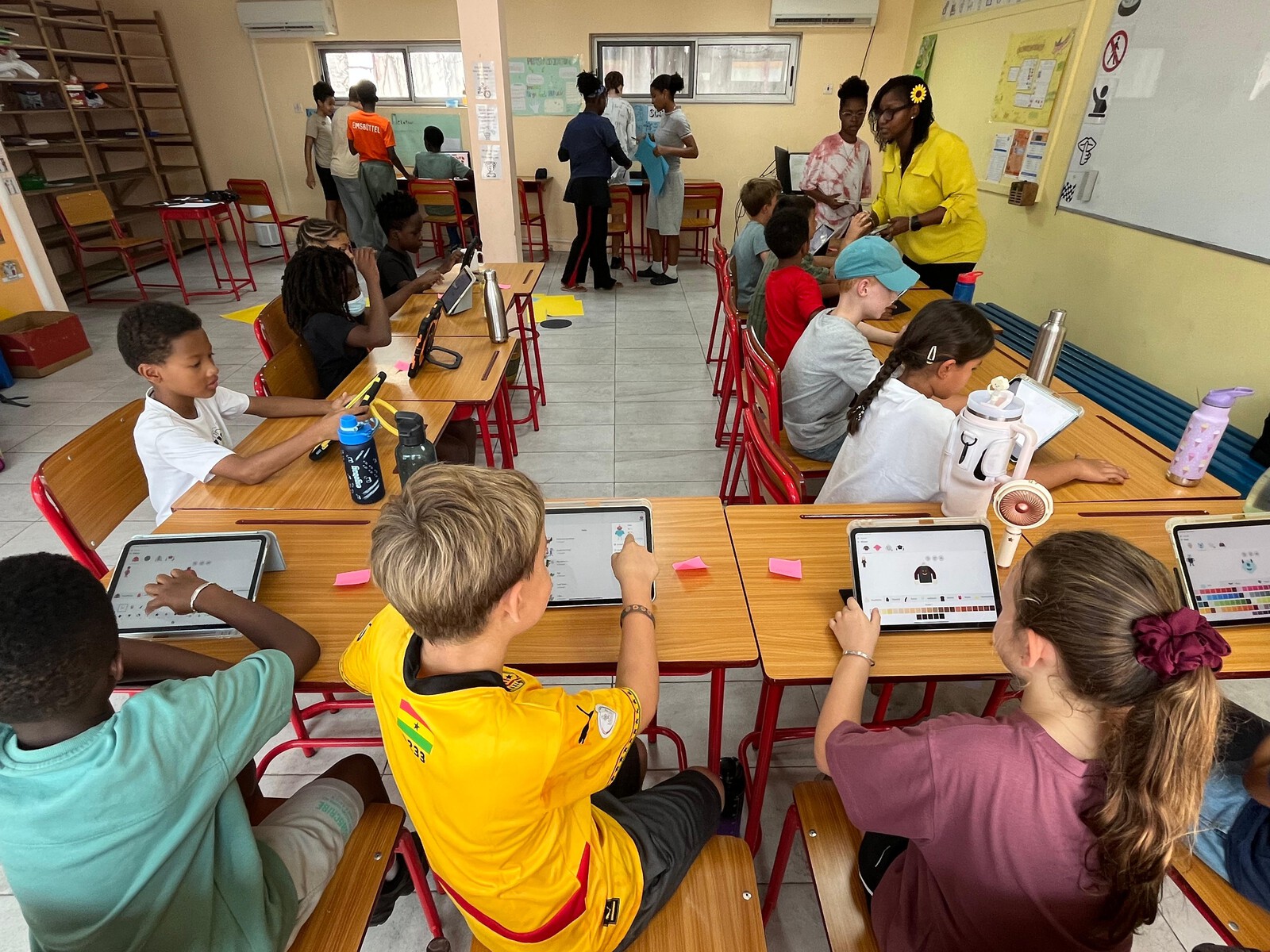
English also brought an exciting change: Grade 3 visited Grade 8 for a joint lesson. Together, the students worked with the ANTON app on greetings, farewells, names and ages. They learned new vocabulary, practised writing and listened carefully to correct pronunciation.
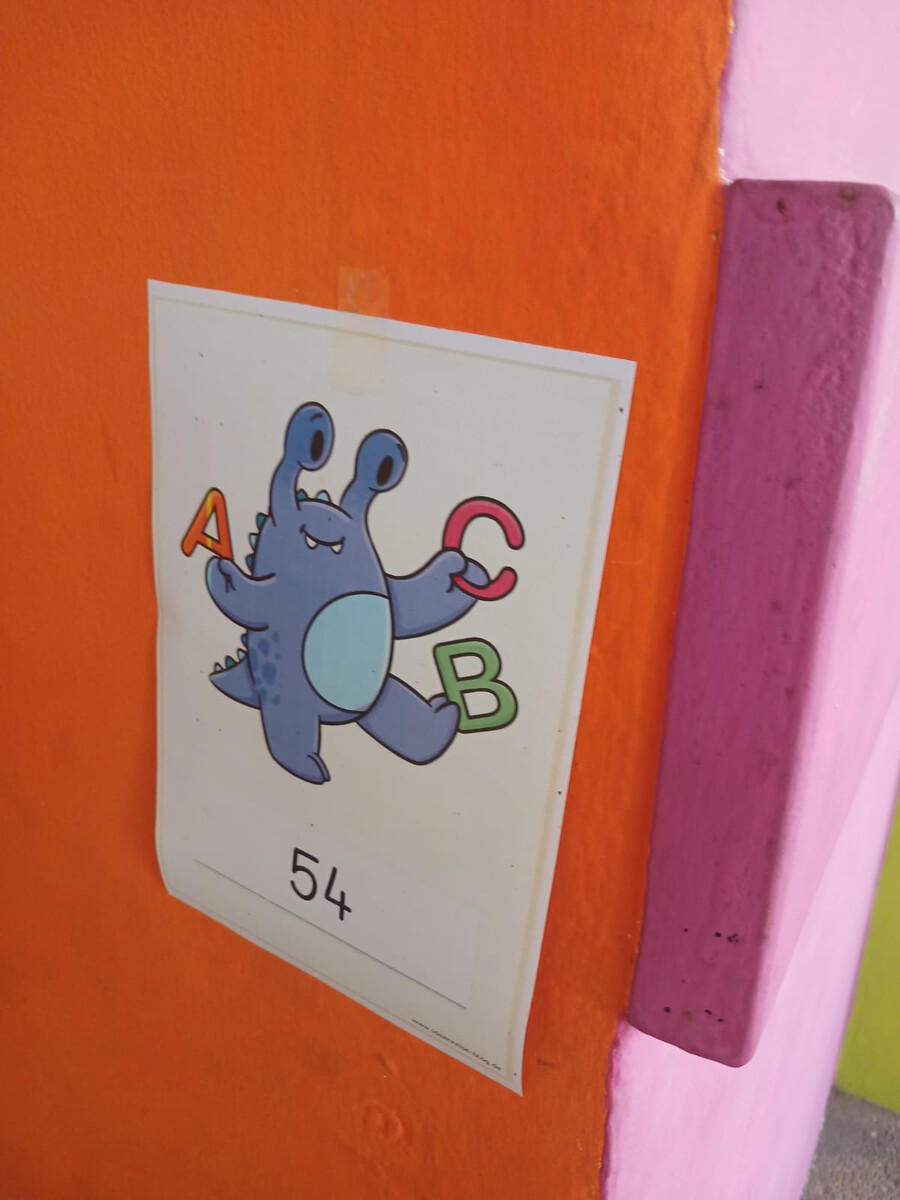
In Mathematics, the children continued working on their individual learning areas following an interim assessment, with some already tackling their first longer word problems. A particular highlight was our first Maths Walk, during which the children went searching for little “answer monsters” in and around the classroom.
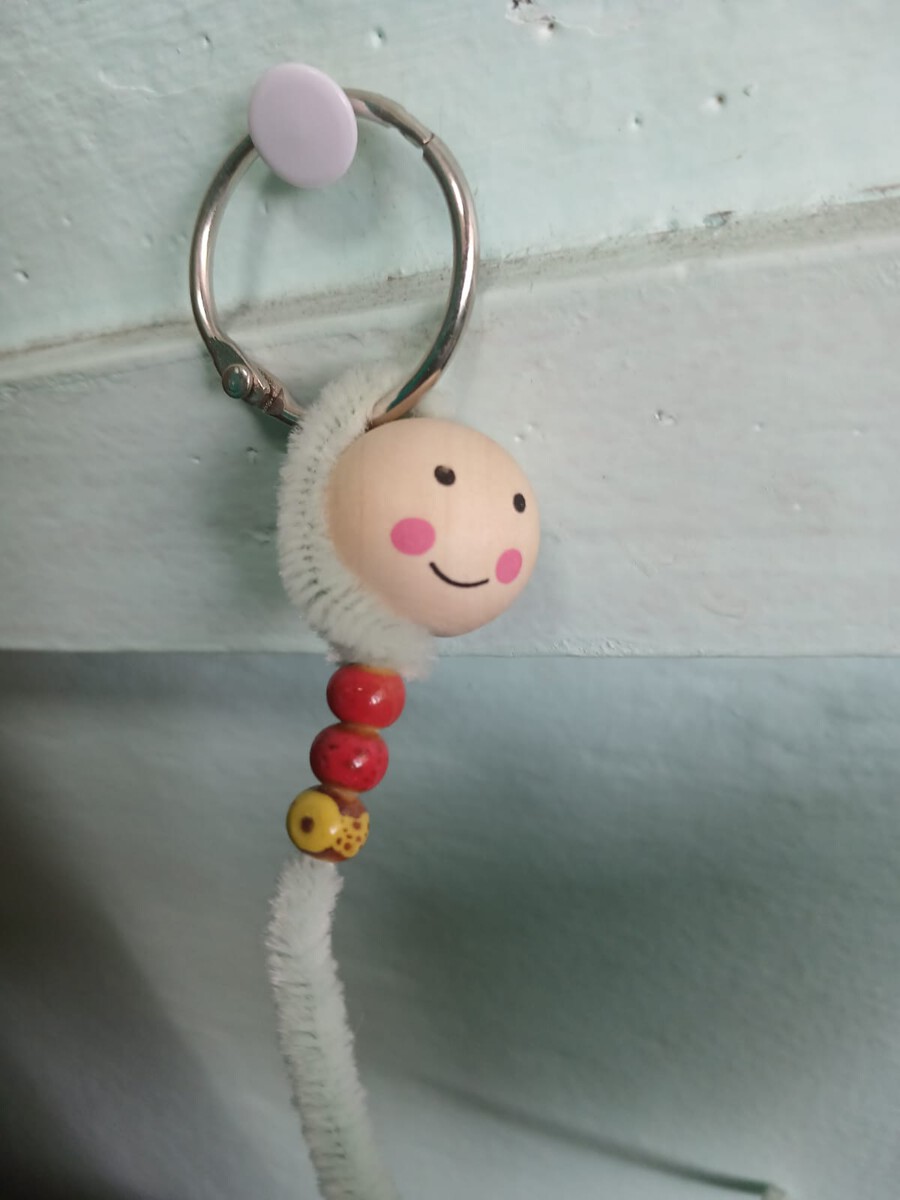
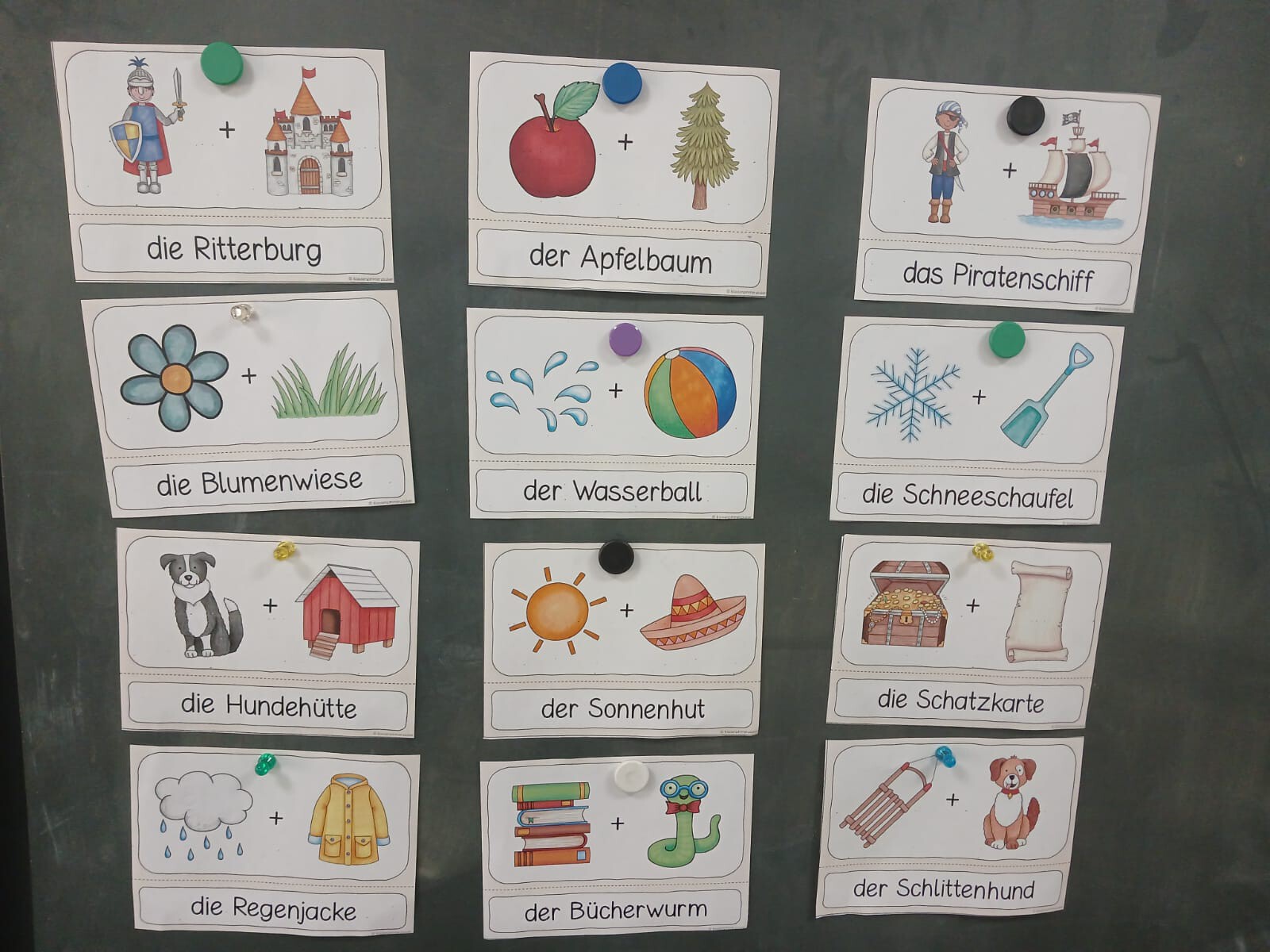
In German, the first reading caterpillar has already been fed – a wonderful achievement after completing an entire reading pass! The children also became language researchers, exploring compound nouns and quickly discovering that the final component determines the article.
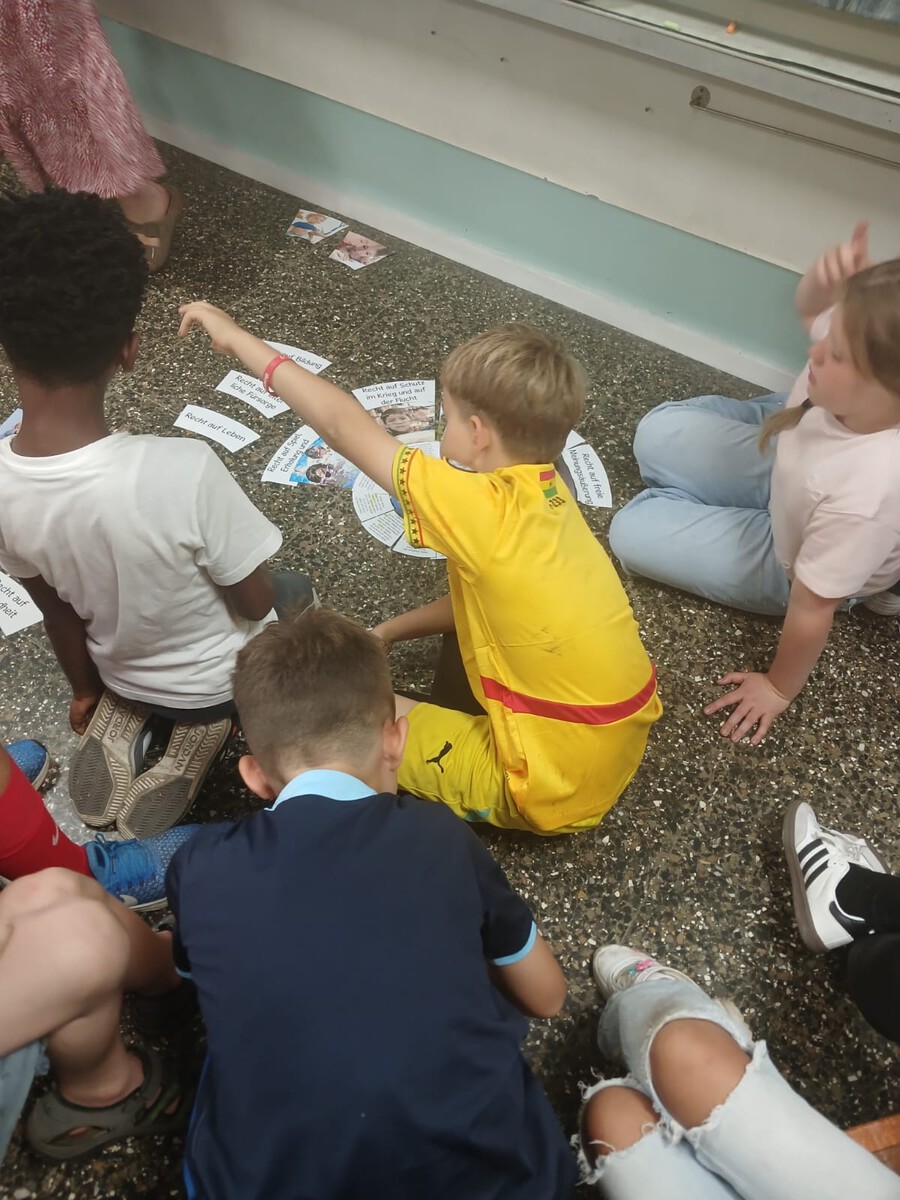
In General Studies, Grade 3 joined forces with Grade 4 to explore children’s rights. Using learning circles, reading texts, pictures and an interactive Kahoot quiz, the children deepened their understanding of the important rights they have.
In PE and swimming lessons, the focus was on developing the correct breaststroke technique.
Grade 4
Over the past two weeks, Grade 4 has worked intensively on solving word problems. The children learned and practised the LUFRAK strategy step by step: Read – Underline – Question – Calculate – Answer – Check. The final step is particularly important: checking whether the answer really matches the question.
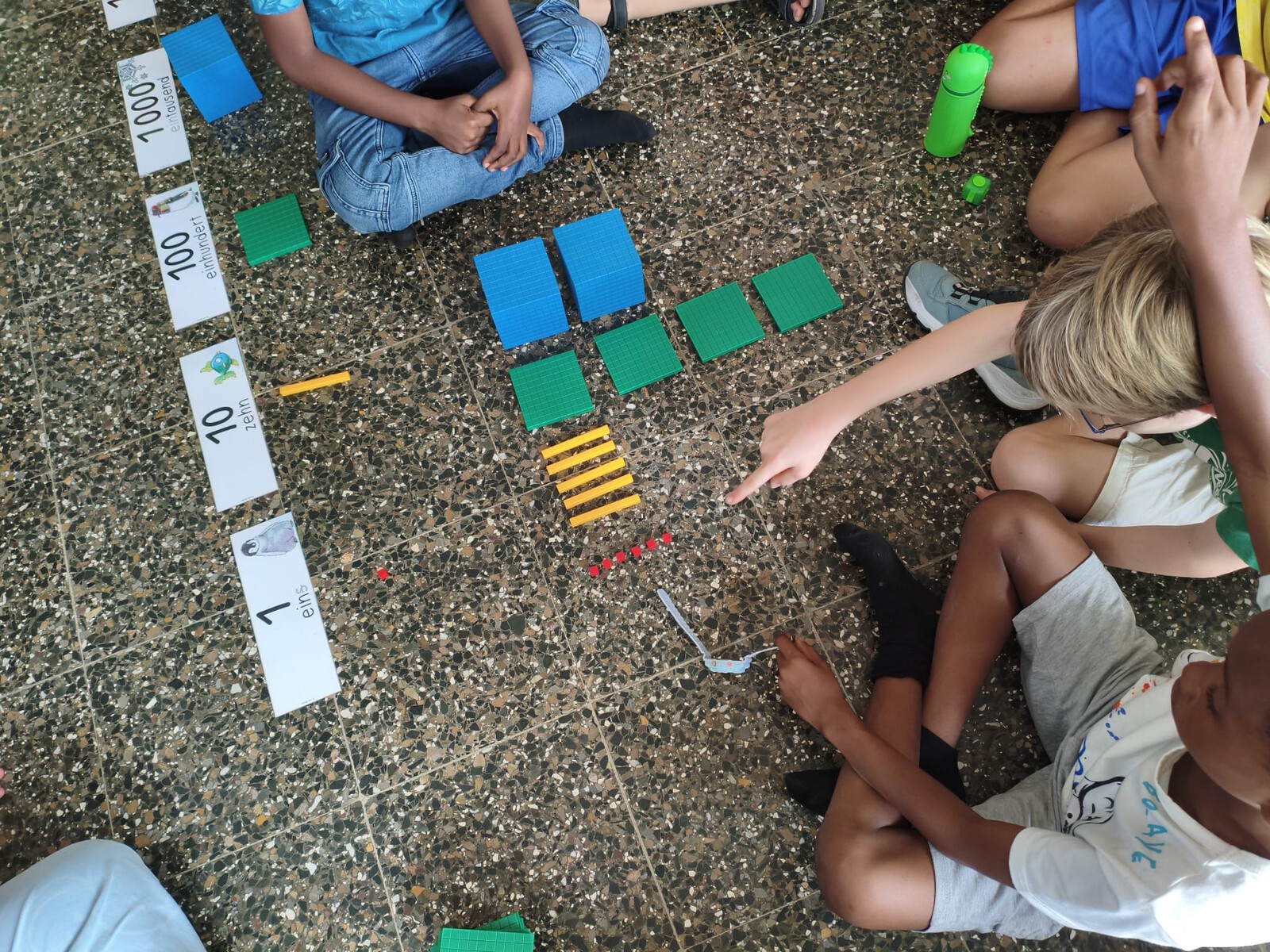
Together with Pipp the Penguin, we also embarked on an exciting mathematical journey: “How much is one million?” The children first collected their own ideas and estimates. This question will stay with us for some time. For now, we are gradually extending our number range to 10,000, using materials, grouping quantities and exploring larger numbers in practical and playful ways.
In German, the children expanded their reading strategies. They practised skimming a text before reading it in detail and, together with our intern Lena, learned what key words are and how to highlight them effectively.
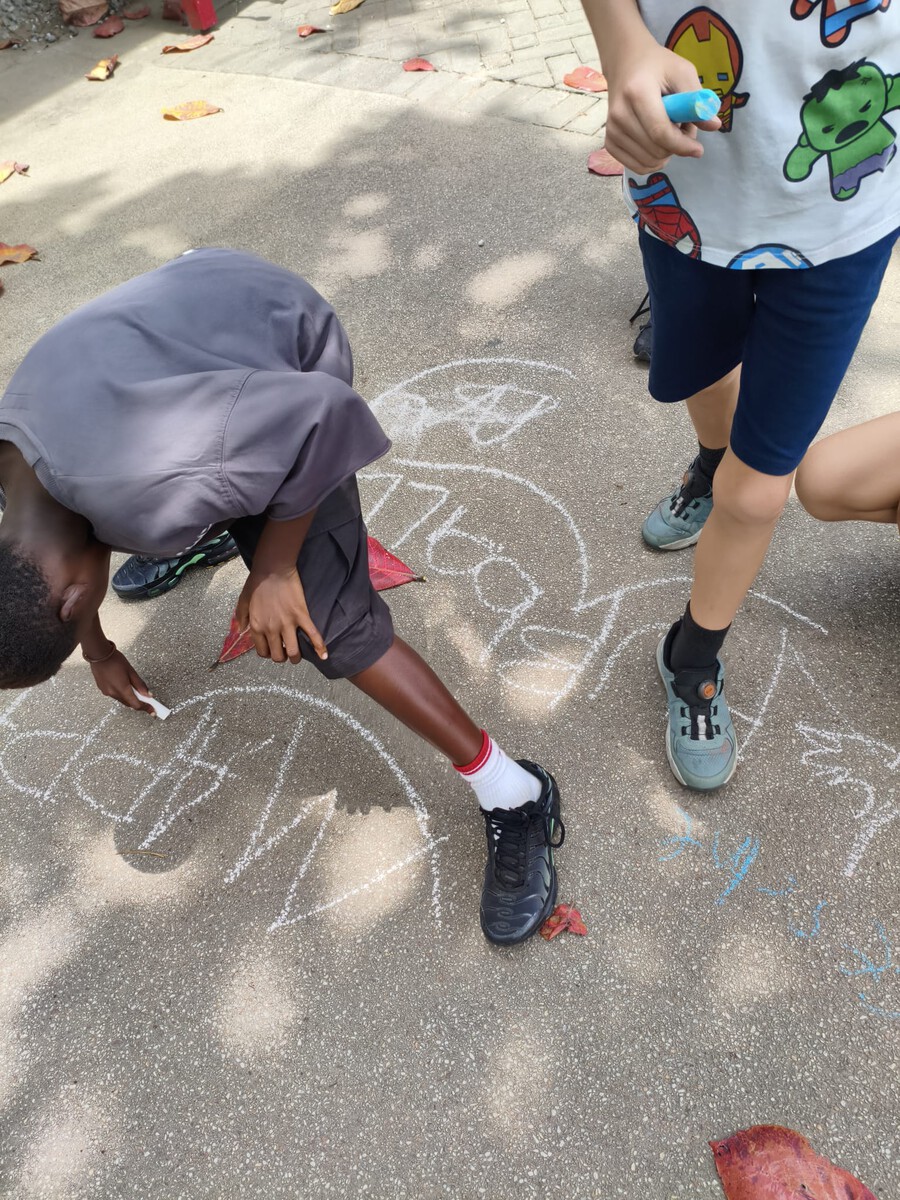
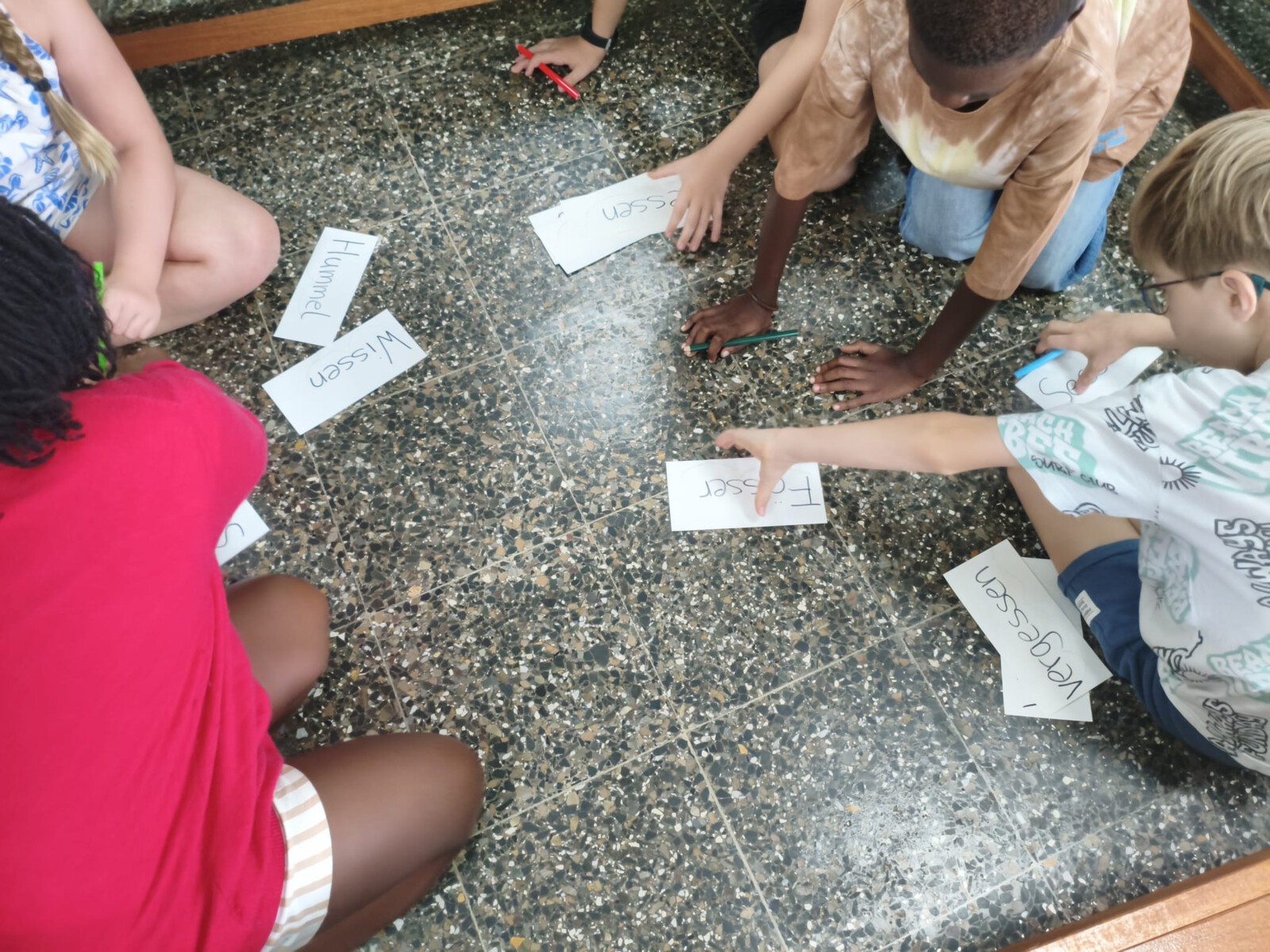
We also took a closer look at compound nouns. The children explored the different types of words that can form compounds and then became word creators themselves. We focused particularly on German compounds that require a linking “s”. Knowledge of syllables and syllable nuclei was also used to check written texts and explore words with double consonants.
In General Studies, Grades 3 and 4 are working together on the exciting topic of children’s rights, an important element of democracy education. This week, the children became true children’s-rights detectives. Working in small groups, they examined different texts about children and their living situations and identified which rights were not being respected.
From Secondary School
Grade 5
In Mathematics, we worked on rounding large numbers to different place values. We also revised how to read and pronounce large numbers correctly, practised estimating using a grid and consolidated important content related to natural numbers.
In History, we continued our journey into ancient Greece. The students explored life in the Greek poleis and discovered how differently society was organised in Athens and Sparta.
In English, the students presented their self-written fables to their classmates. They asked questions, listened to feedback and used the comments to improve their work. This helped them gain confidence in both writing and speaking.
In Geography, Grades 5 and 6 worked intensively with the atlas. The students learned how to locate cities using latitude and longitude and explored how the index can help them find cities, mountains and rivers efficiently.
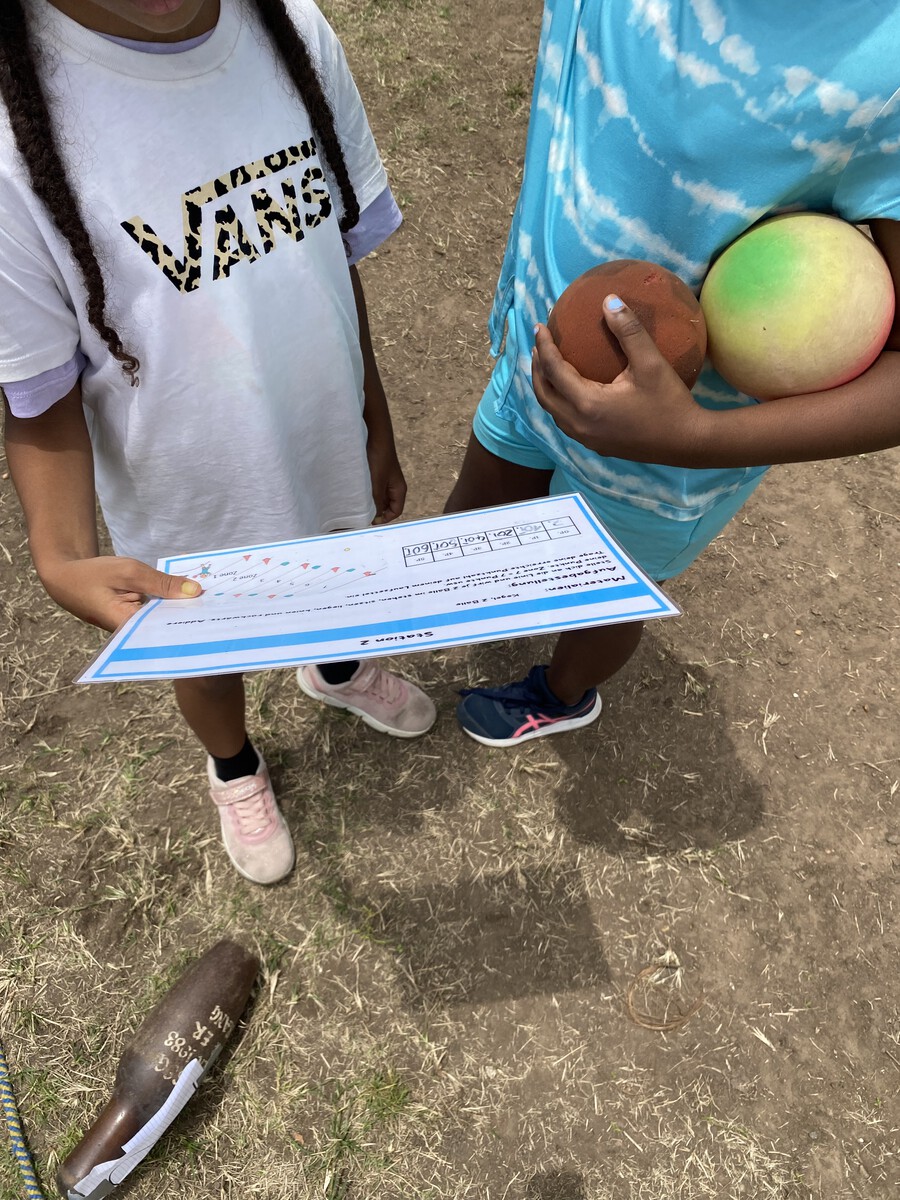 In PE, Grades 5 and 6 focused on throwing. Students worked independently at different stations, reading the instructions, completing each activity and then moving on to the next. The skills were later reinforced through a points-based activity.
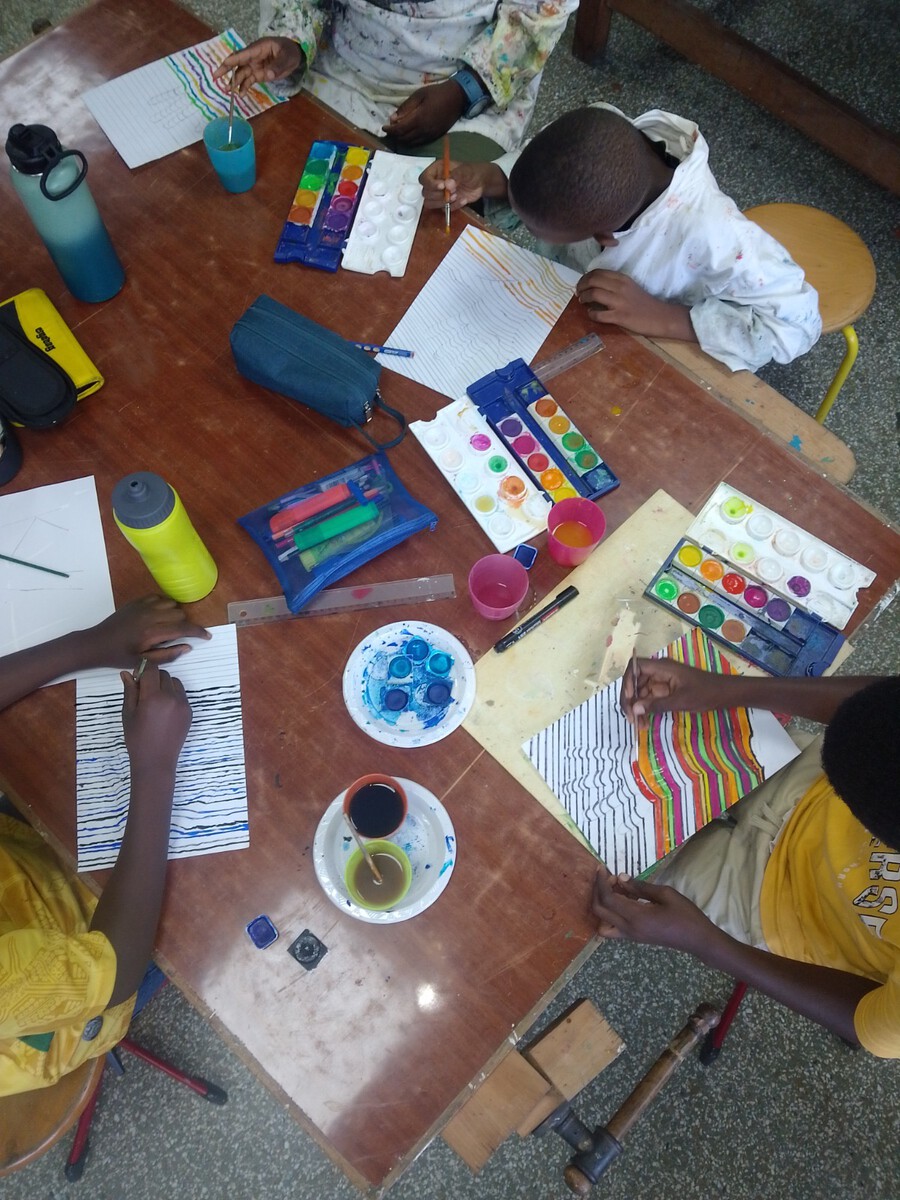 In Art, after finishing their moving figures inspired by Keith Haring, the students turned their own hands into works of art. Using carefully drawn lines, they created striking three-dimensional effects. The next step will bring colour into the designs.
In Biology, the students explored how we can recognise plants as living organisms. They examined the characteristics of living things, applied these to plants and compared similarities and differences between plants and animals.
Grade 6
In German, we started our new unit on narrative writing. We explored how texts can create vivid pictures in the reader’s mind, compared different texts and wrote our own stories. The students also practised giving one another constructive feedback to make their stories more exciting and vivid.
In Ethics, our “Happiness Lab” continues to generate plenty of thought and discussion: Do friends make us happy? Does money make us happy? And can happiness actually be learned? On that last question, almost everyone initially agreed that it cannot – we are curious to see whether this opinion changes as the unit continues.
In Mathematics, the students developed important foundations for their upcoming work with fractions. They now know divisibility rules as well as sets of factors and multiples. Most students are becoming increasingly accustomed to working with weekly plans, and it is encouraging to see that many are now using their independent learning time much more effectively.
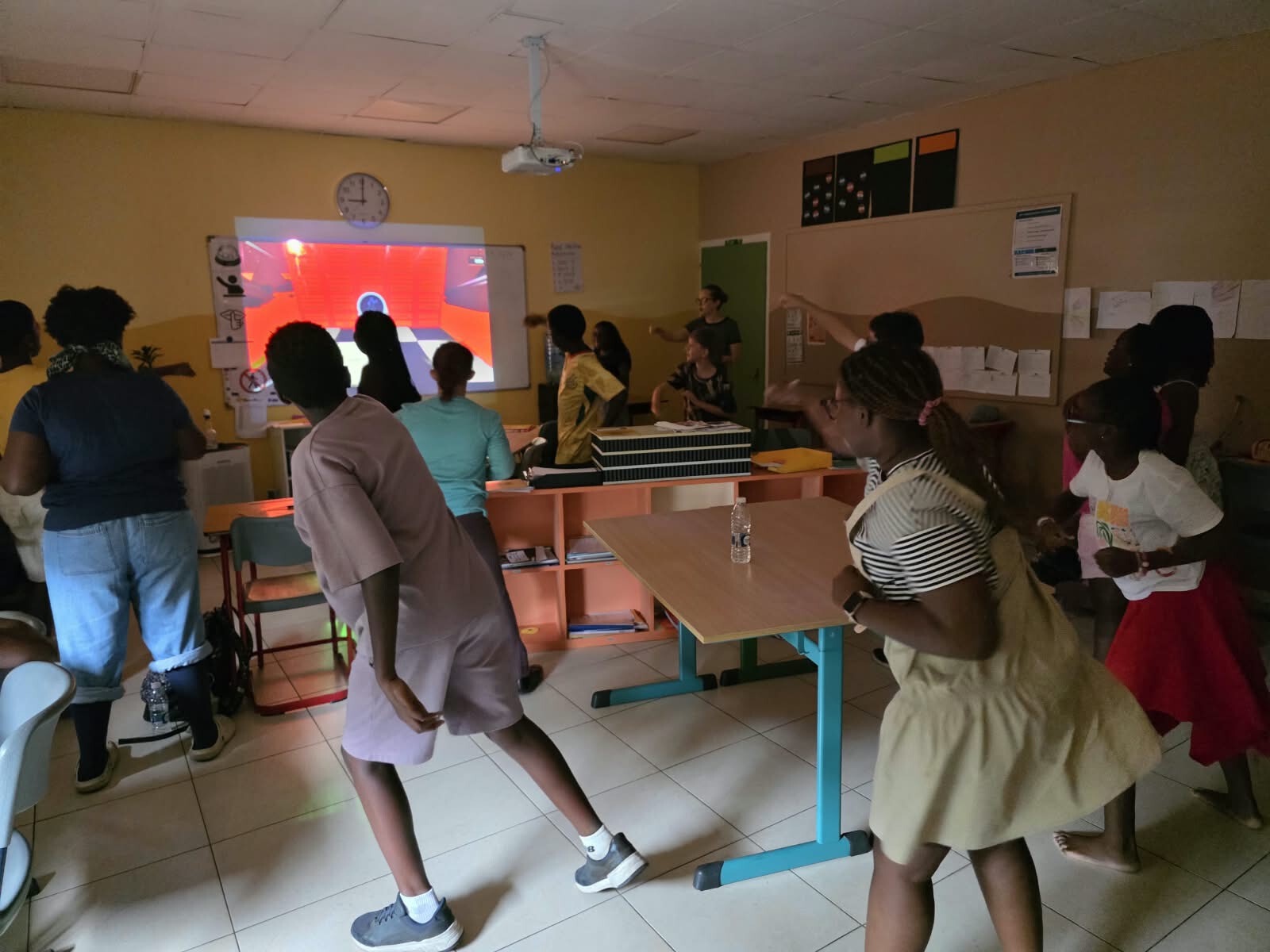 In English, the students have been working on reading and writing narrative texts. They began by exploring a prologue, its characteristics and how it can help create suspense in their own writing.
In Biology, the students explored how plants can be identified as living organisms. In History, ancient Greece was once again at the centre of our learning. Using Athens and Sparta as examples, the students explored different ideas about society, education and political organisation.
Grades 5 and 6 also worked together in Geography, PE and Art.
Grade 7
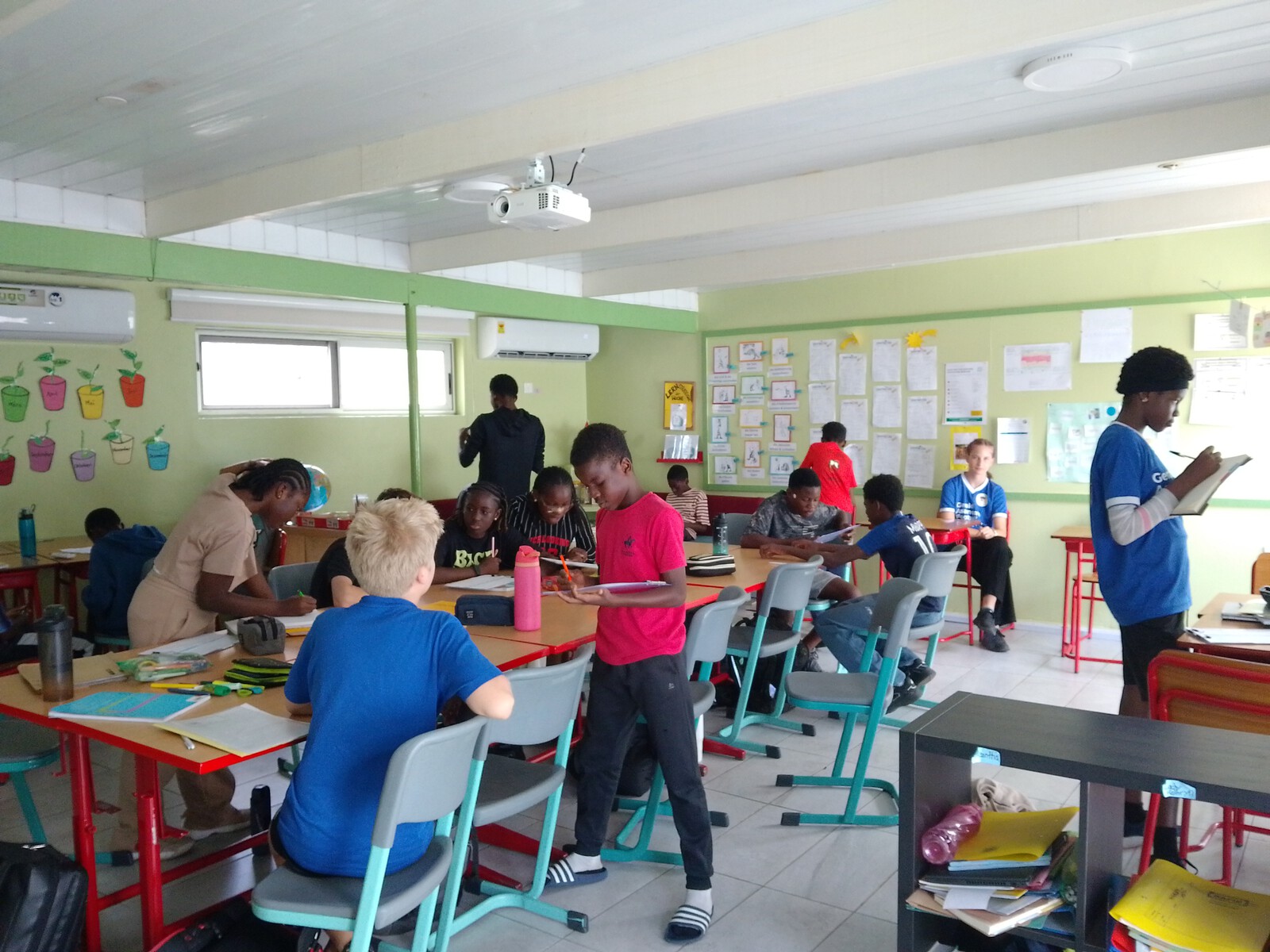 In German, we took the next major step: from oral debate to written argumentation. Using the question “Should school start later in the morning?”, we collected arguments for and against in small groups using placemats. And it quickly became clear that even when a question initially seems straightforward, it is worth looking closely at the other side.
Then it was time to put those arguments on paper. In writing conferences, we examined our first drafts carefully: Is the claim clear? Is the reasoning convincing? Does the example fit? Are there any spelling or grammar mistakes hiding in the text? The students read, checked, improved and sometimes substantially reworked their texts.
Our DaF students also brought some fresh ideas to the lesson. Their questions about media and food generated new discussions – and plenty of potential topics for future debates.
In Mathematics, we are currently exploring coordinate systems and practising how to read coordinates accurately and plot points in the correct positions. We also returned to rational numbers, revising and consolidating calculations with positive and negative numbers.
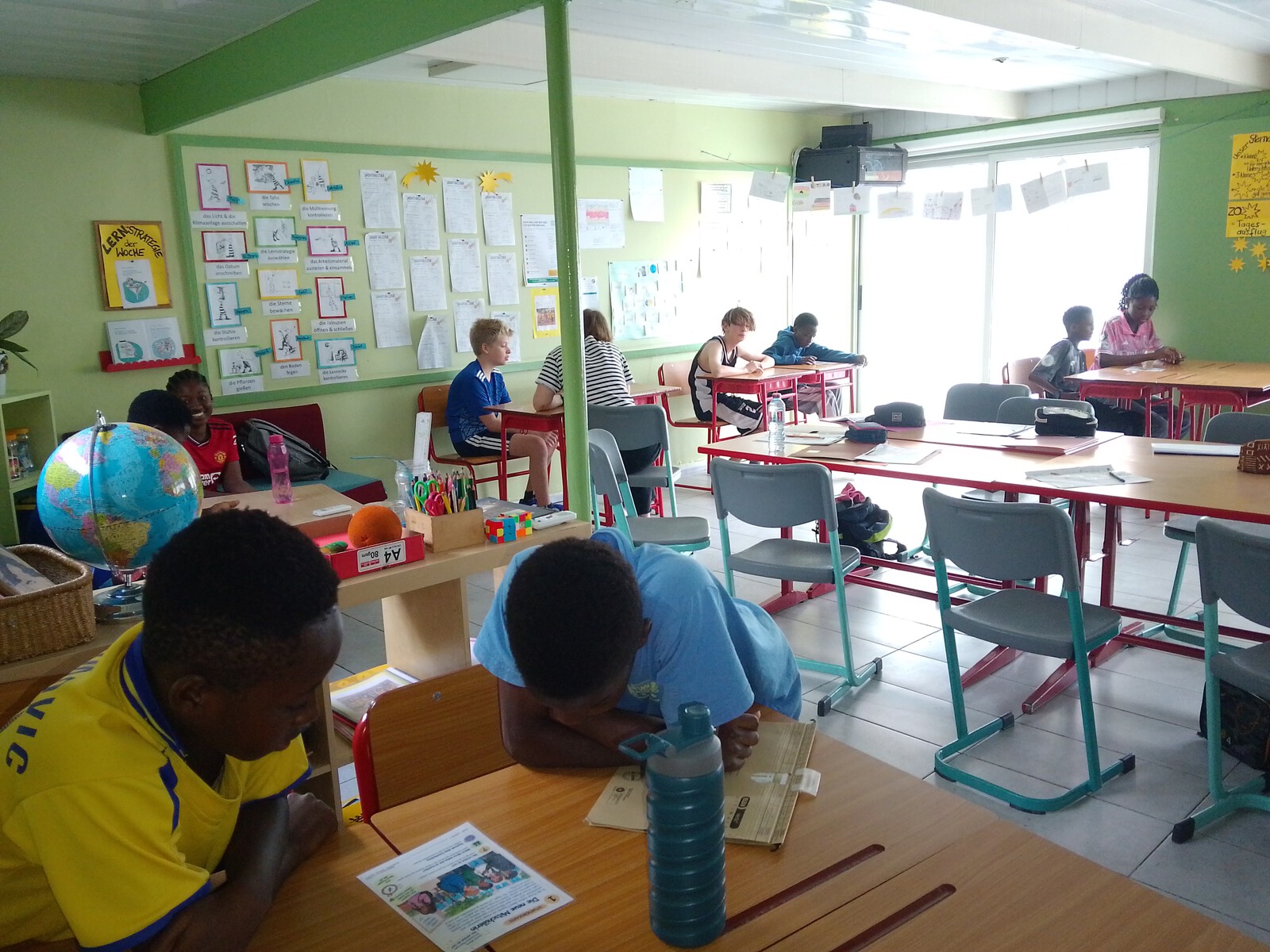 In Ethics, theory gradually became practice. After choosing personal “Top 5” values from our “treasure chest of values”, we moved on to the question of what happens when two important values come into conflict. At eight stations, students read texts, analysed images and discussed everyday situations.
Our journey through time continued in History, where Grade 7 remained in the Middle Ages and explored rule, power and the development of the medieval empire. History was not only read and learned; students also tried to understand historical developments through active learning and by imagining themselves in the world of the time.
Geography took us to the coldest ends of the Earth: the Arctic and Antarctic. We explored similarities and differences, life and wildlife in these extraordinary regions, and the impact of climate change. It soon became clear that the polar regions are not only about ice, polar bears and penguins, but also about politics, economics and competing interests.
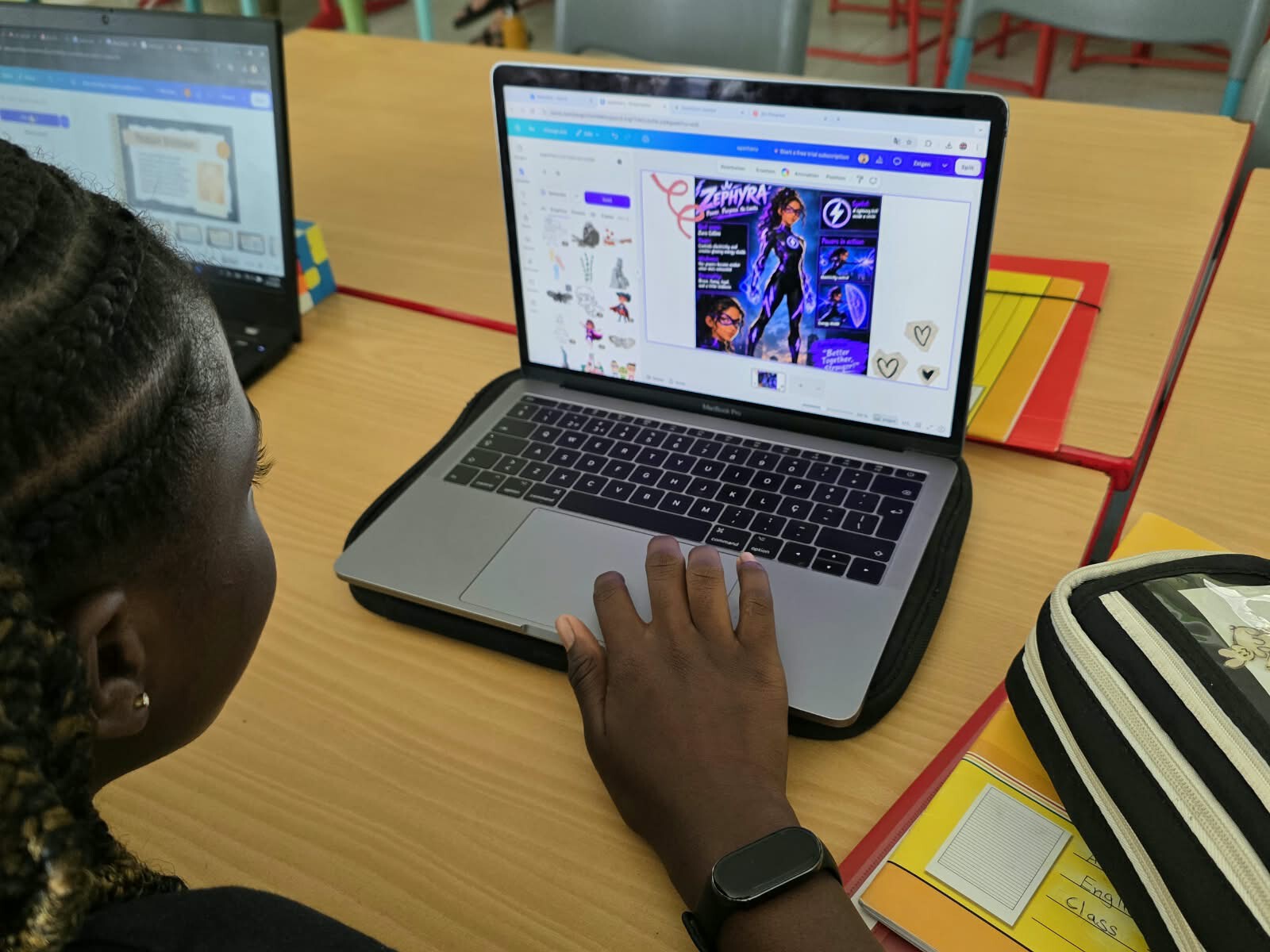 In English, we continued from our adventure story and are now creating our own superheroes. Character profiles, drawings and first ideas are gradually developing into individual stories.
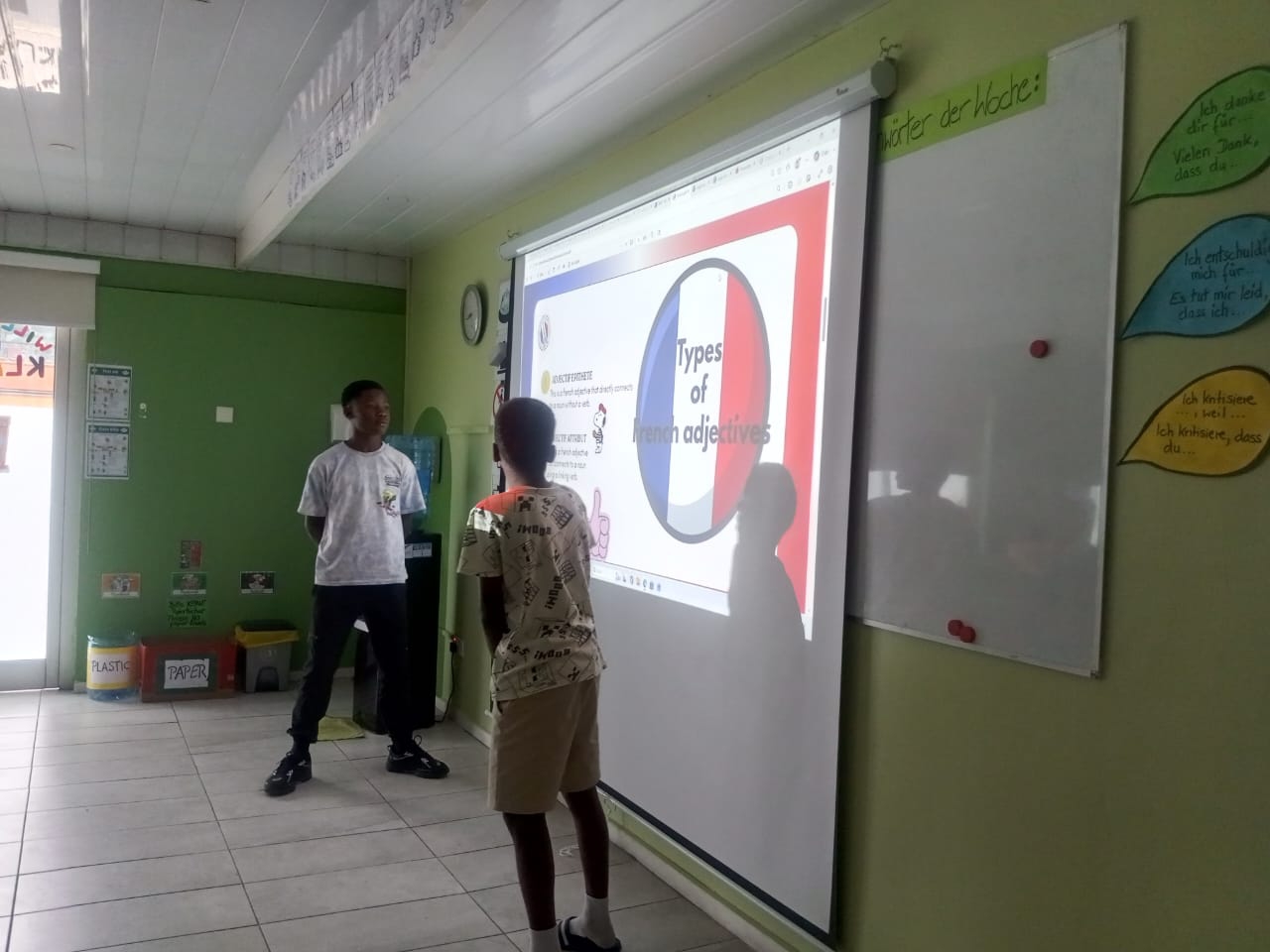 In French, the students independently explored French adjectives and investigated how they change according to gender and number. Their findings were then presented and compared with German and English.
Flames, skulls and exclamation marks: in Chemistry, we explored hazard pictograms, the dangers they represent and the protective measures required.
In Physics, we investigated gravity and clarified the difference between mass and weight. We discovered that a person’s mass remains the same on Earth and on the Moon, while their weight does not. Unfortunately, the commute to the Moon is still a little too long.
Grade 8
In Ethics and Social Studies, Grade 8 has been working intensively on the “Responsibility with Heart” project centred on the Gerald Asamoah Foundation and its work for children with heart conditions. The students explored why people help, what makes support effective and what different needs the people involved may have.
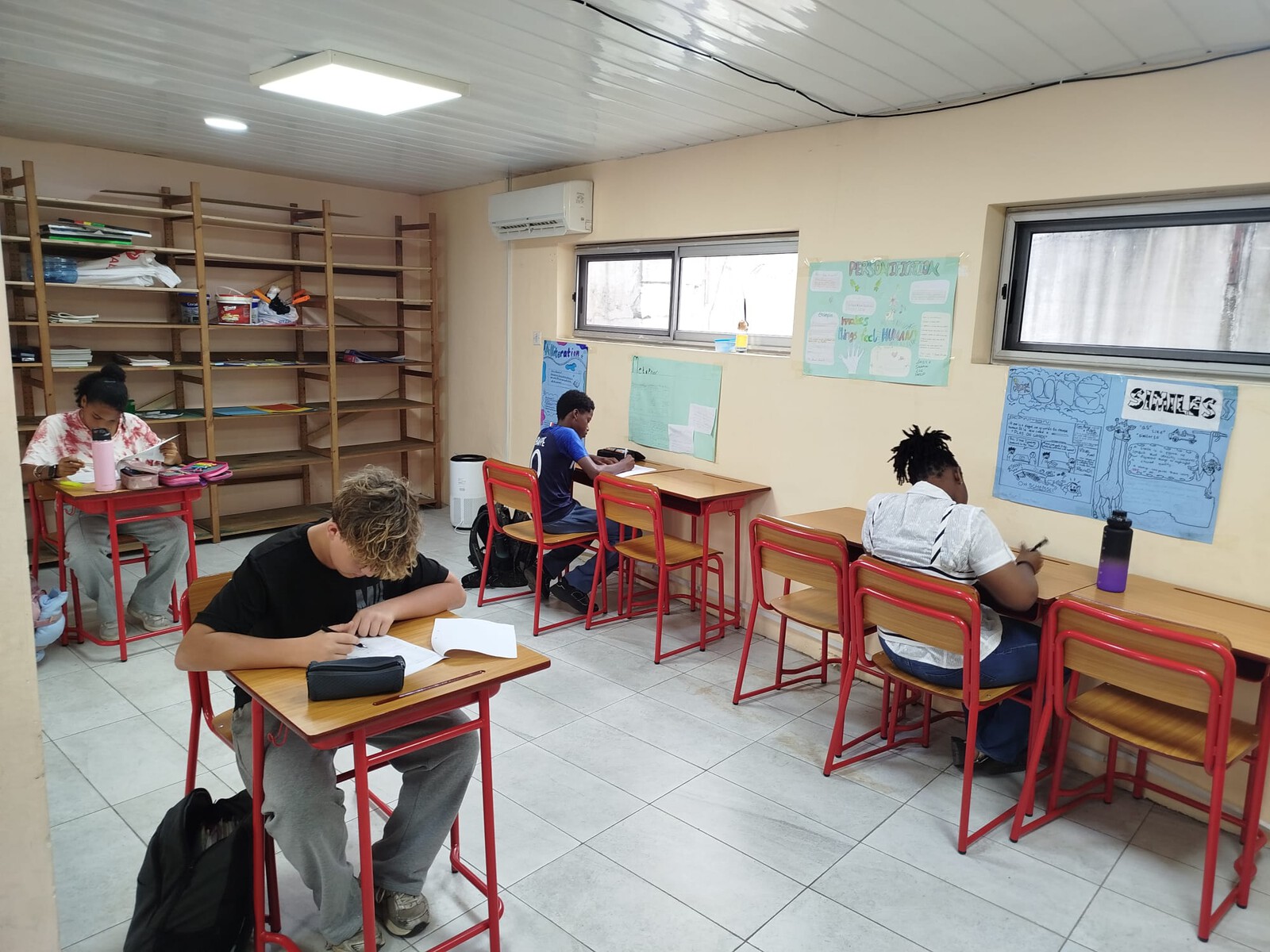 In Mathematics, after a test on expanding expressions, the students were introduced to and practised the binomial formulas. In Biology, the class continued working on presentations about invertebrates. In Chemistry, the focus was on mixtures and separation methods, with decanting and filtration also being explored practically in the laboratory.
In History, the students deepened their understanding of power and society in the Middle Ages. In English, the adventure story written by “eight minds” has now been completed. The students are working on its final structure before inviting the whole school to read it. In French, the passé composé was reinforced through authentic French texts, while new vocabulary was explored through context.
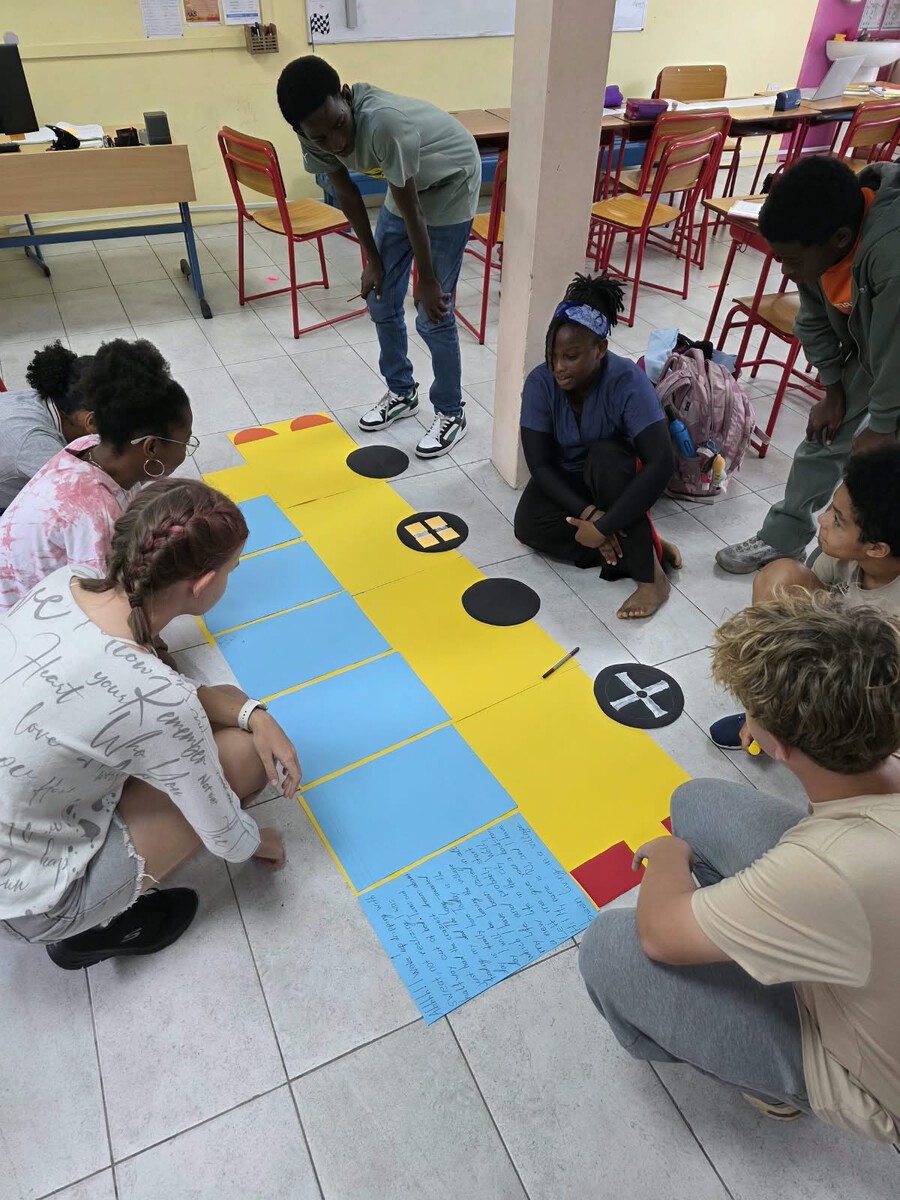 In English, the story written by eight minds has now come to an end. The students are excited and are currently working on the structure of their adventure story before inviting the whole school to read it. One particularly positive outcome of the project is that they have learned to work together more effectively and have gained greater confidence in their writing.
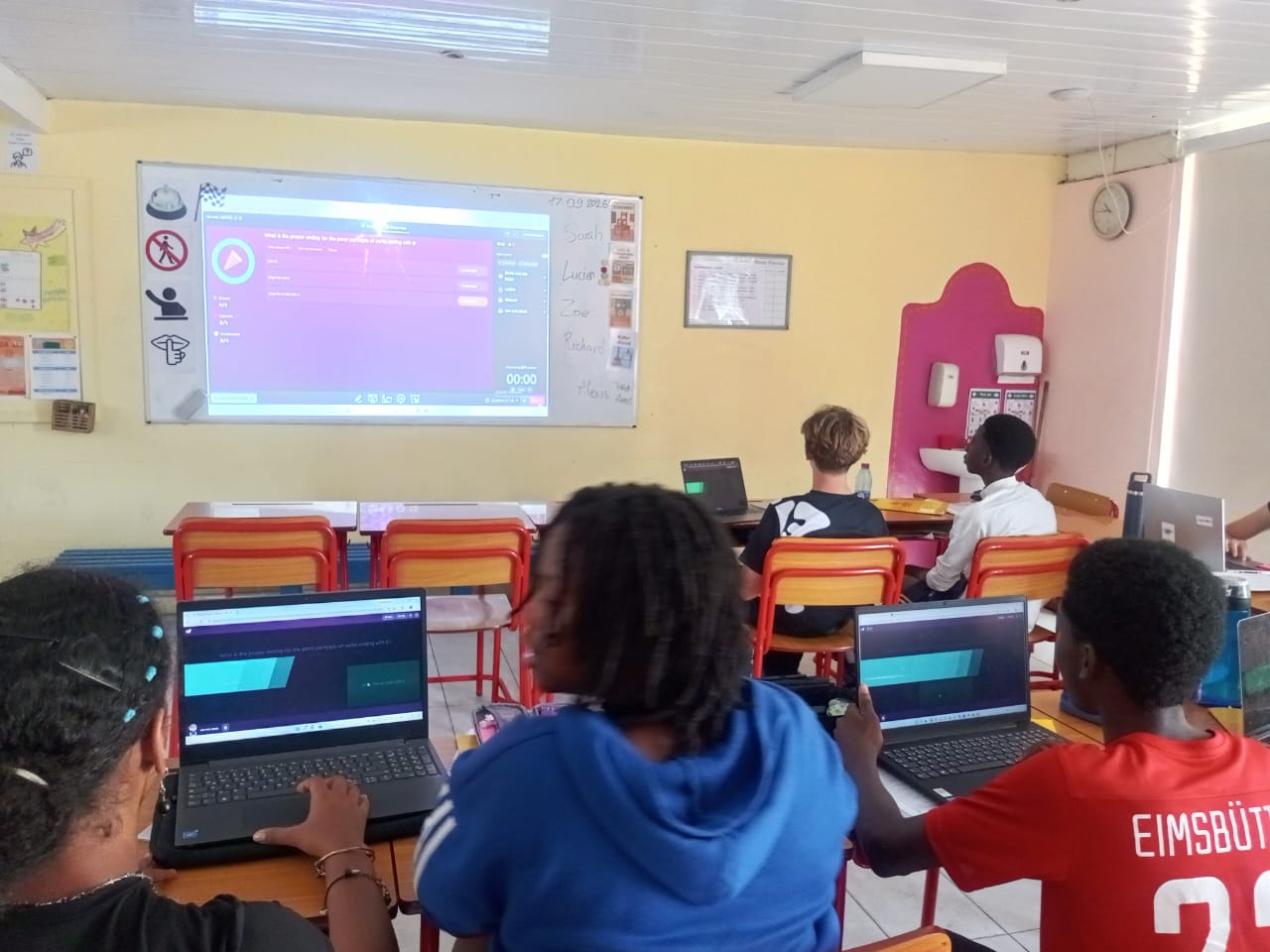 In French, Grade 8 continued building confidence with the passé composé by taking grammar beyond isolated exercises and into real French texts. The students read and explored different passages, identified examples of the passé composé and recognised how the tense is used to describe completed actions and past events. Along the way, they discovered new vocabulary and learned to use the surrounding context to understand unfamiliar words. Step by step, the passé composé is becoming a language skill they can recognise and use with confidence.
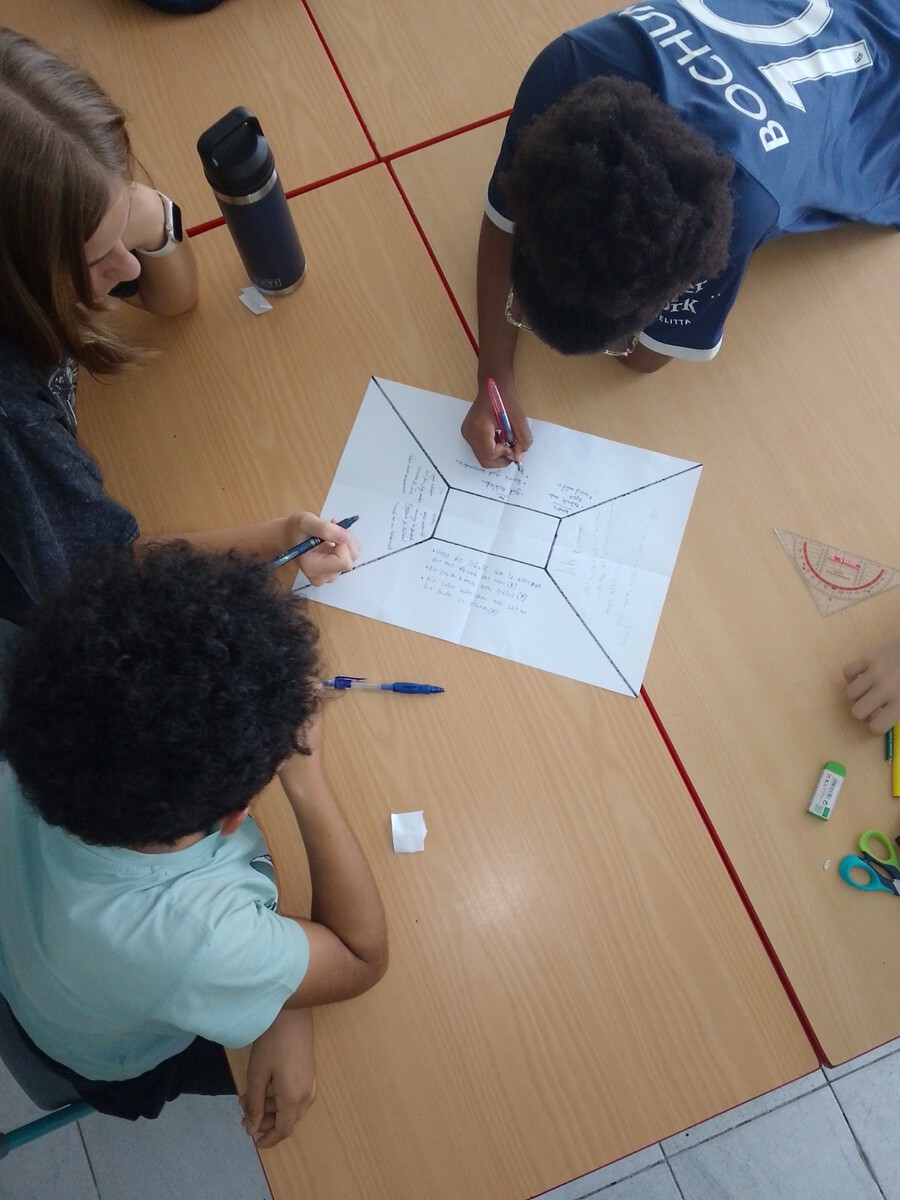 In German, the class moved from oral Fishbowl discussions to written argumentation. Using the question “Should school start later in the morning?”, students collected and evaluated arguments for and against before writing their own texts. Writing conferences were then used to review and improve argumentation, structure and language.
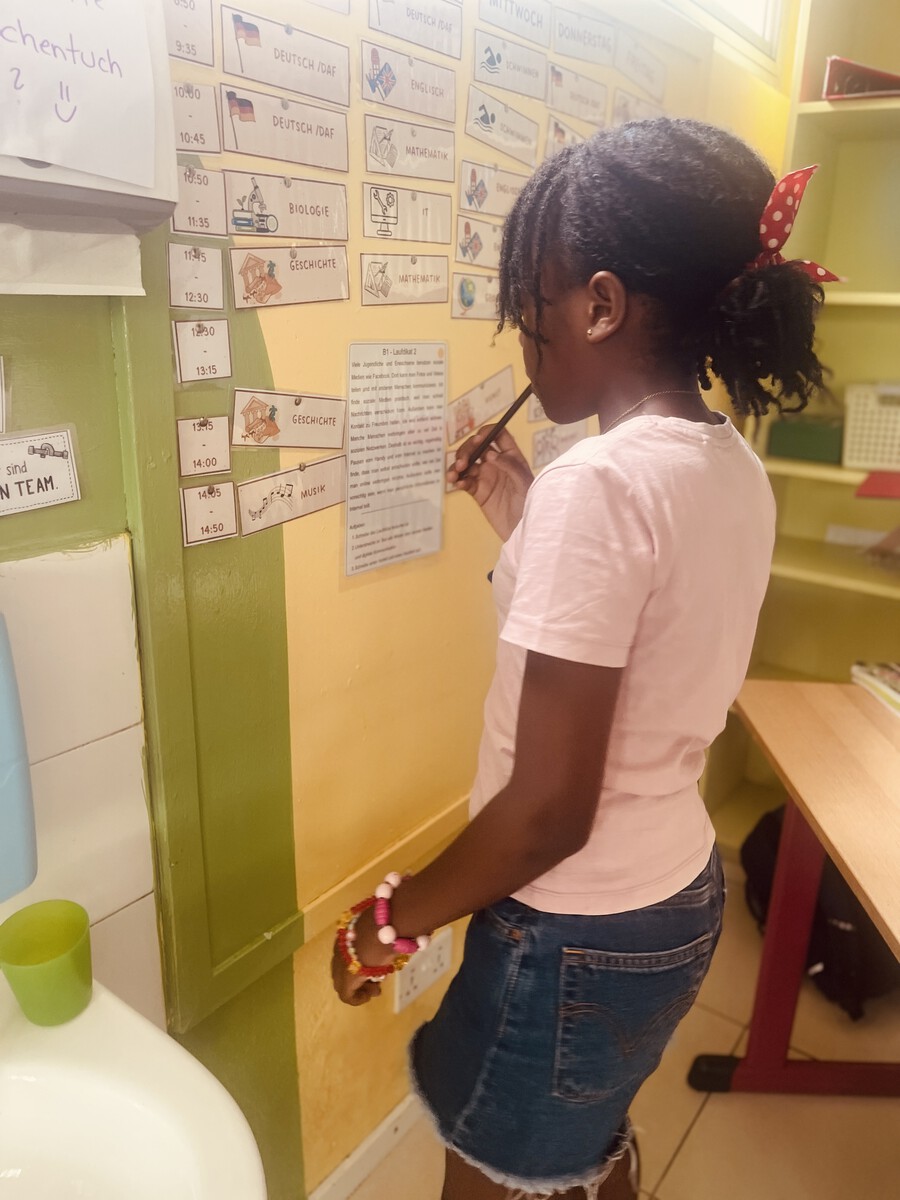 German was also applied very practically in DaF lessons. Students worked with more complex sentence structures, explored arguments for and against different positions and developed their own surveys on nutrition and digital media.
➡️ Learn more: Learning German Means Using German
Grade 9
In Mathematics, the focus was on linear functions and moving between equations and graphs. In Physics, students explored uniformly accelerated motion and analysed corresponding diagrams. In Chemistry, they studied the shell model of atoms and isotopes. The development of German academic and subject-specific language was integrated throughout these lessons.
In History, the focus was on the “home front” during the First World War. Food supply and hunger, work and production, the wartime economy and their consequences were linked using a block diagram and then expressed in precise subject-specific language – reflecting our approach that every History lesson is also a German lesson.
In German, the students also moved from speaking to writing. Claims, reasoning and examples formed the basis for written argumentation. Initial texts were not simply completed but carefully reviewed and revised with regard to structure, argumentation, spelling and language.
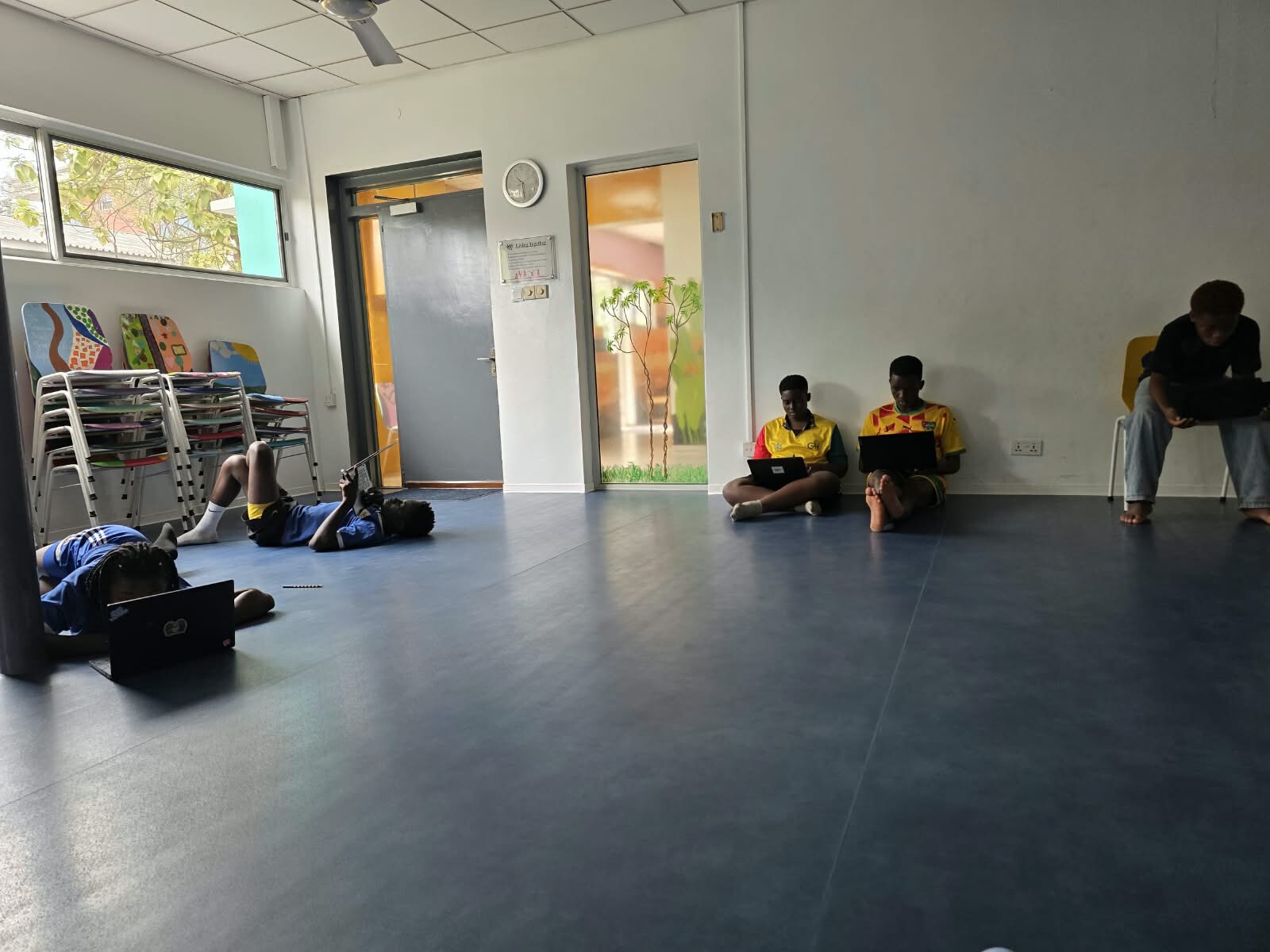 In English, the class continues to explore Octavia E. Butler’s novel Kindred. Students take responsibility for leading individual chapters, helping them gain confidence in literary discussion. In French, they practised listening and reading comprehension and learned how to use context, sentence structure and linguistic clues to work out unfamiliar vocabulary independently.
In Social Studies, the class explored key characteristics of democracy and the separation of powers. In Ethics, students presented their first findings on Buddhism, from Siddhartha Gautama to the Four Noble Truths. In Biology, the structure of different types of leaves was completed before moving on to photosynthesis and its fundamental importance for plants and life on Earth.
The Class Council was also part of the past two weeks. A well-being survey produced a very encouraging result: the students said that they feel at home at GISA.
Dates & Outlook
📚 Friday, 25 September 2026
Professional Development Day – no regular classes
Our staff will spend the day on professional learning, educational development and key school development projects. Emergency childcare will be available for registered students.
⚽ Tuesday, 29 September 2026
Faces of Football – 3rd Edition at GISA
Around 30 girls from UWSA, Chance for Children and GISA will come together with former German national team player Petra Landers for a special day of football.
🏆 Monday, 5 October 2026
Deadline for MTN Heroes of Change Nominations
Parents and friends of GISA can nominate our school for the MTN Heroes of Change recognition until this date.
🍂 19–23 October 2026
Autumn Break
🇩🇪 Saturday, 31 October 2026, 3:00–6:00 p.m.
German Language Day at GISA
Under the motto “German Connects: From Language to Opportunities”, we invite you to a lively afternoon celebrating language, culture, education and German-Ghanaian encounters.
❤️ 7–14 November 2026
Heart Operations of the Gerald Asamoah Foundation
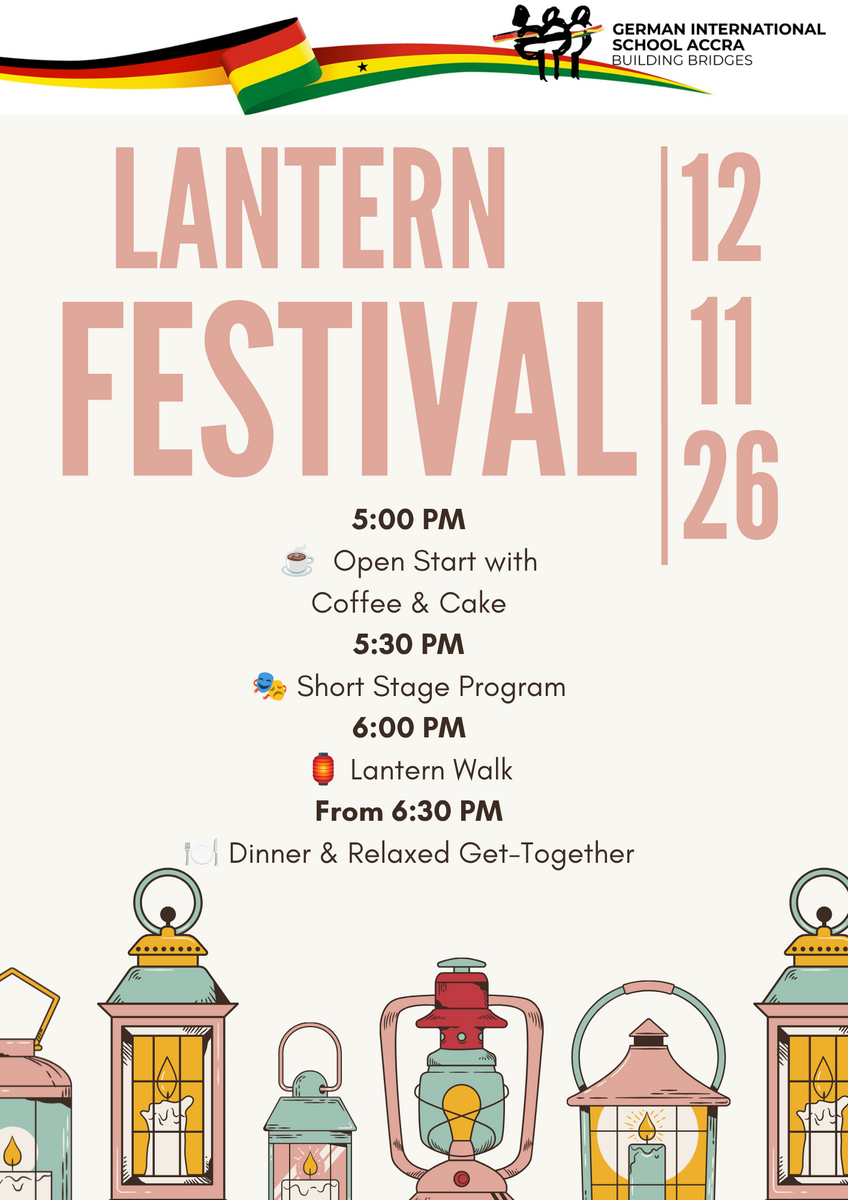
🏮 Thursday, 12 November 2026
Lantern Festival at GISA
🎭 Friday, 13 November 2026
Cultural Festival at the Goethe-Institut
🎄 Saturday, 28 November 2026
GISA Christmas Market
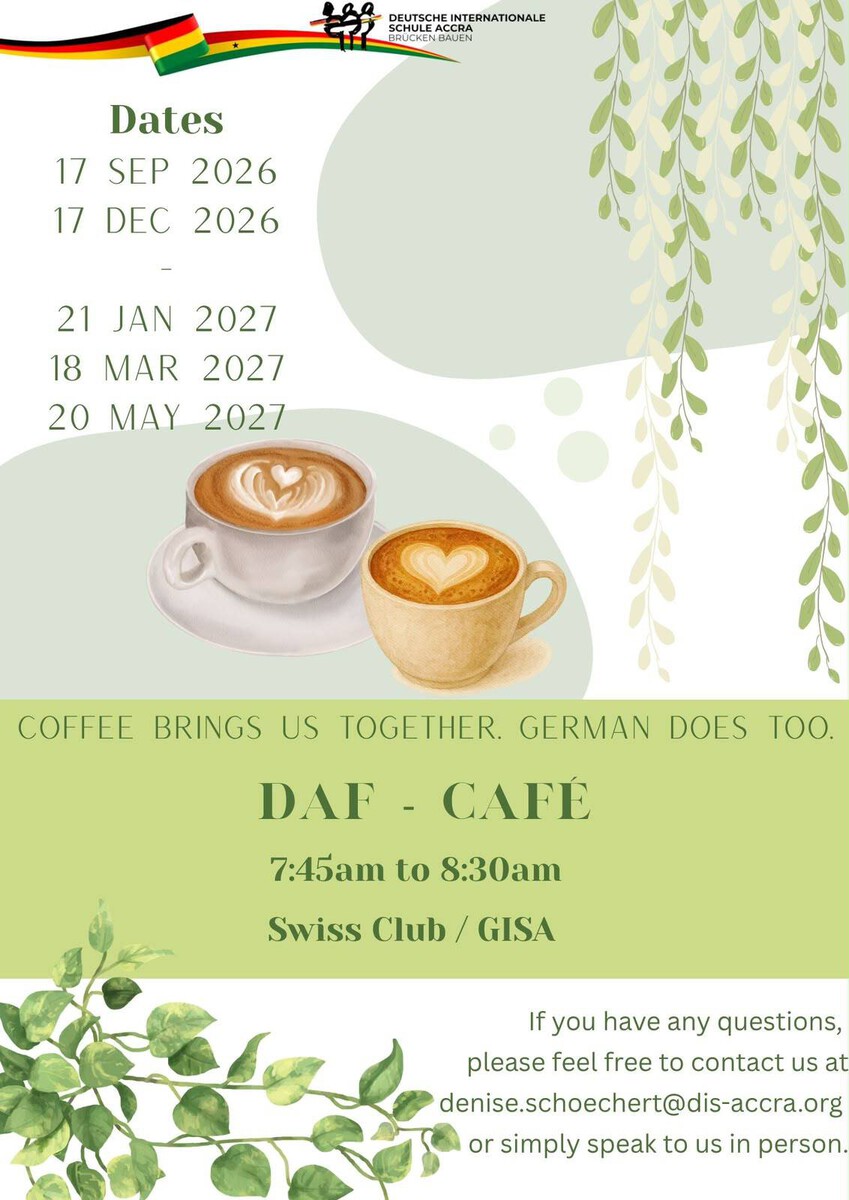
☕ Thursday, 17 December 2026
Next DaF Café
Following our successful first exchange, we once again invite parents to gain insights into DaF lessons and exchange ideas on how to support their children in learning German.
Excellence Scholarship Programme 2027
⚽Gerald Asamoah Football Academy
Lantern Festival
🇩🇪 German Language Day

☕ DaF Café: Speaking German and Connecting Through Conversation
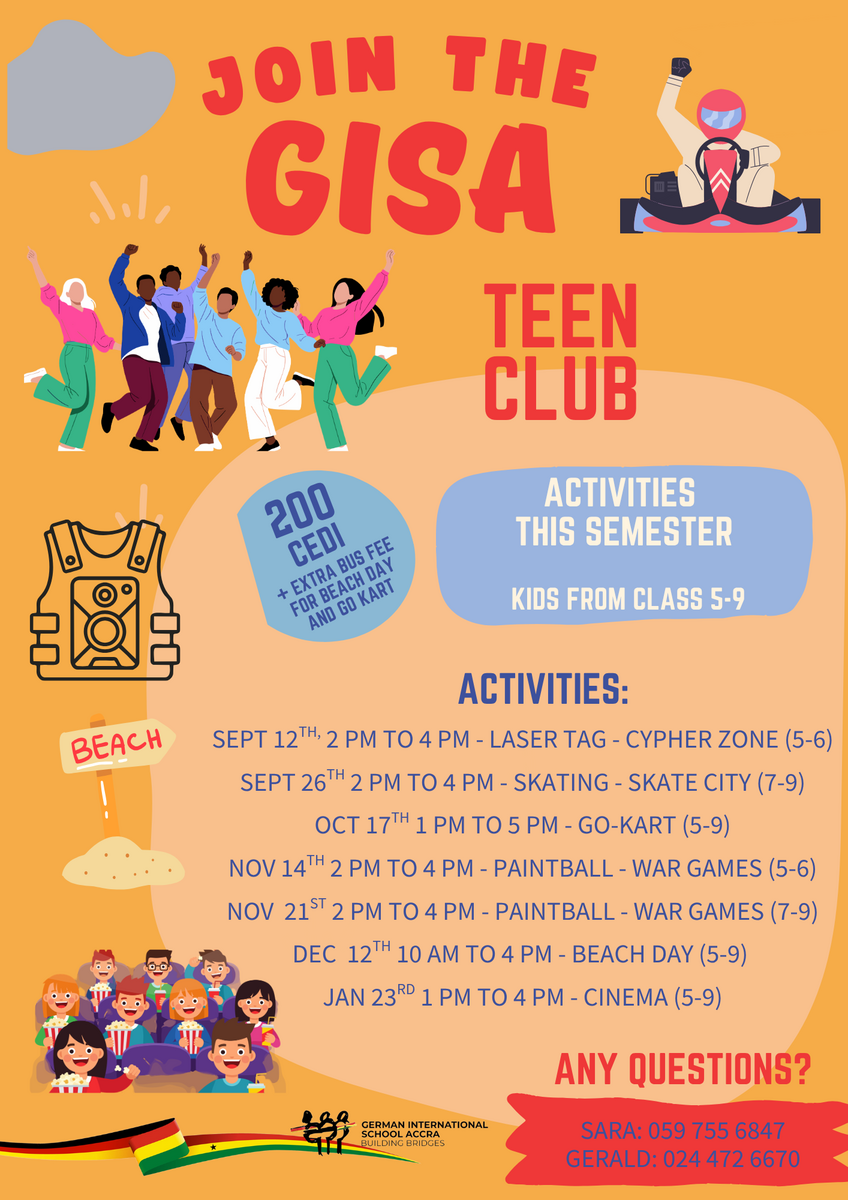
GISA Teen Club