Newsletter 23.01.2026


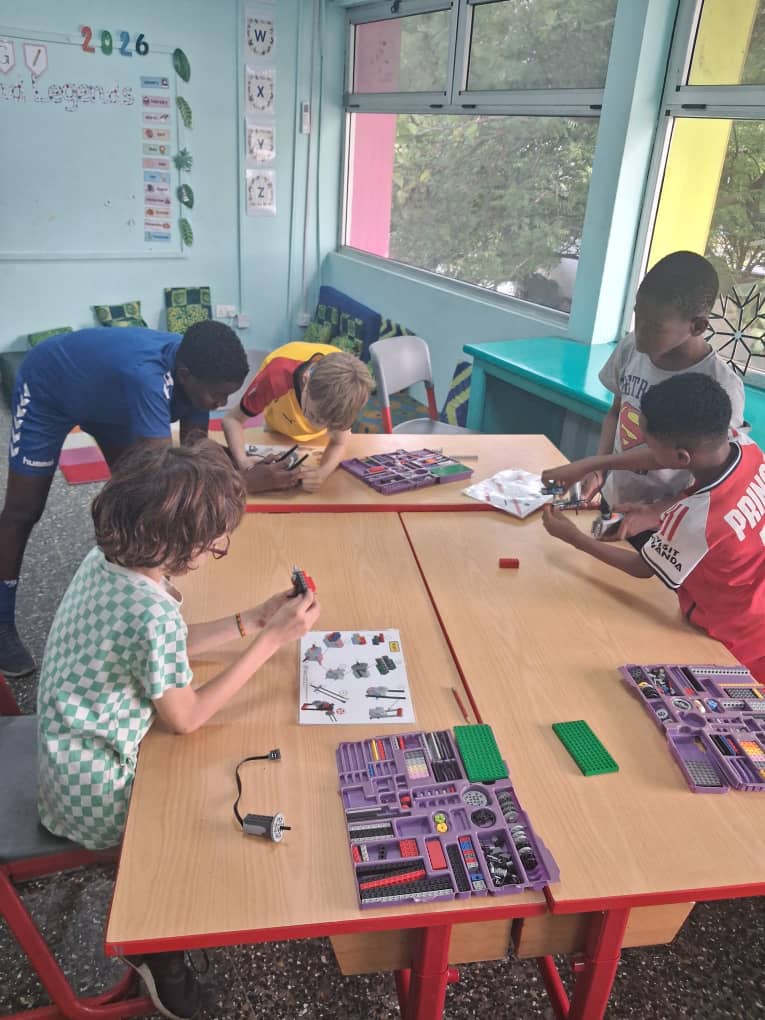 Our LEGO Technics extracurricular class is a real highlight of the week for many students. Together with teacher Gilles, the children dive into the world of building, tinkering, and experimenting. With great enthusiasm, they create imaginative constructions that are planned, built, tested, and improved step by step.
This is about much more than simply connecting bricks: students strengthen their logical thinking, creativity, and teamwork skills, learn to work patiently on solutions, and gain playful first experiences with technical and basic engineering principles. The atmosphere is marked by focus, curiosity, mutual support, and the joy of shared success—clearly visible in the proud faces when a model finally works.
A friendly reminder to our parents: all extracurricular teachers are always available for quick questions, feedback, or a short conversation after their sessions. Our Extracurricular Coordinator, Sara Debackere, is also happy to listen, support, and receive feedback regarding the activities and your child’s development.
We sincerely appreciate the commitment of our staff and the strong motivation with which our students take part in LEGO Technics week after week.
The GISA School Band
The GISA School Band successfully started rehearsing this week. With drums, keyboard, electric bass, microphones, and a small electric guitar, we have already played a few songs — even though we are still waiting for some equipment upgrades. Hopefully, we will be ready soon for our first performance on 26 February. We are always happy to welcome new band members!
Growing Together – Open Positions at GISA
 The German International School Accra is a vibrant international school where children and young people from many nations learn together. Our educational work follows a clear vision: education that builds bridges—between languages, cultures, and people.
Due to our continued growth, we are looking for dedicated individuals who see a school not only as a workplace, but as a space to shape and develop. We are currently seeking additional support in Administration, Nursery and Kindergarten, as well as in the Secondary School.
All information about our open positions can be found on our website.
We look forward to continuing to grow together with you.
Gerald Asamoah Cup – First Edition at GISA
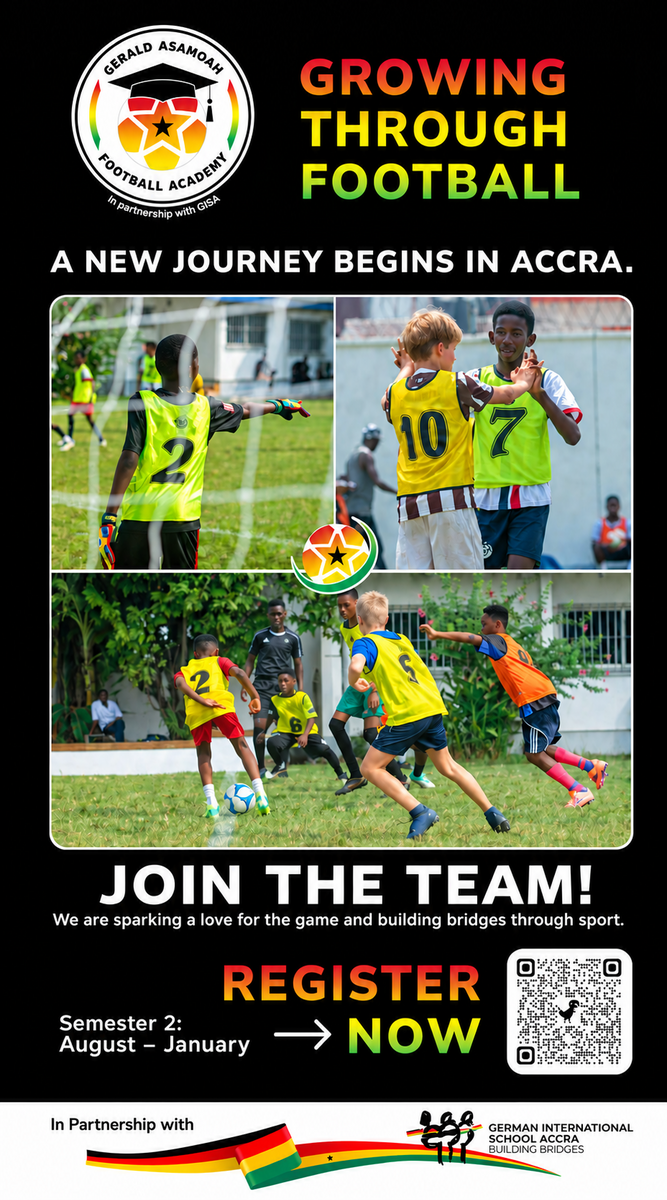
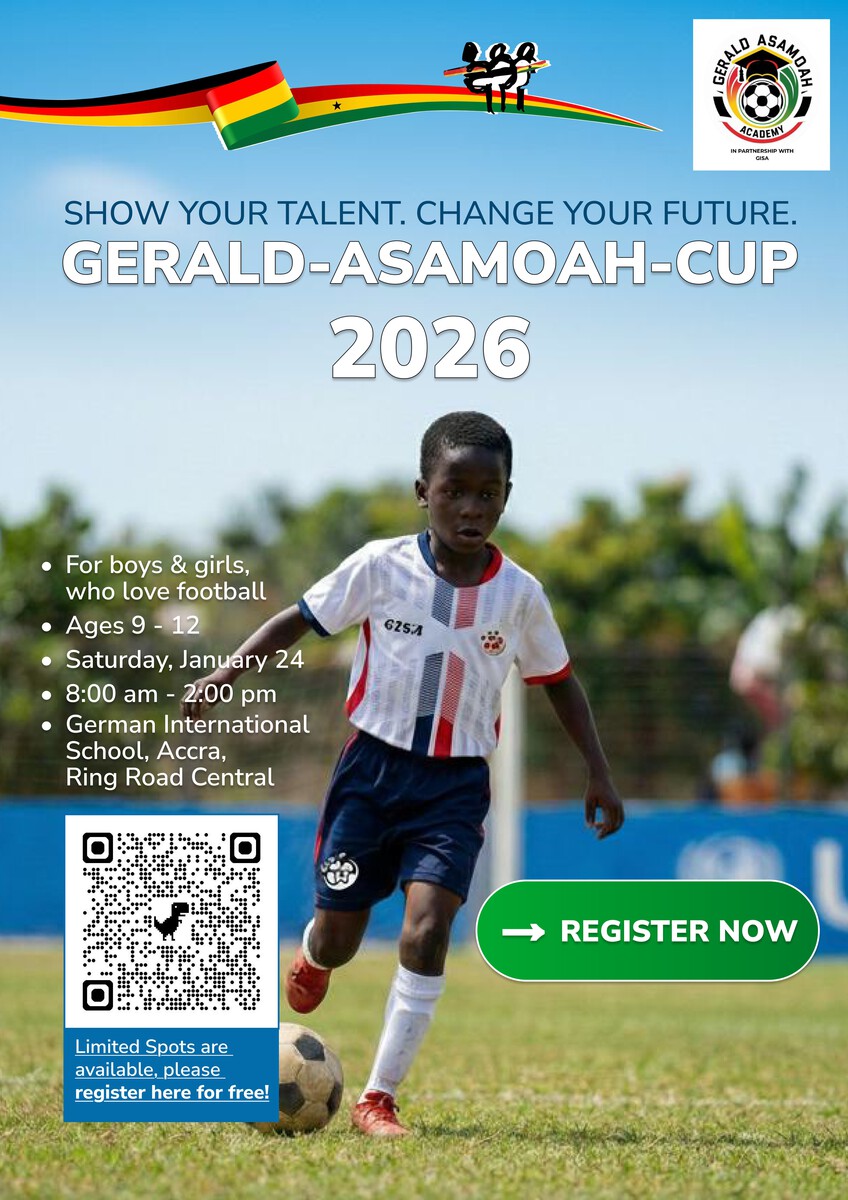 Tomorrow, Saturday, 23 January 2026, the Gerald Asamoah Cup will take place at GISA for the very first time. Children between the ages of 9 and 12 will have the opportunity to show what they can do and introduce themselves to our coaches as potential candidates for the new Gerald Asamoah Academy—with the possibility, depending on suitability, to apply for a school scholarship as well.
At the heart of the day are the joy of movement, team spirit, and meeting others on the green pitch. Through a tournament format, the children will play through stations inspired by Gerald Asamoah’s football journey—from Ghana to Hannover 96, Schalke 04 and the German national team, and later clubs such as FC St. Pauli and Greuther Fürth.
Nursery and Kindergarten
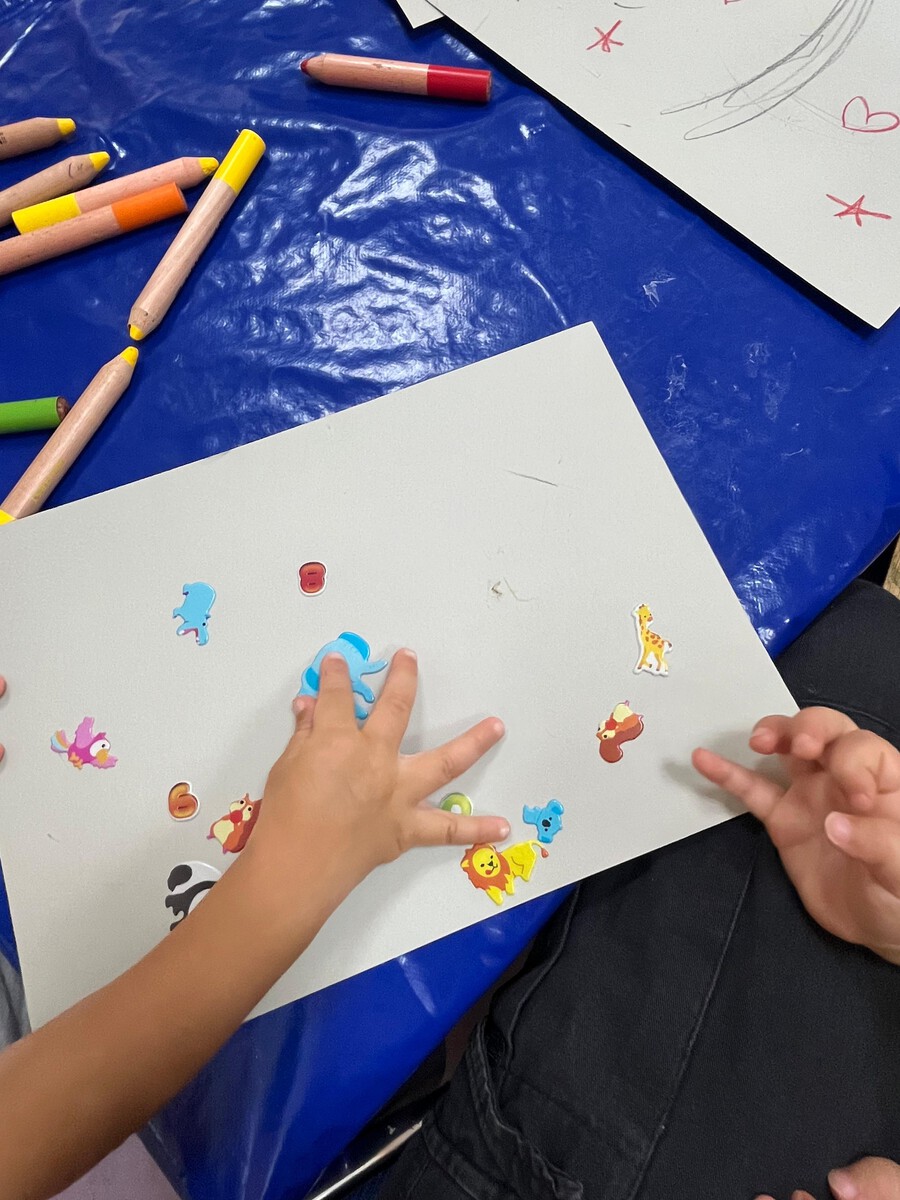 This week in the Nursery was all about animals 🐾
During a playful “animal rescue mission,” the children strengthened their fine motor skills and empathy 🐘🤍. They also got creative with animal sticker crafts 🎨, and during free play, Schleich figures and cuddly animals inspired lots of imaginative role play 🧸🐯.
A new finger play, “Five Little Monkeys” 🐒🎵, enriched our morning circle and supported language development as well as the joy of movement.
We are looking forward to many more animal discoveries! 🌿🐾
In Kindergarten, we focused closely on our current topic: water 💧🌊. The children created matching crafts 🎨✂️ and explored the water cycle in a playful way ☁️➡️🌧️➡️🌊.
A real highlight was our “Sink or swim?” experiment ⚓🪵💦, where the children tested with great curiosity which materials float and which ones sink 😊🤔.
During learning time, we also explored water vapour ♨️💨. Musical activities 🎶🎵 and creative bubble art 🫧🎨 brought lots of joy and excitement.
In German class, we worked on the articles der, die, das 📘✏️.
Our English class also took place 🇬🇧🔤 and was once again a lovely part of our weekly programme 😊🎵
Primary School
This week, the first carnival spirit arrived in Classes 1/2, as our school carnival celebration will already take place in three weeks. Whether “Piraten”, “oben unten” or “Wolkeplatz” – our students can celebrate just as well as they can work.
In Mathematics, the students worked on different types of tasks. Some practised written calculation strategies, others already explored division, and some focused on bundling ones into tens.
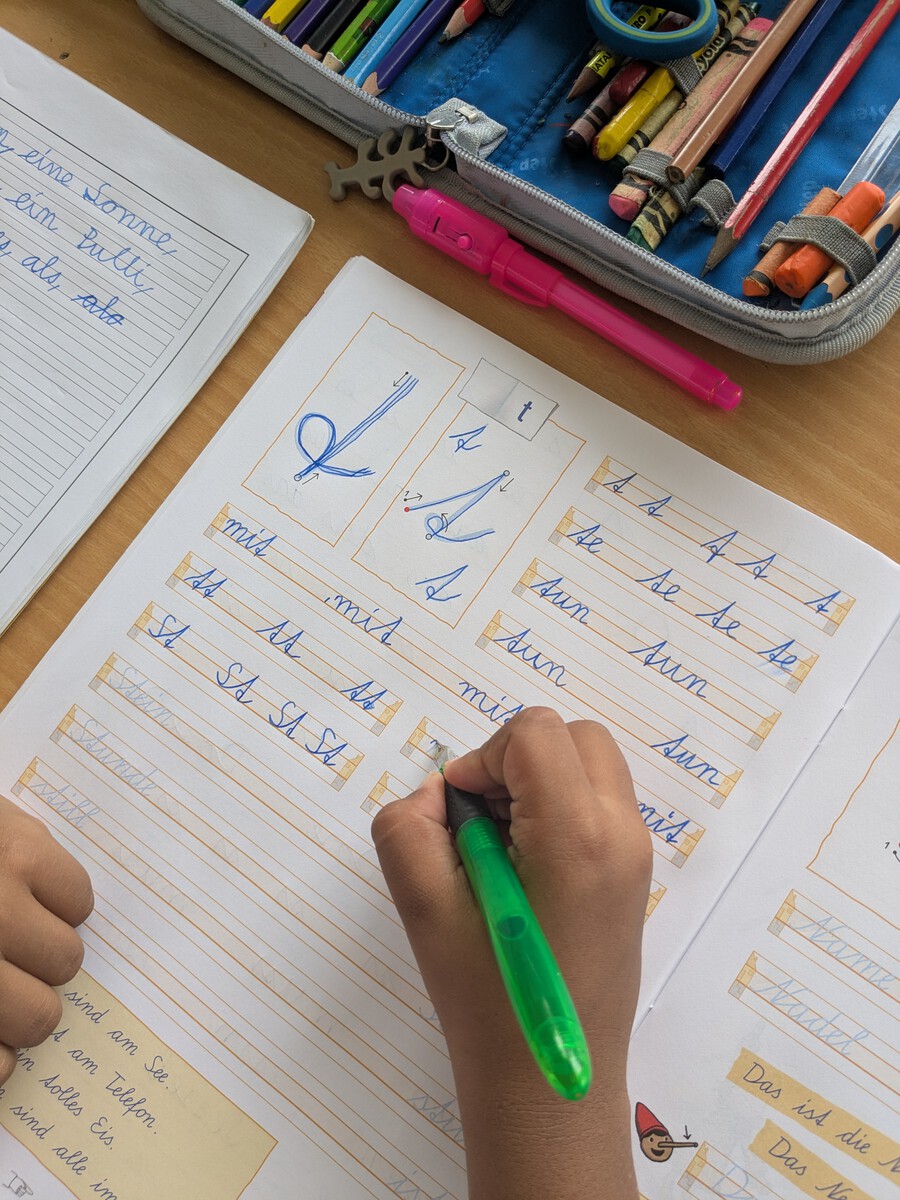 In German, the students placed great importance on neat handwriting. Depending on the grade level, they continued practising cursive writing using fountain pens.
In Ethics, the students sang a version of the song “Ich bin anders als du”. The message was clear: everyone is different – and that is a good thing. Absolutely!
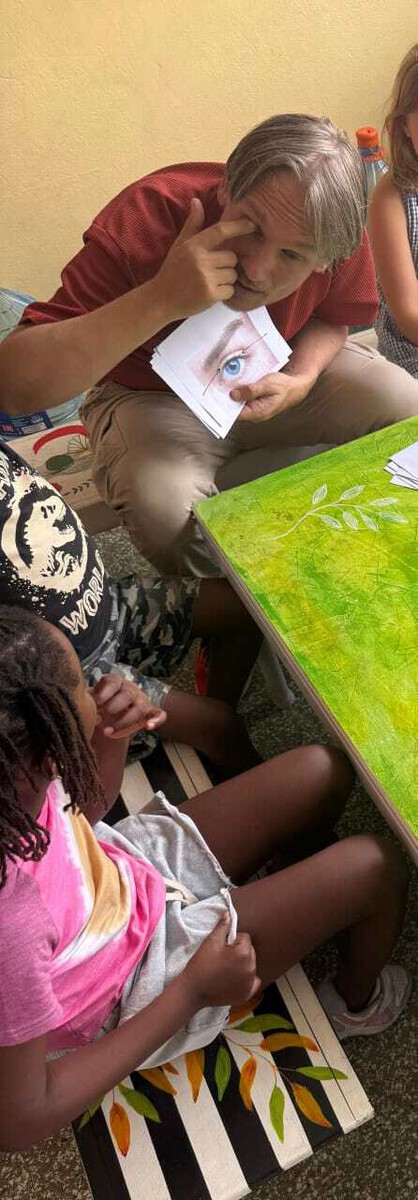 In Science, the students started an exciting new topic this week: sight and the human eye. They learned about and named the outer parts of the eye, such as eyelashes, eyelids, pupil and iris. To help the learning stick, the class worked in three practical groups:
Function group: The students explored what each part of the eye does and why it is needed.
Safety group: The students discussed how our eyes help us move safely through the world and recognise danger in time.
Connection to the brain: In an active movement-based game, the students demonstrated how quickly the eyes and brain work together.
It was wonderful to see how focused and curious the students were, and the week ended with many smiling faces.
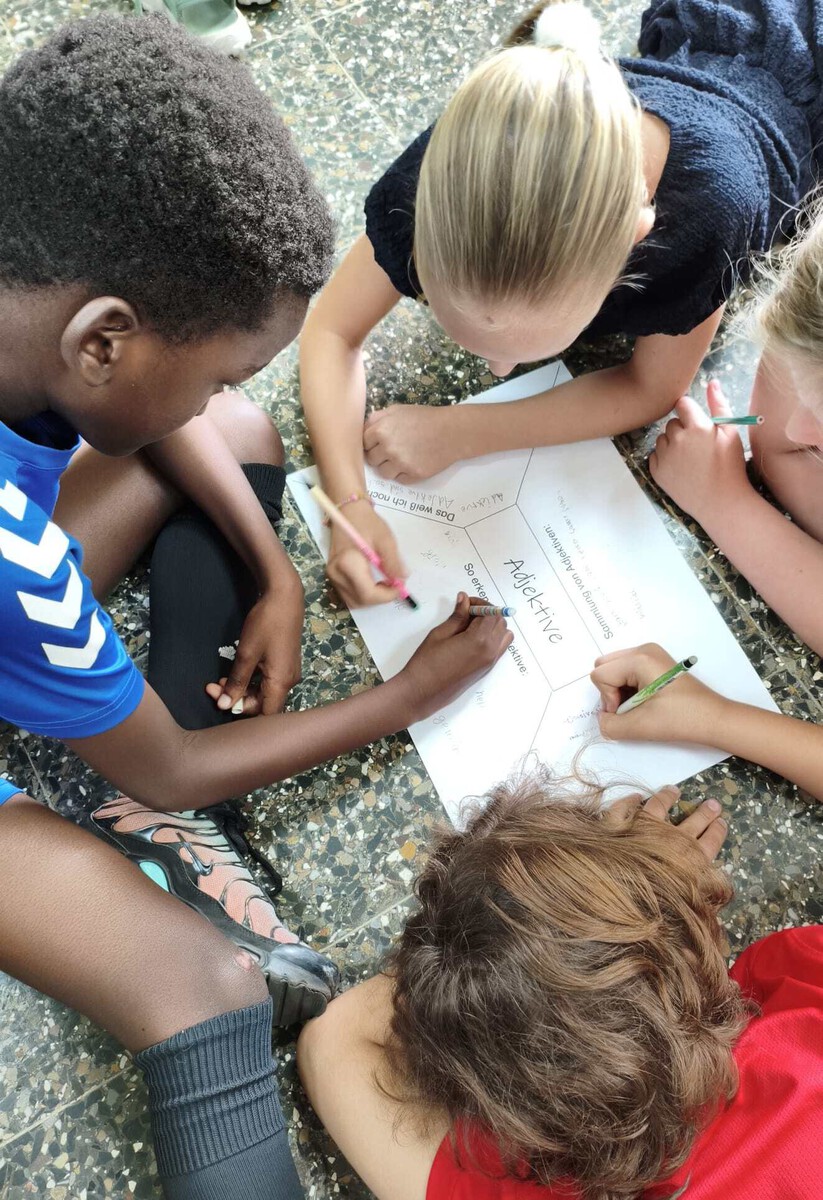 In Classes 3/4, the “Little WE” moved into our Ethics lessons this week. Together, the children discussed what is important so that the WE in the middle of the class feels comfortable and welcome. This led to thoughtful conversations about kindness, respect, and how we can strengthen our class community.
In Mathematics, the students continued working on the topic of length. Using rulers and set squares, they measured different objects from their school bags and practised using measuring tools accurately.
In German, we completed our unit on past tenses and started a new topic: adjectives. First, the children worked in small groups to collect and share their prior knowledge, before exploring new examples and activities.
In Science, Classes 3/4 began an exciting new unit on “Our Internal Organs.” The children identified key organs, explored where they are located in the human body, and learned about their functions. They also created their own anatomical drawings, carefully placing each organ in its correct position. To end the week, the students worked hands-on with 3D human body models and practised assembling the internal organs inside the torso—an engaging and very successful learning experience.
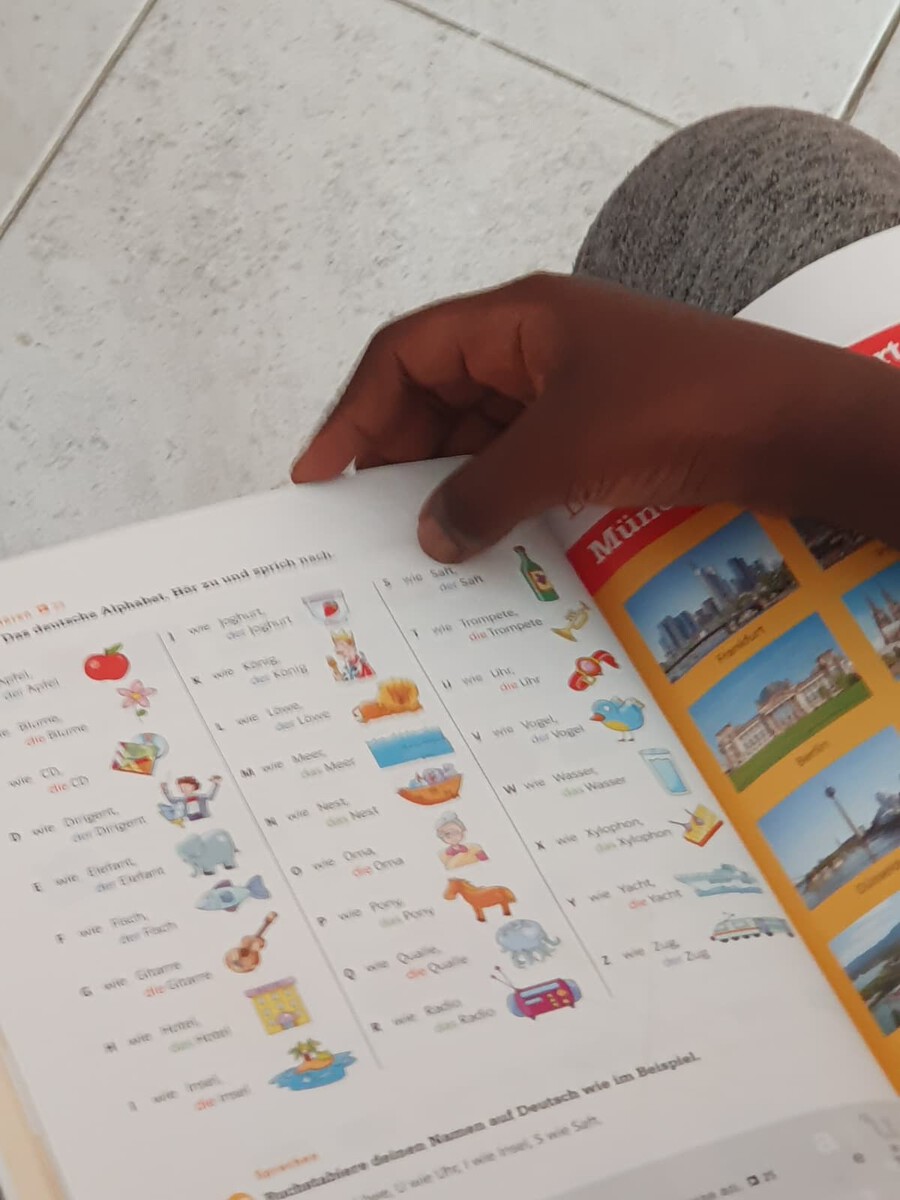
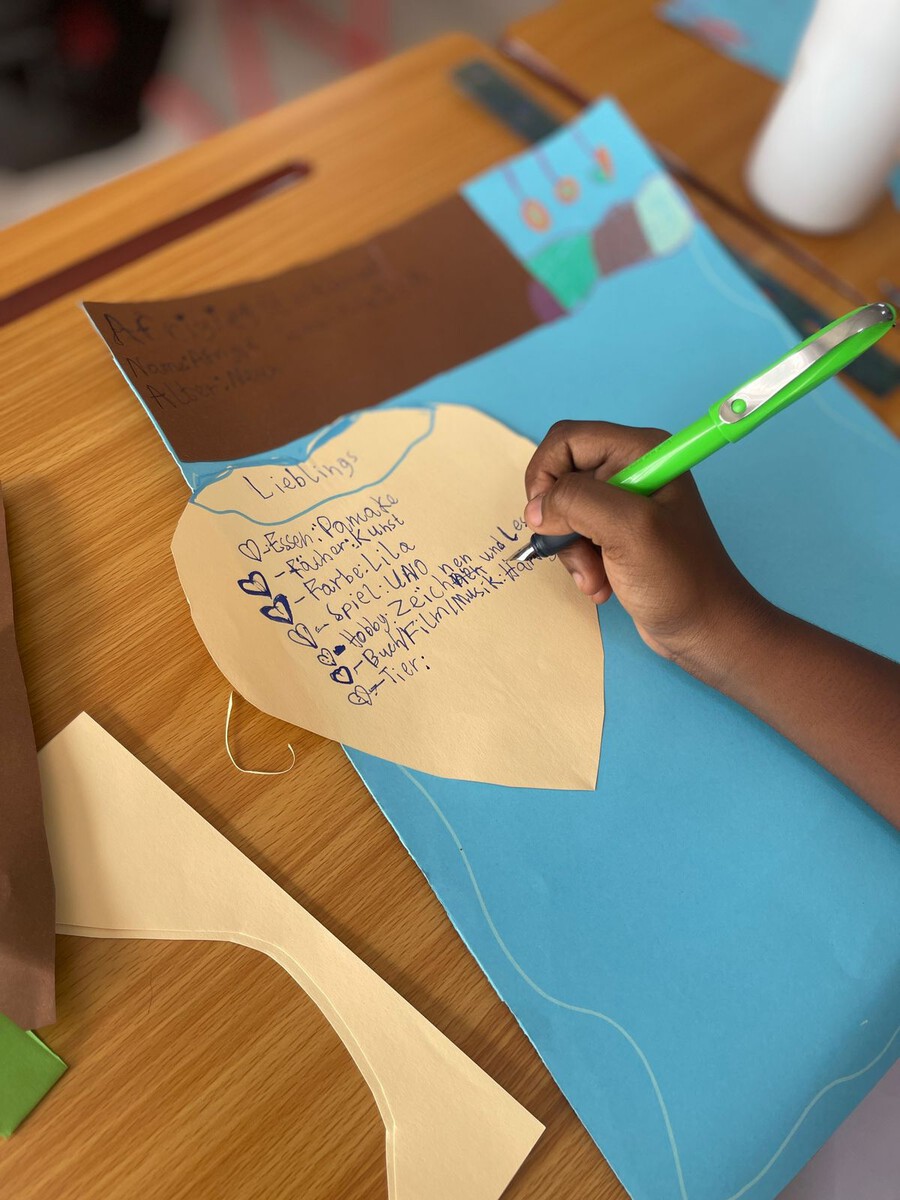
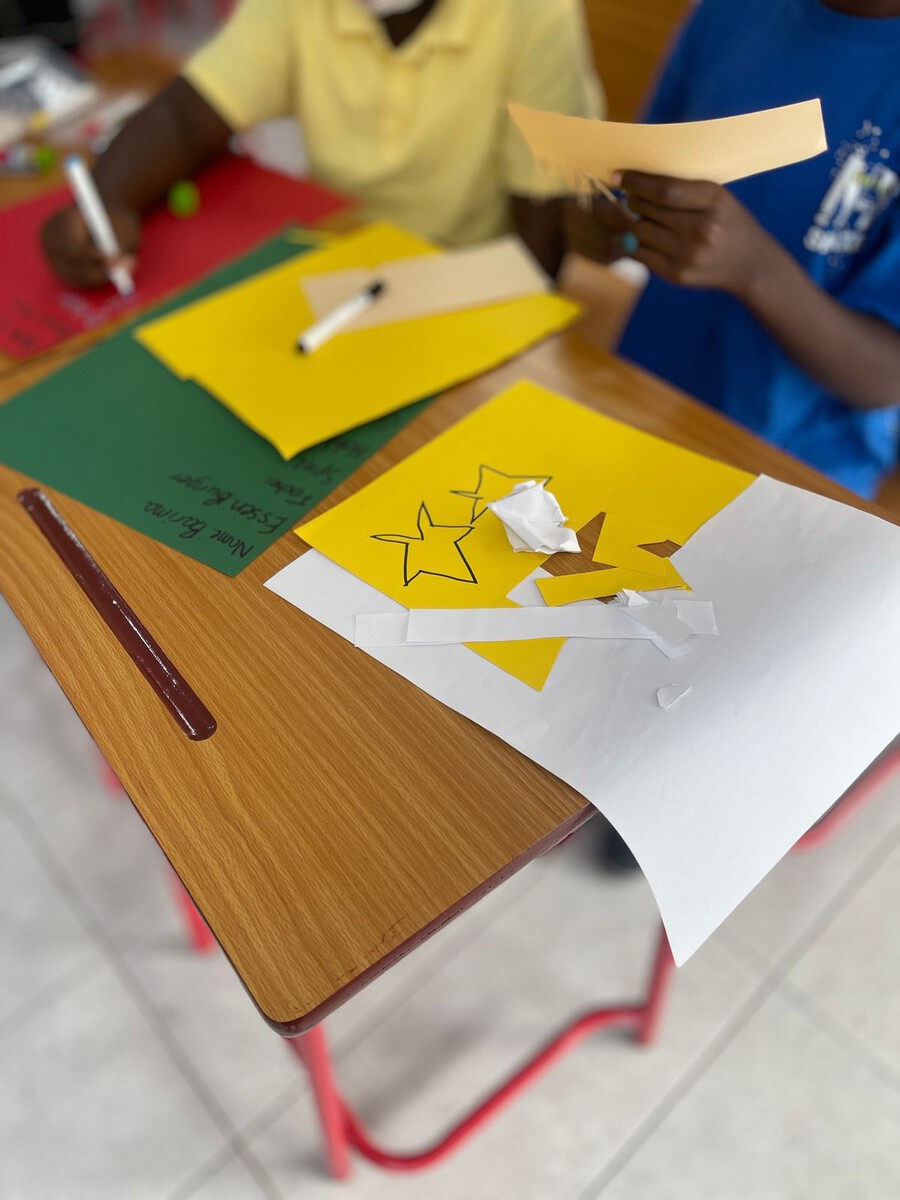
Our new intensive German as a Foreign Language (DaF) group also completed its second week. The motivated learners from Grades 3, 4, 5, and 6 focused on vocabulary related to Mathematics, Geometry, classroom activities, and the alphabet. In addition to word-card boxes, individual vocabulary lists were introduced to support learning. The students also created and presented their first German-language personal profiles. During the week, the group completed the second part of their learning assessment as well.
Secondary School
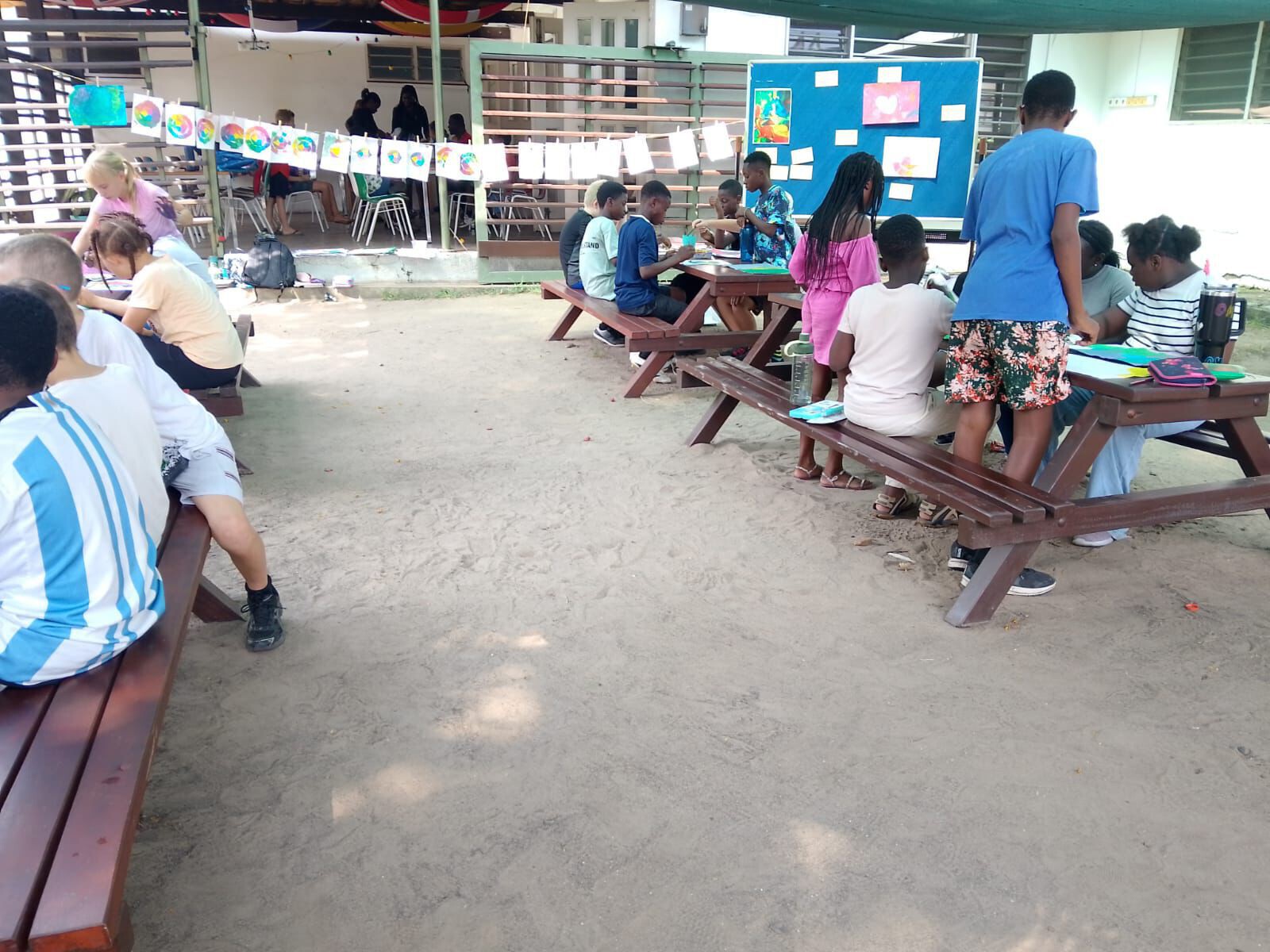 This week, Class 5 began a new Biology topic: amphibians. We focused especially on the development of the frog and learned about the fascinating changes it goes through from egg to adult.
In Art, the colour wheel was the main focus. Students explored primary and mixed colours and learned how colours can be combined in different ways.
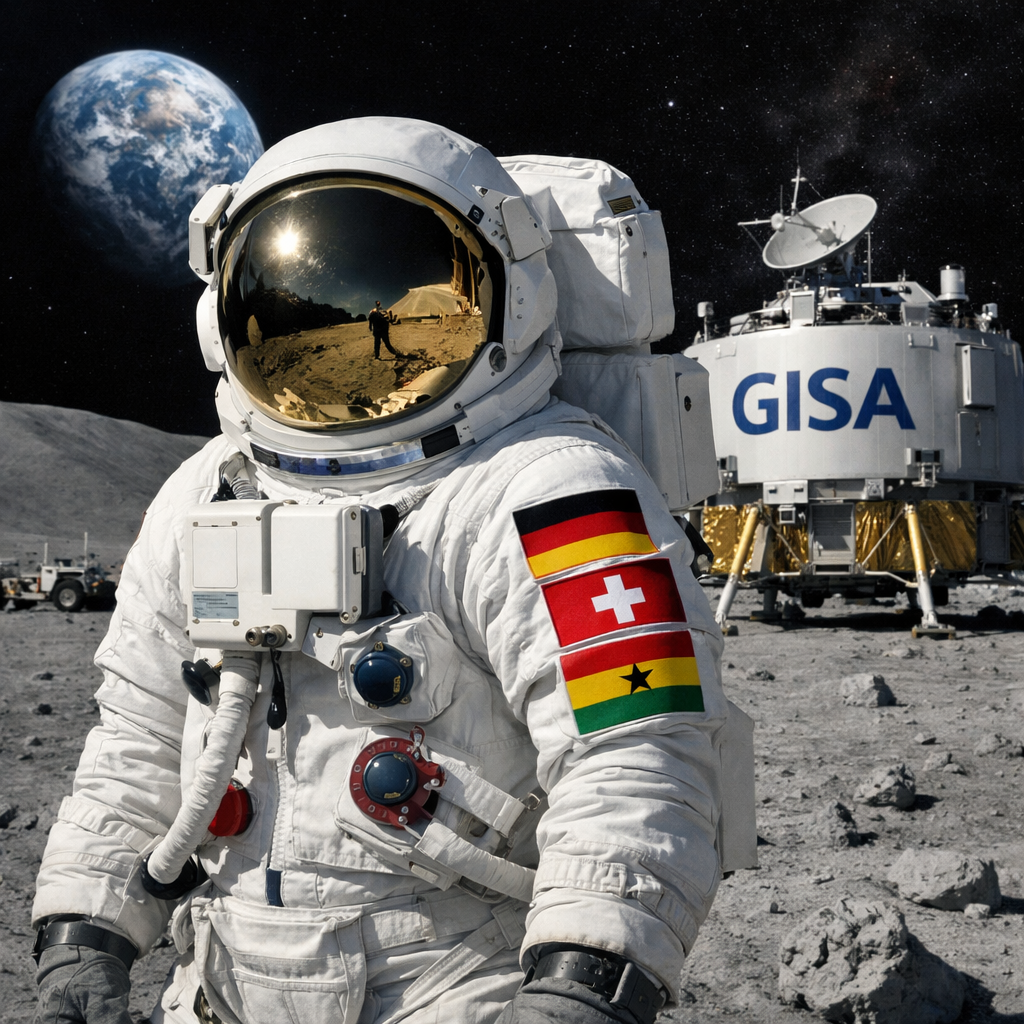 In Geography, Classes 5/6 dived into the history of space travel – from Sputnik to Mars rovers, from risks and opportunities, and above all the human spirit of exploration.
In the second week of the new calendar year, Class 6 worked on a wide range of exciting learning activities. In Mathematics, we explored cuboid nets, checked different net shapes, and drew them independently. In addition, we created oblique drawings of cubes and cuboids. Along the way, we discovered that a cuboid with equal measurements can look different depending on which face is chosen as the front view—an insight that strengthened our spatial awareness.
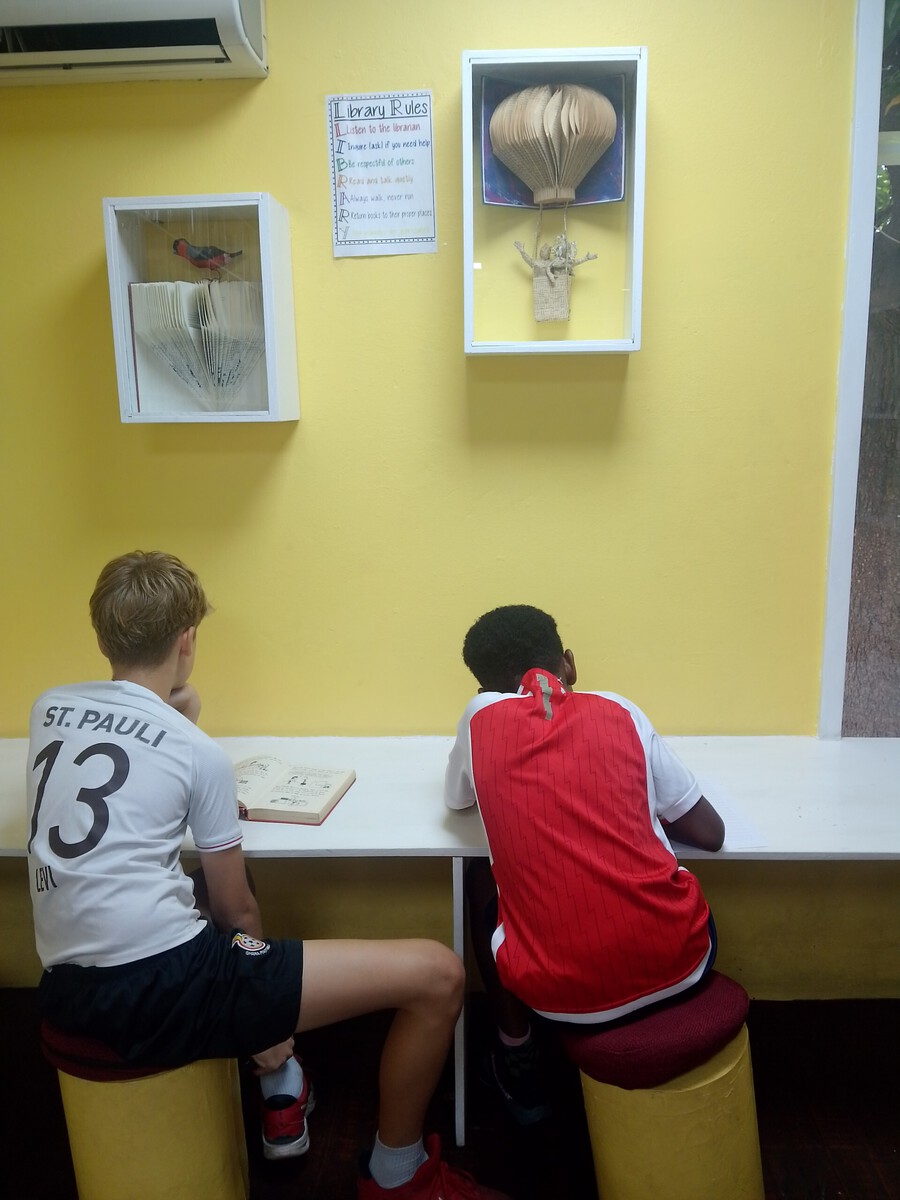 We were also busy with language learning. In German, we continued working with Käpt’n Blaubär and his “big and small lies,” exploring the typical features of tall tales. A particularly enjoyable part of the week was our weekly reading time on Thursday morning in the library, which provided a calm and highly productive working atmosphere.
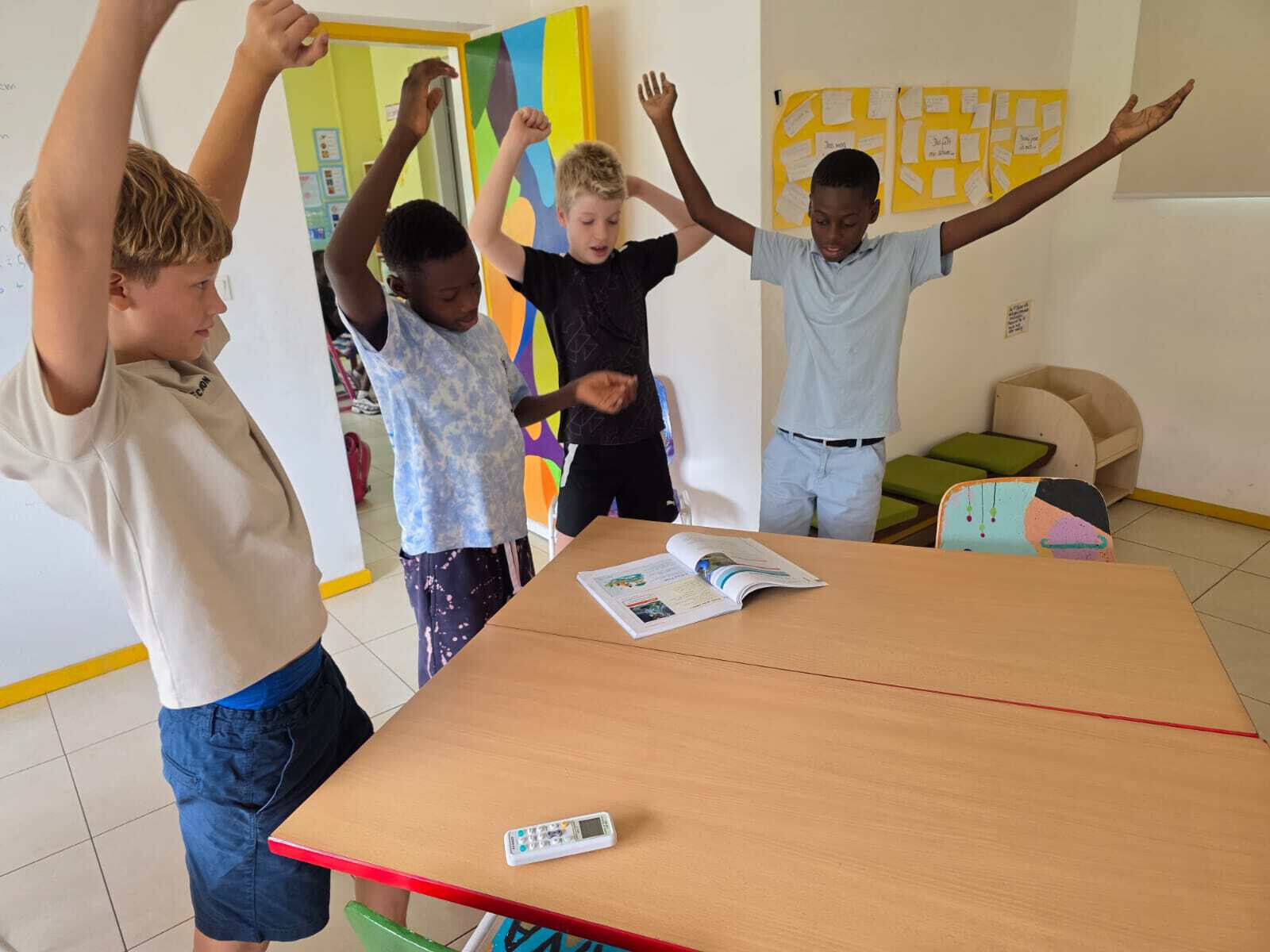
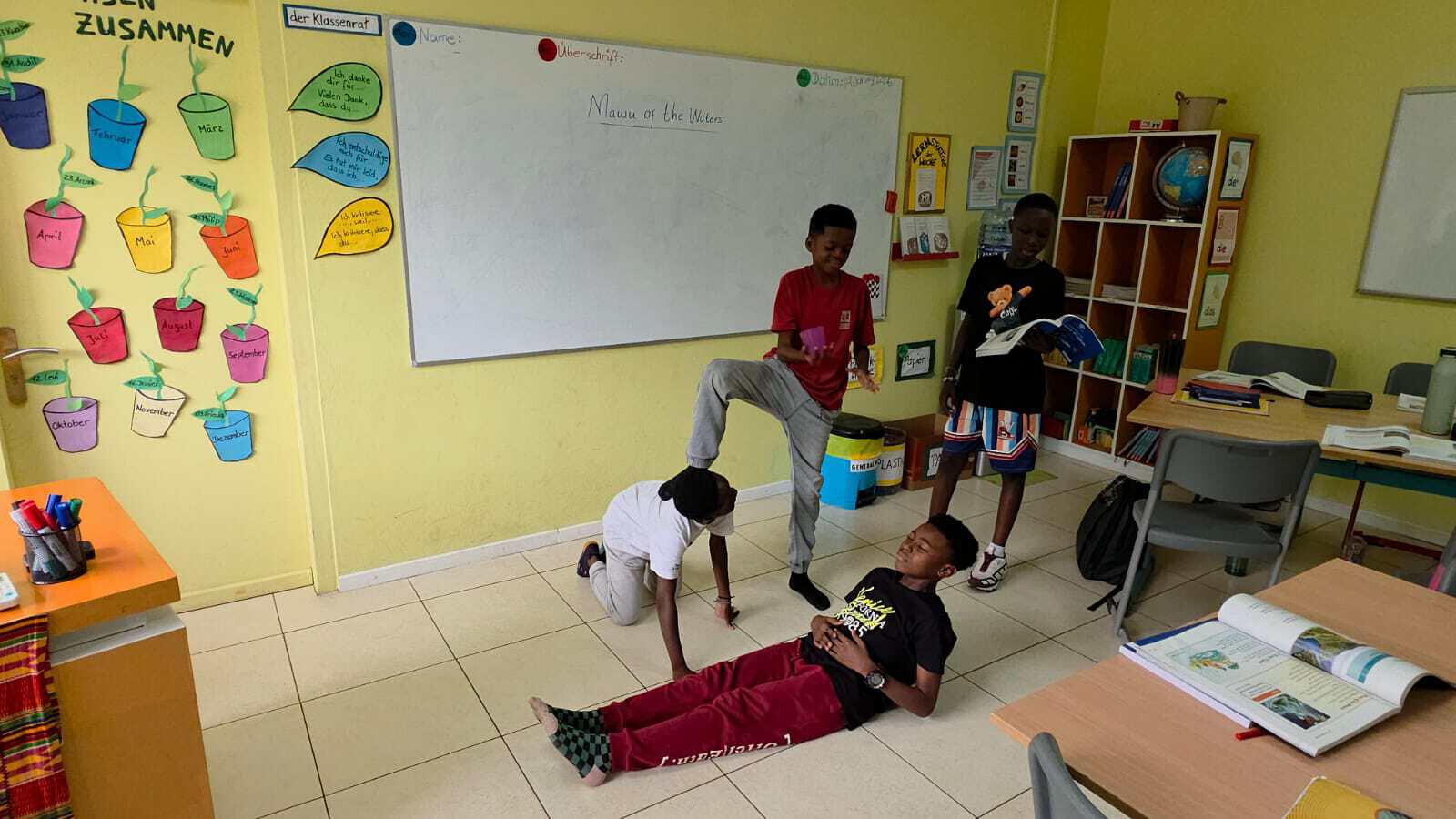
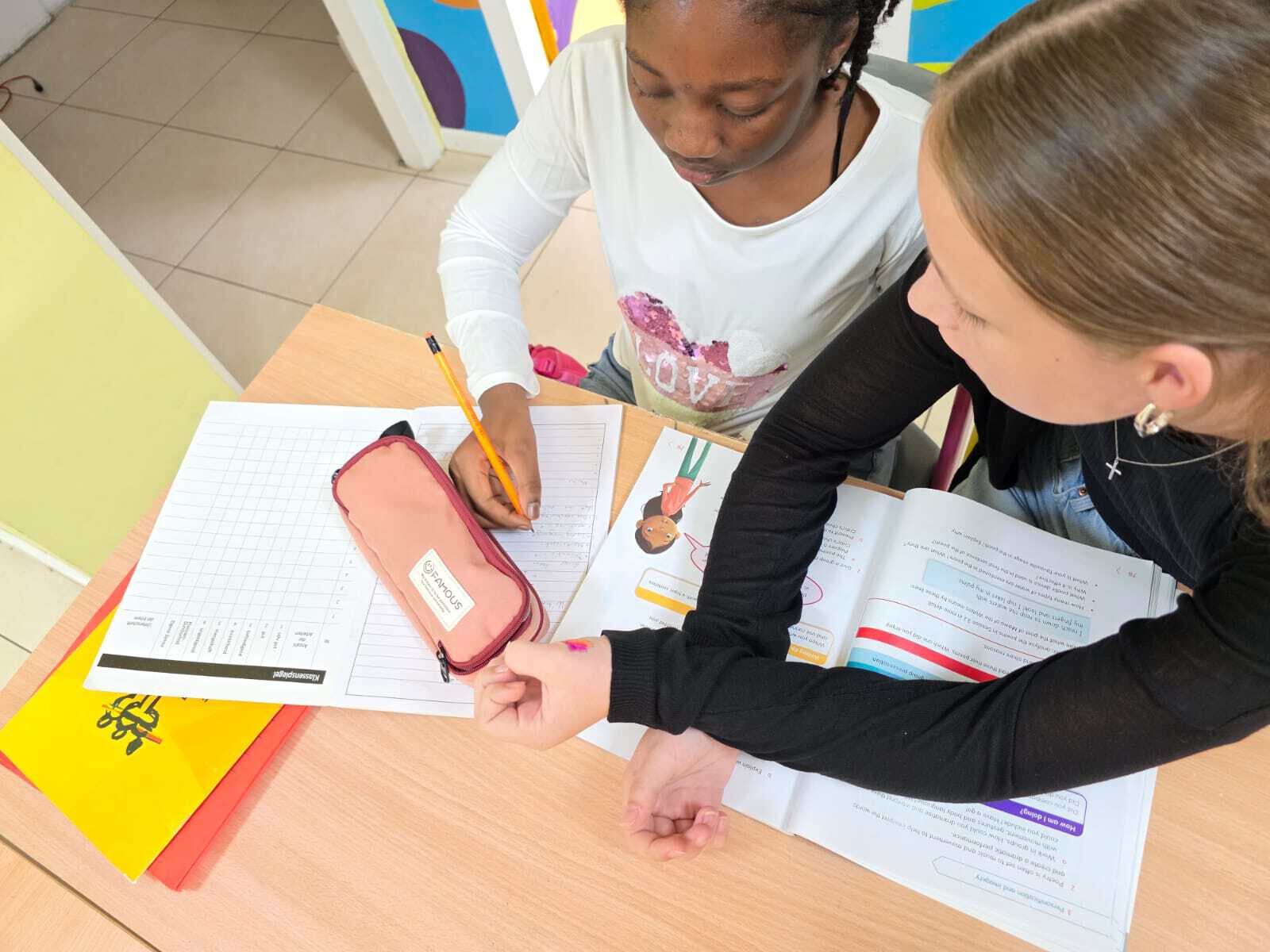
In English, we deepened our work with poetry by interpreting different poems and discussing figurative language as well as meaning, mood, and theme. We ended the week with group performance presentations, supported by student judges who offered constructive feedback. Next week, students will write their own poems and present them to Class 5.
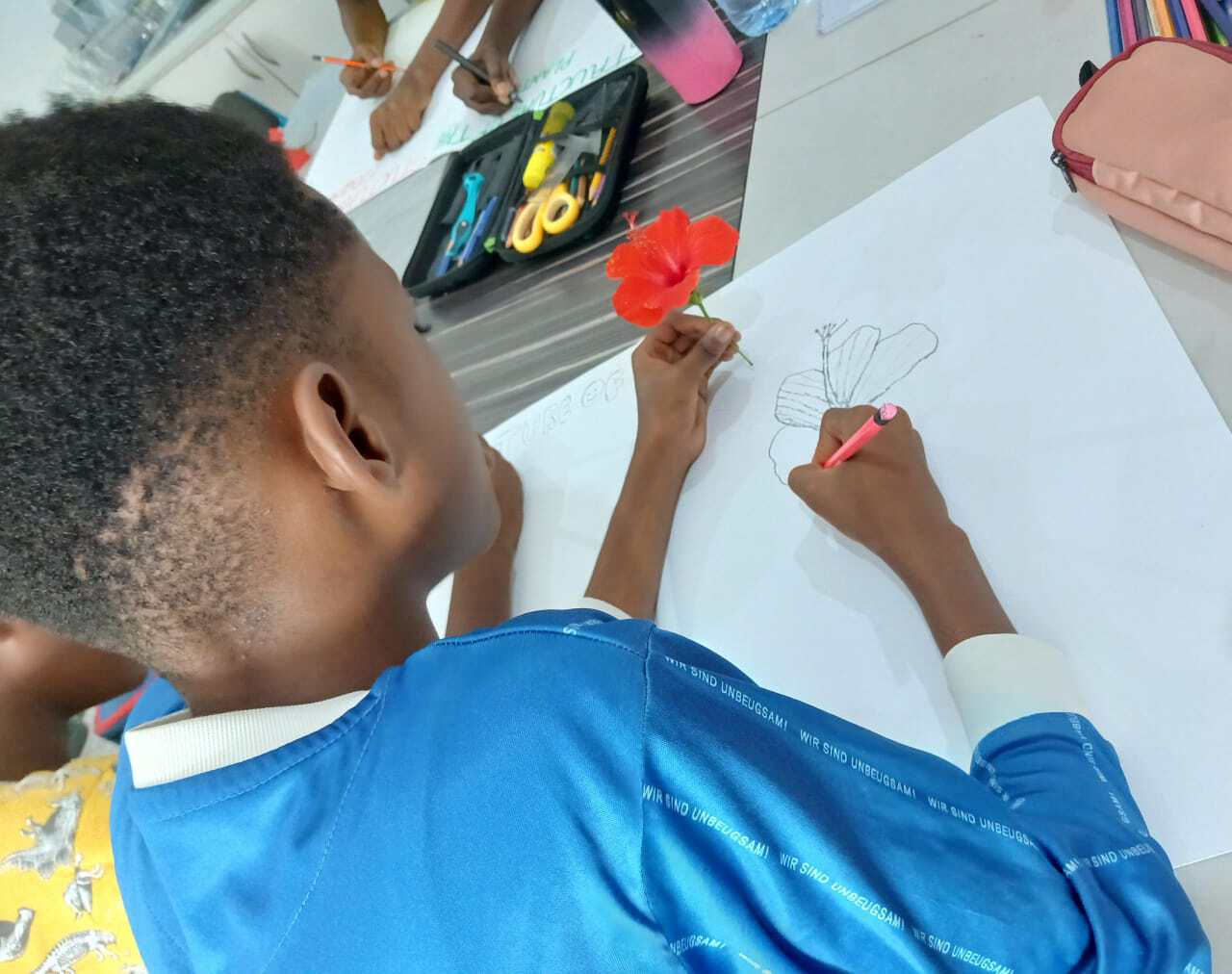
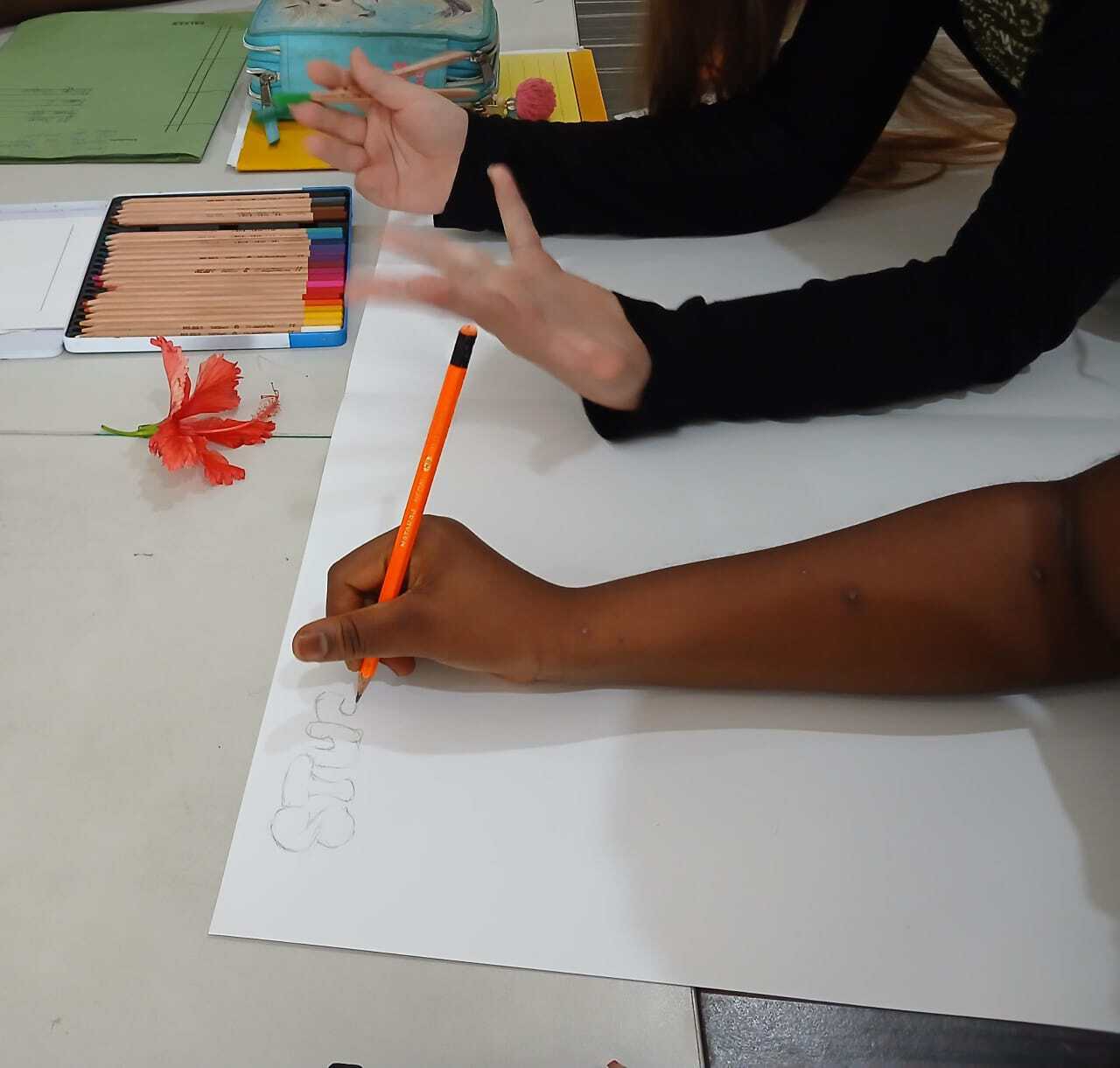
In Science, we continued our unit on seed plants and focused on the structure of a flower. Using real flowers, we identified the different parts and discussed their functions. We are currently creating posters on this topic, including detailed drawings, deeper research, and interesting additional information.
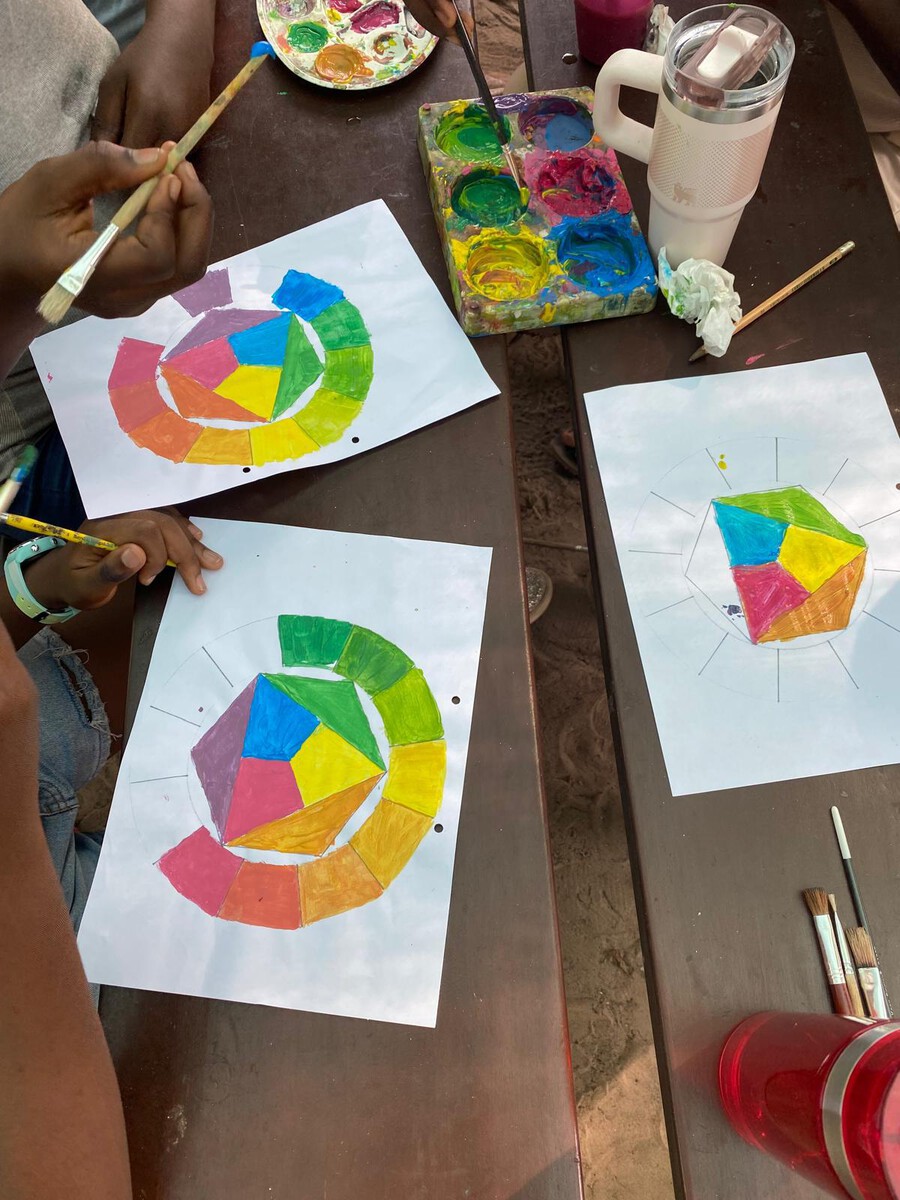 Creativity was also a key part of our week in Art, which we spent together with Class 5 in the art studio. There, we worked with Itten’s colour wheel, mixed primary colours to create secondary and tertiary colours, and explored the concept of complementary colours, which students were able to explain confidently using their prior knowledge.
We are looking forward to the upcoming presentations and to many more varied learning experiences in Class 6.
In Mathematics in Class 8, students worked intensively on the area of a trapezium. They not only learned the formula, but also practised rearranging formulas in order to calculate missing values. In addition, we explored the Pythagorean theorem and how it can be used to calculate side lengths in right-angled triangles.
In Mathematics in Class 7, the angle bisector was the main topic. Students learned about its meaning, constructed angle bisectors independently, and discovered how they are used in geometry.
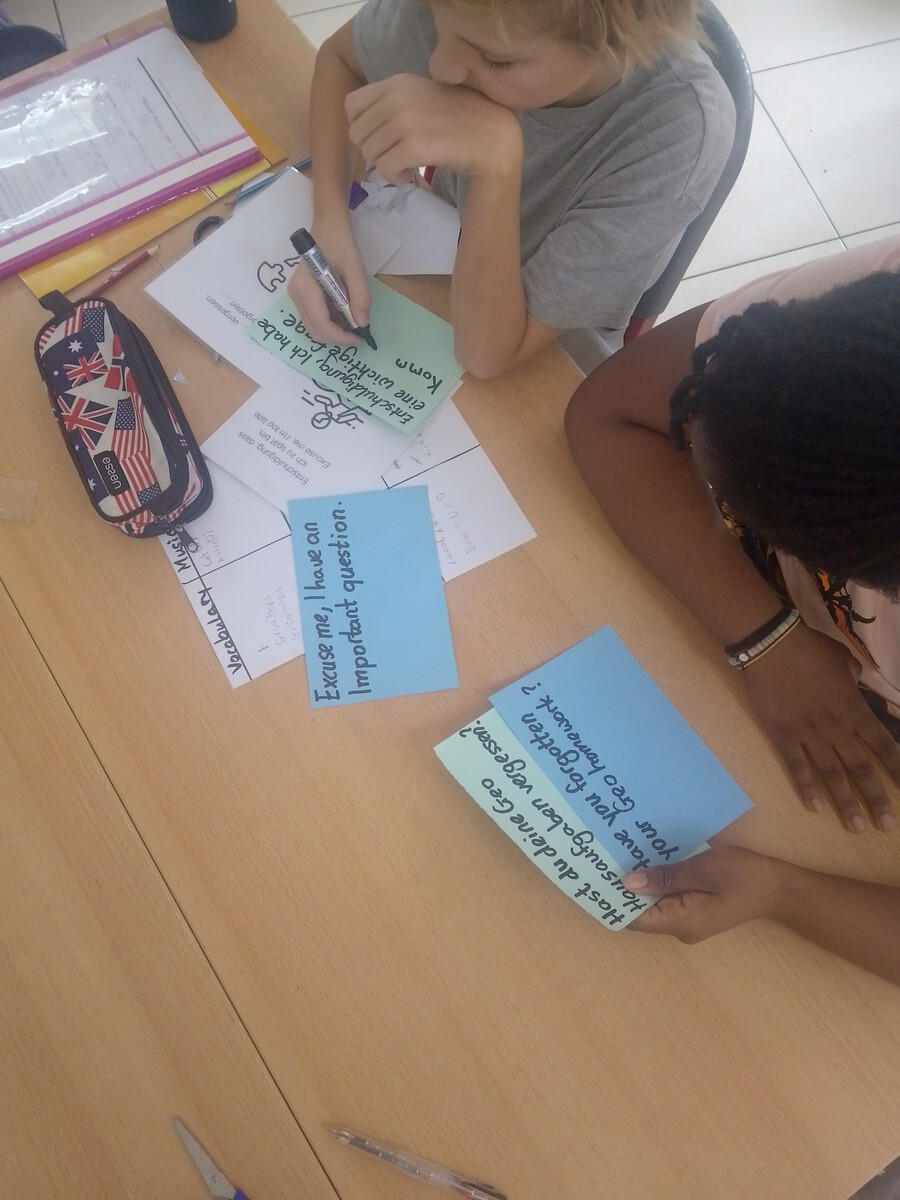
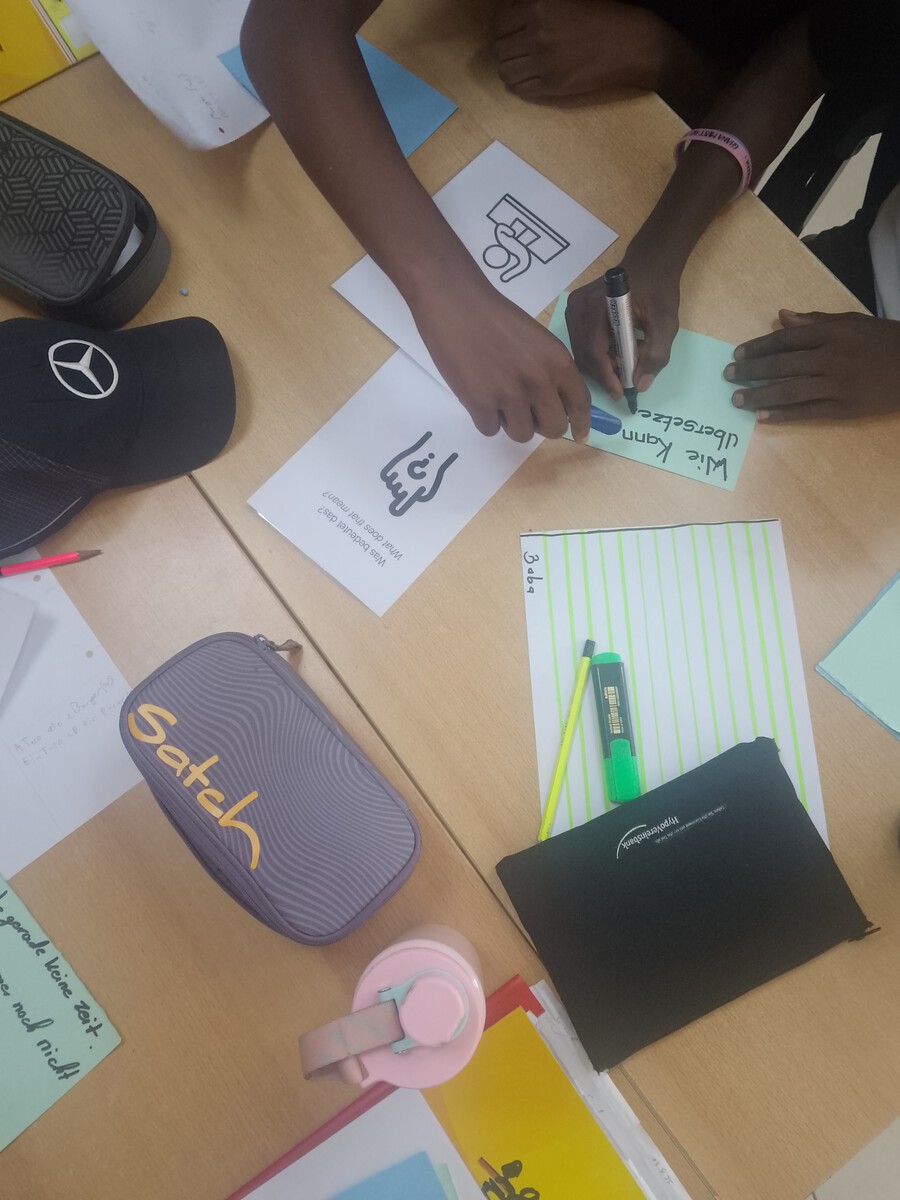
This week, our lessons in Classes 7/8 were all about team teaching: we worked together in English and German. We started with a playful warm-up activity where we collected as many everyday words and expressions as possible – like a little “vocabulary musical.”
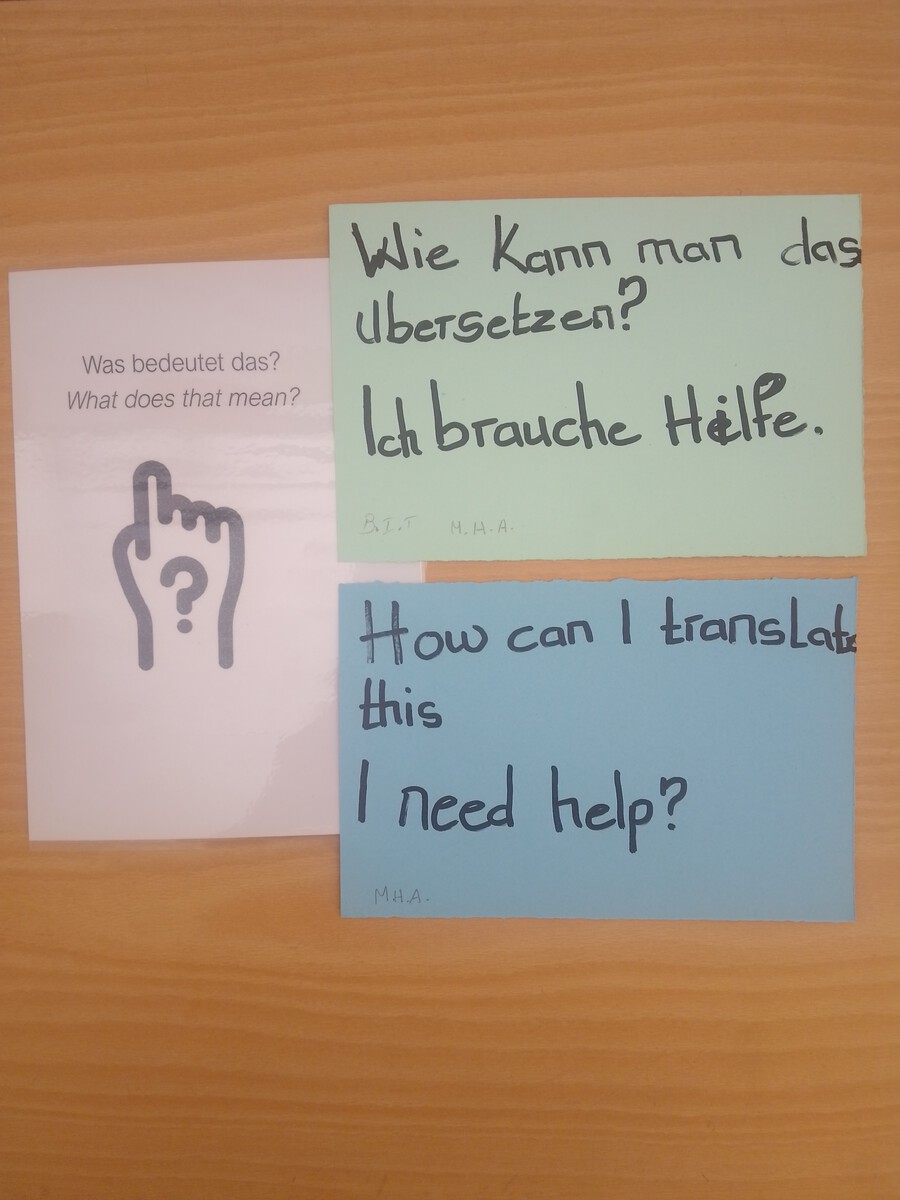
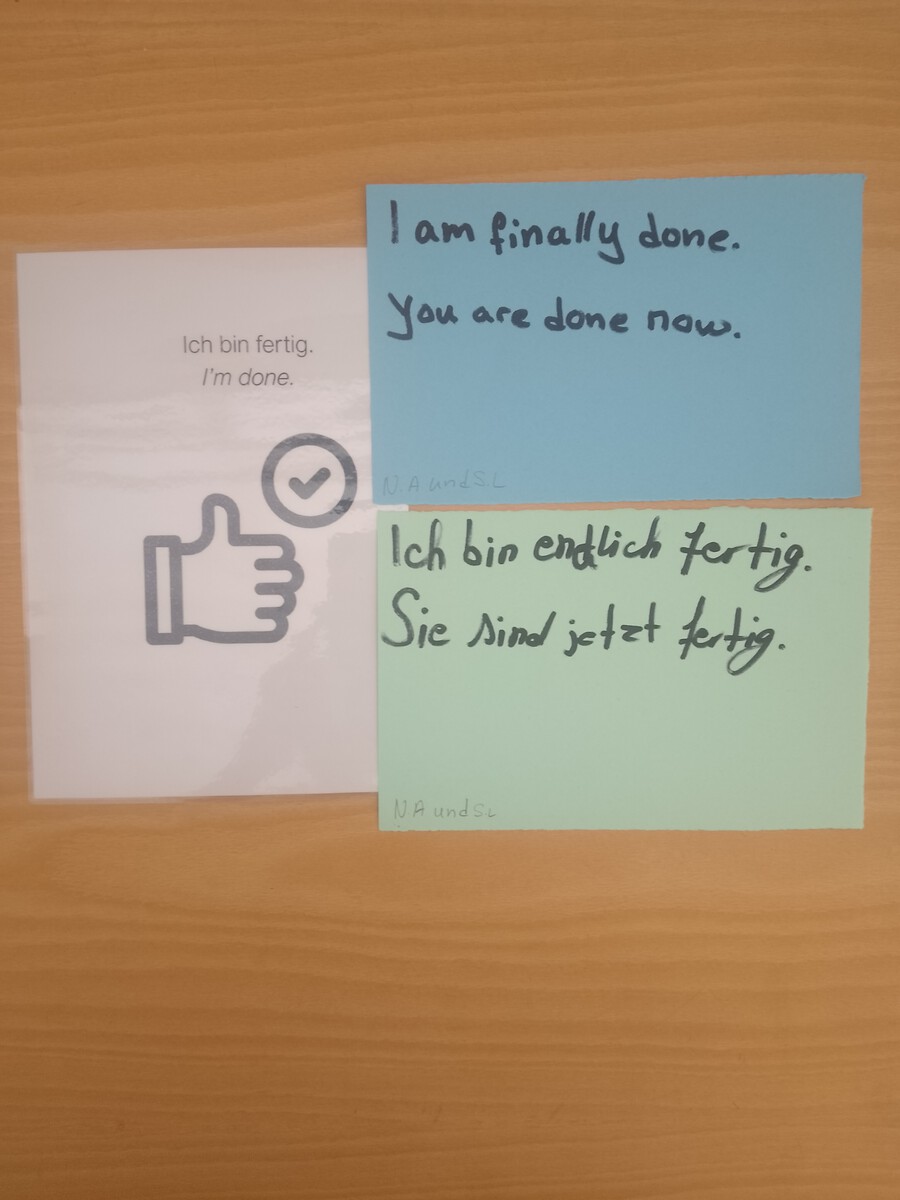
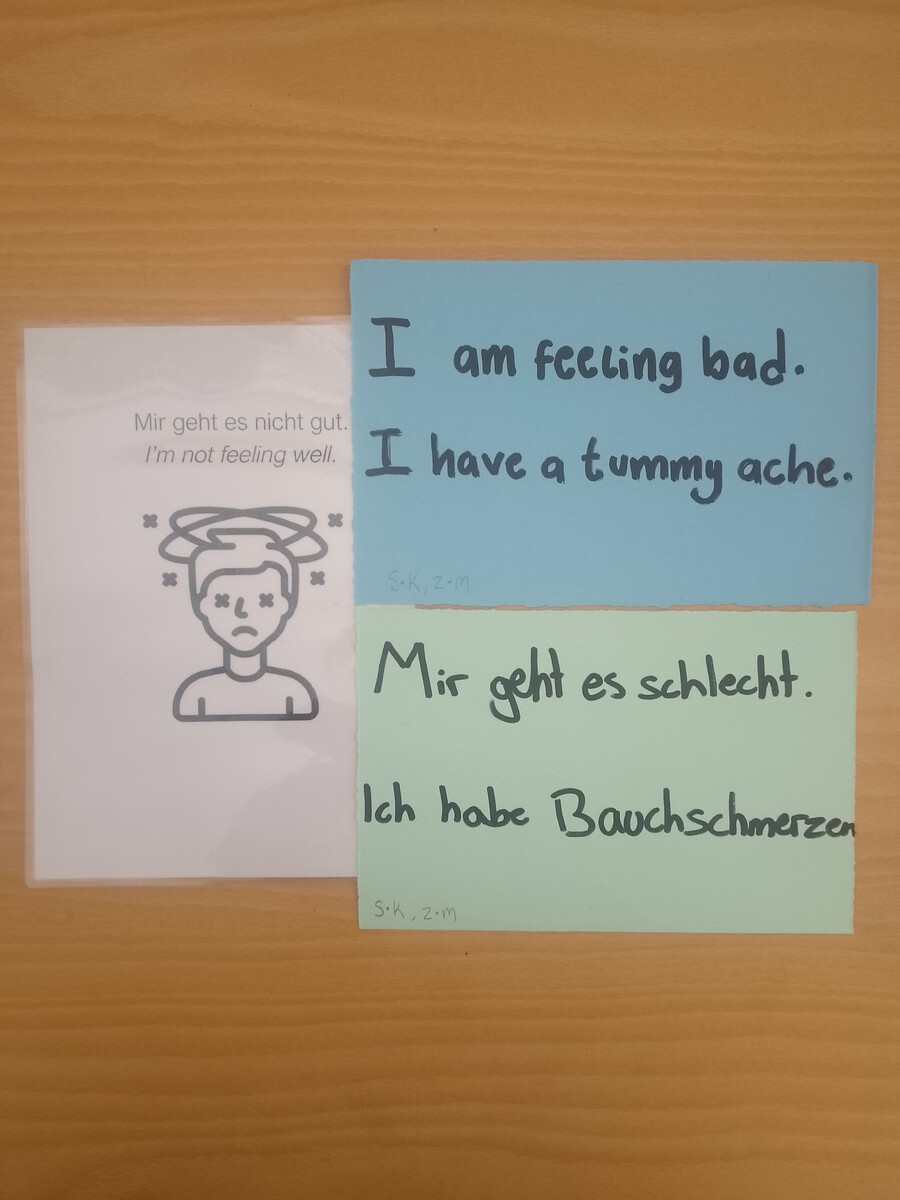
After that, we expanded the phrases we had gathered by keeping the main verb and adding an adverb or a noun. In the next step, we were given typical classroom phrases as examples and created our own sentences based on them. This allowed us to compare the structures of both languages directly and use them in a creative way.
Next week, we will take a closer look at our texts. We will check the grammar of our sentences and display the collected words and phrases on the classroom wall, so everyone can benefit from our creative ideas.
This cross-curricular approach not only strengthens our language awareness, but also makes learning active, creative, and team-focused.
Biology lessons also included many interesting topics. At the beginning, students discussed whether they would choose to be cloned, as Volvox algae reproduce through cloning. They then learned more about Volvox algae, investigated their special characteristics, and explored their importance as an example of multicellularity.
In the second Biology lesson, a new unit began focusing on the human body and digestion. Using different food products, students analysed nutrition tables, compared nutrients, and researched key characteristics in order to develop a first understanding of a balanced diet.
In PE for Classes 7 and 8, everything revolved around fitness and movement. After the “Workout of the Day,” students completed a range of exercises at different stations, focusing on strength, endurance, flexibility, coordination, and overall fitness.
In Ethics, the classes worked with the iceberg model. Students learned that only a small part of our behaviour is visible, while emotions, thoughts, needs, background experiences, and values often lie beneath the surface and strongly influence our actions. This led to interesting discussions and new perspectives on how we interact with one another.
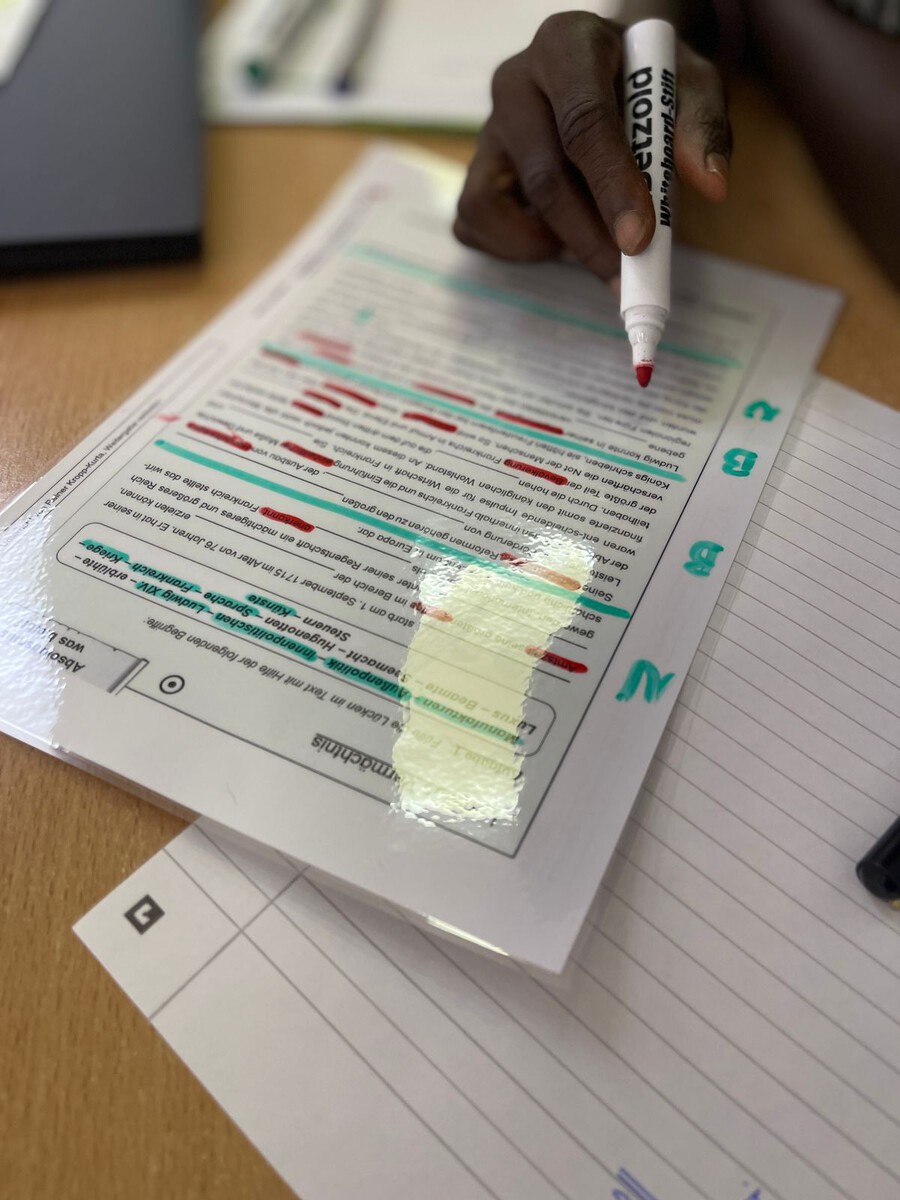
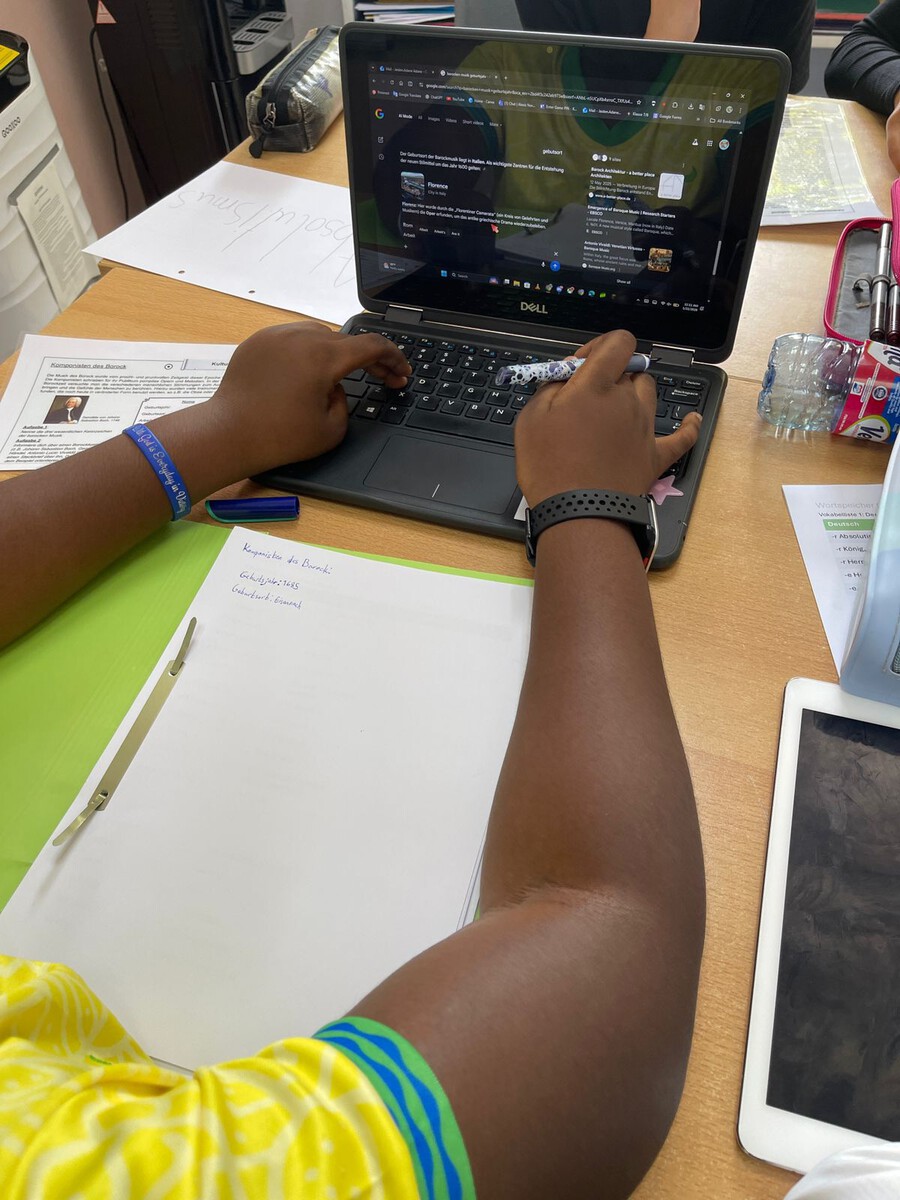
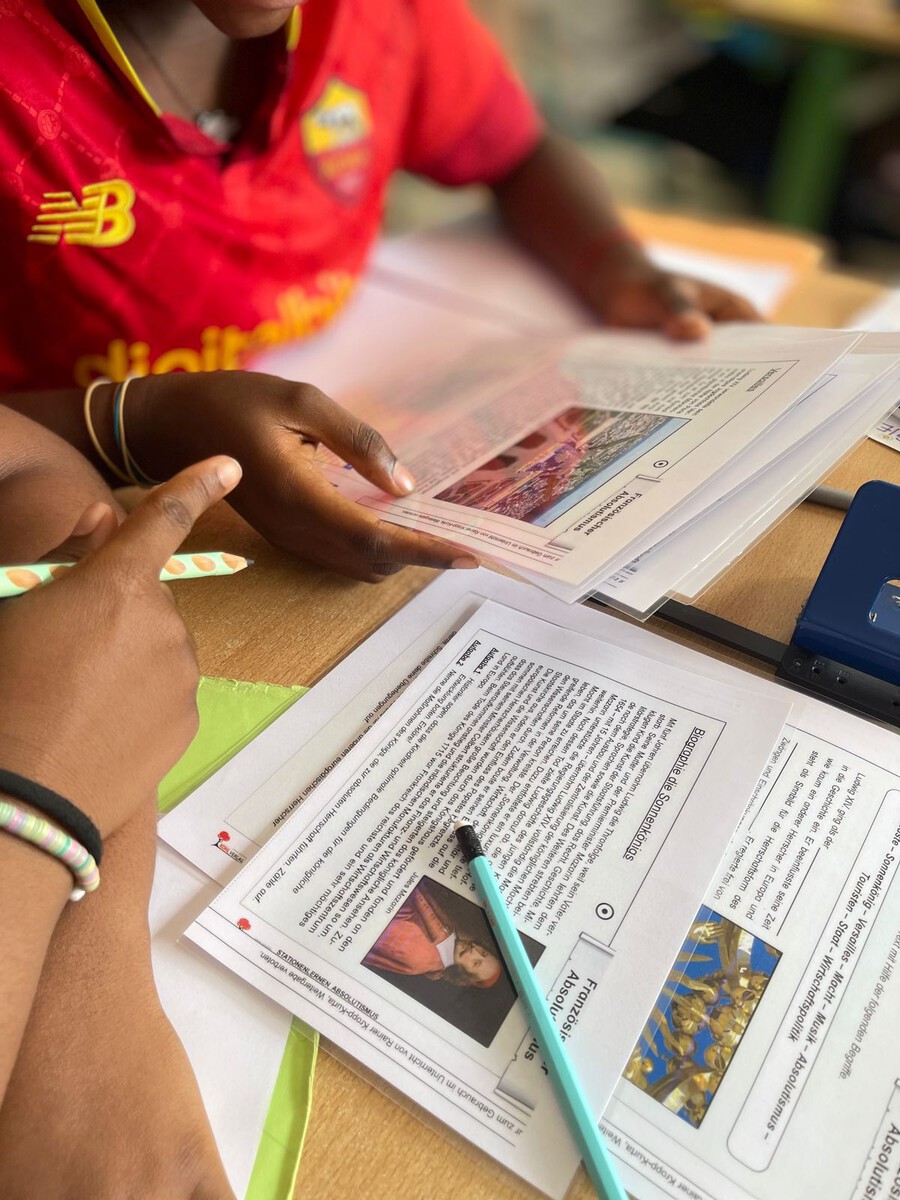
In History, students in Classes 7/8 worked on the topic of absolutism at differentiated levels. To create an authentic atmosphere and support their engagement with the period, the lessons were accompanied by contemporary Baroque music.
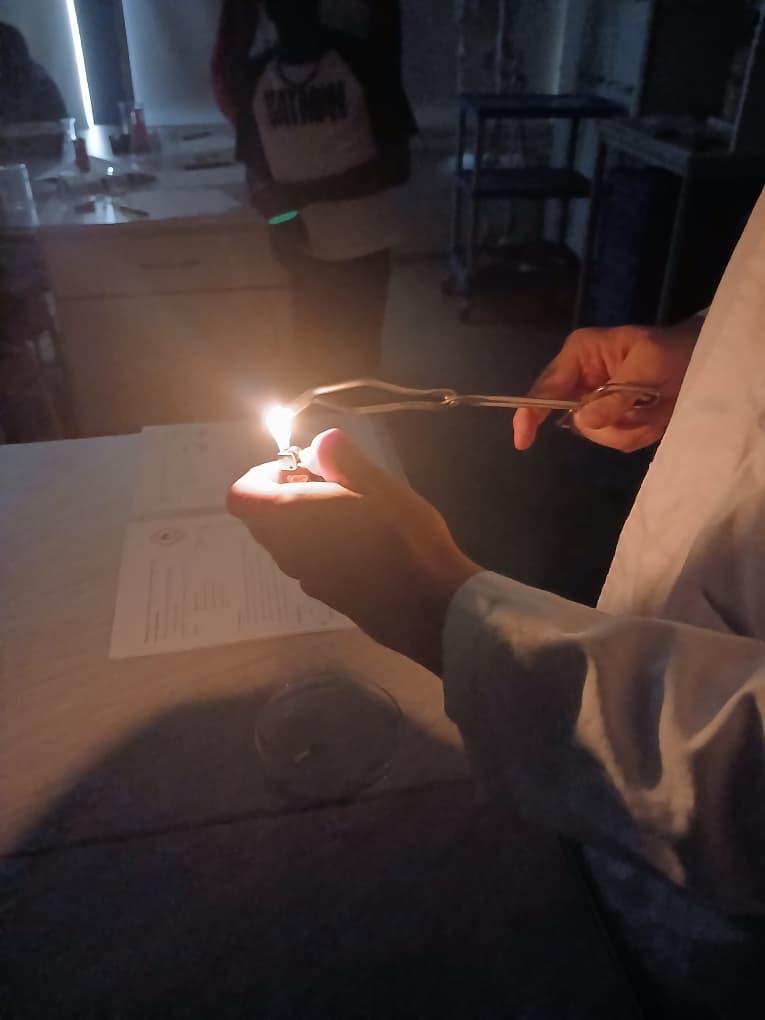
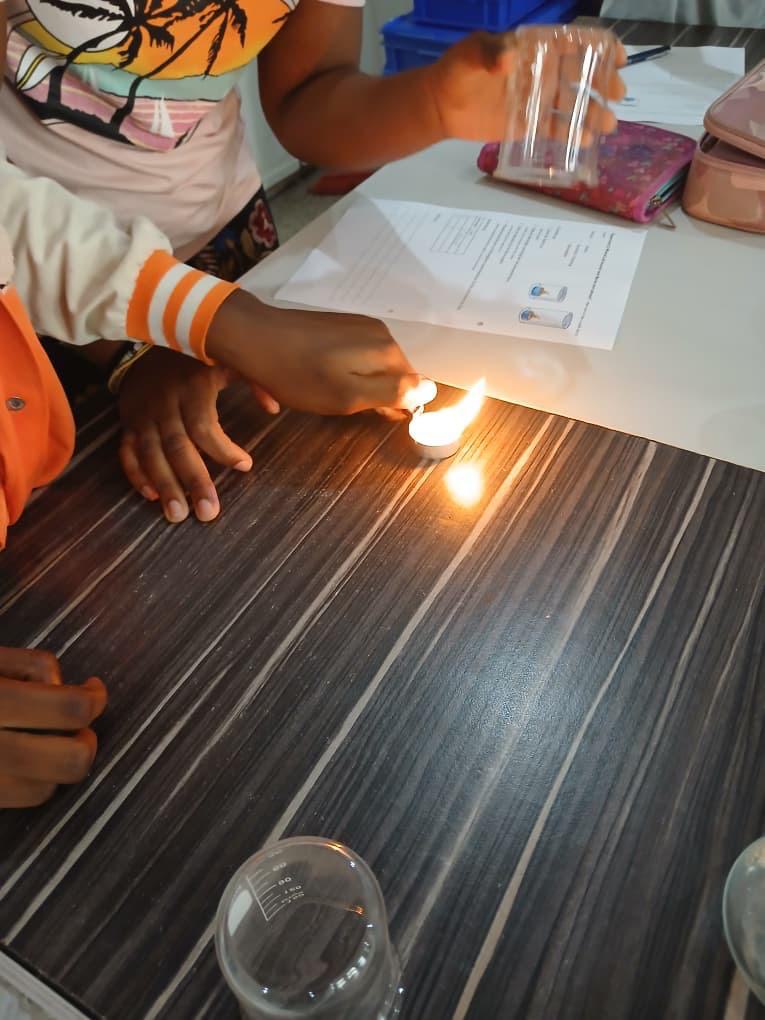
A special highlight this week was Chemistry. Students carried out various experiments related to air. Together, we explored the question of whether air actually exists and what role it plays in keeping a candle burning. We also observed what happens when magnesium is ignited. These experiments allowed students to observe scientific phenomena directly, make predictions, and recognise first connections.
In our German as a Foreign Language (DaF) lessons, we reviewed and evaluated the tests from last week and identified topics that need more focus. In groups, students worked on different tasks and then shared grammar tips and common challenges with one another.
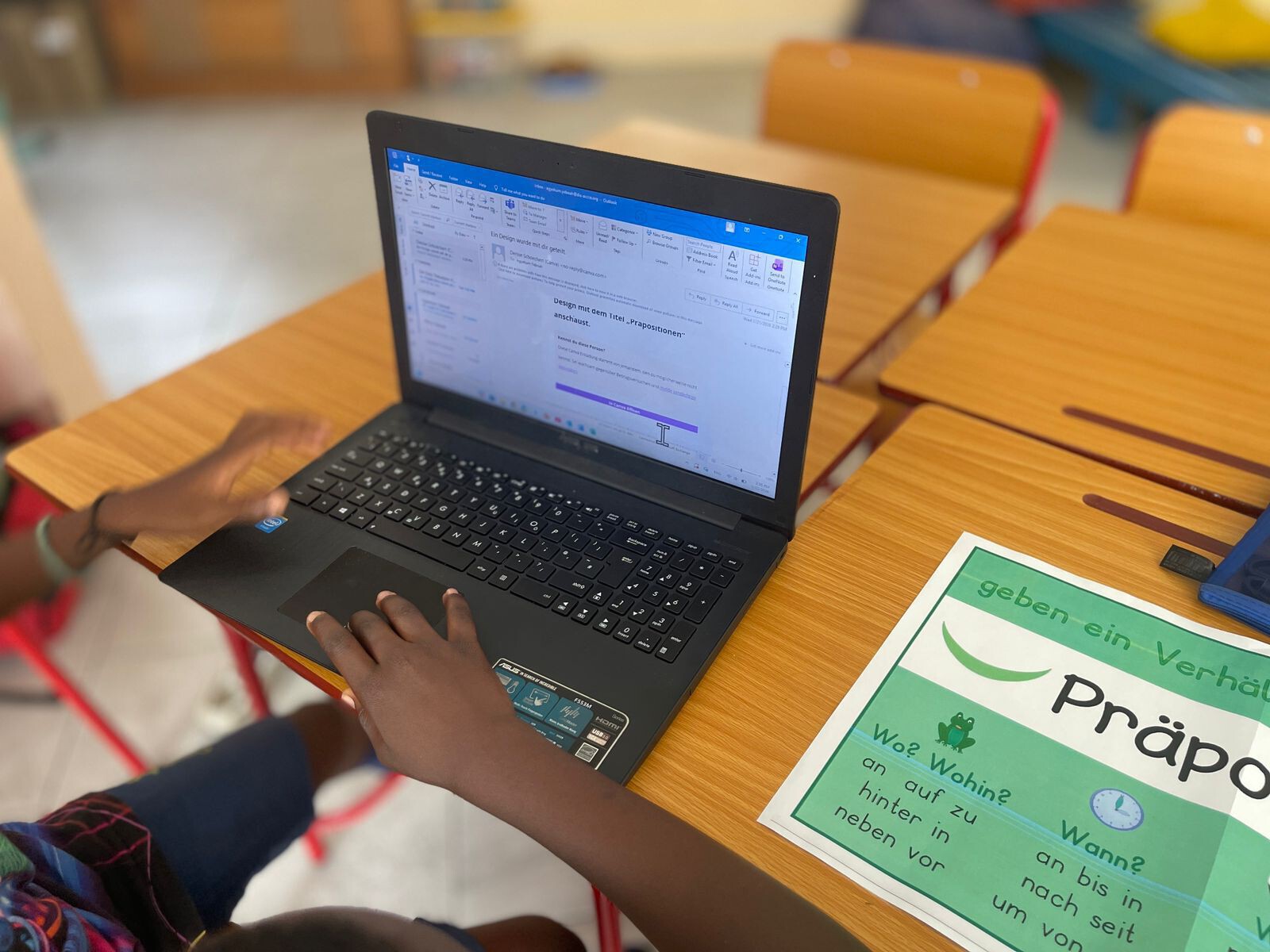
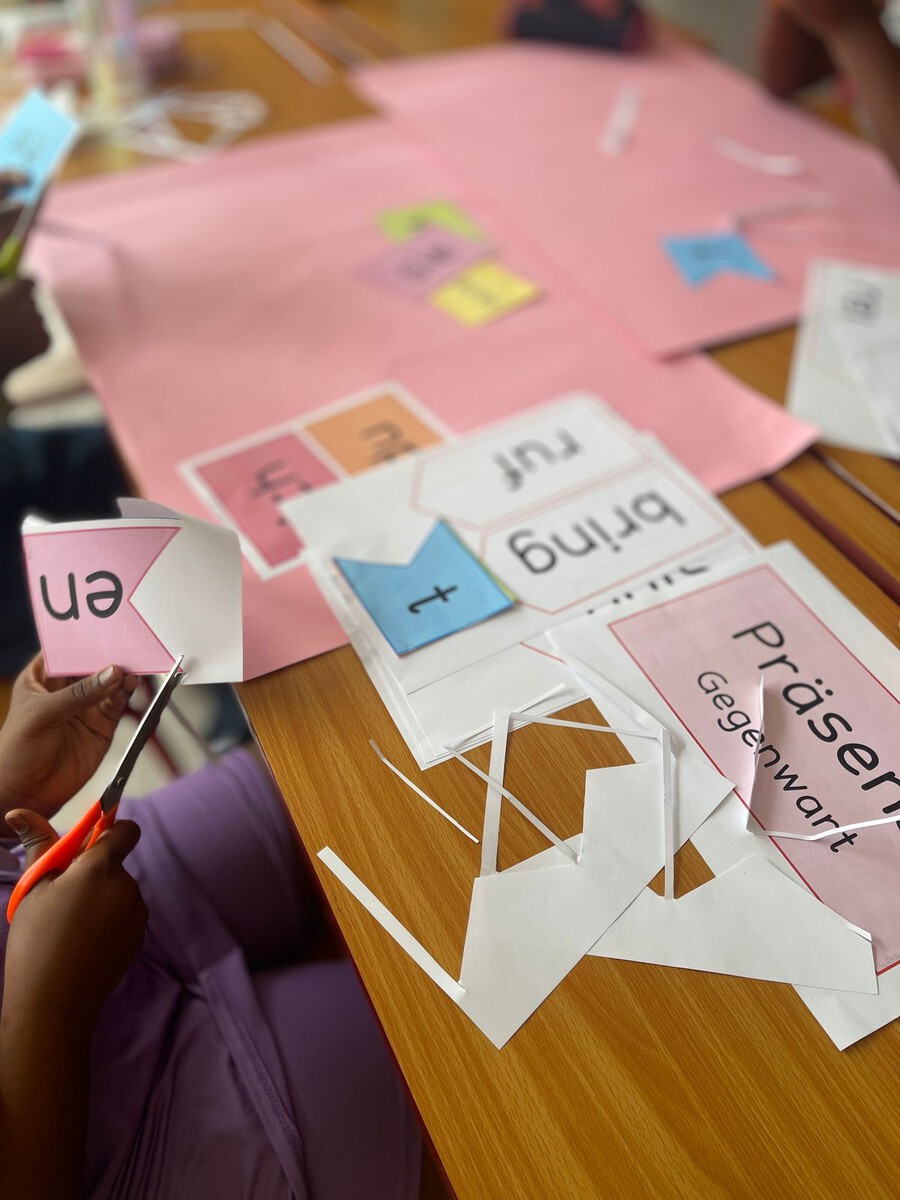
After that, we started creating overviews of tenses. While Classes 5/6 are designing analogue learning posters, Classes 7/8 are preparing digital learning presentations.
Next week, the finished results will be presented and displayed in the DaF room so that everyone can benefit from them. The posters will support students in keeping an overview when learning and applying different tenses.
Roving Reporters
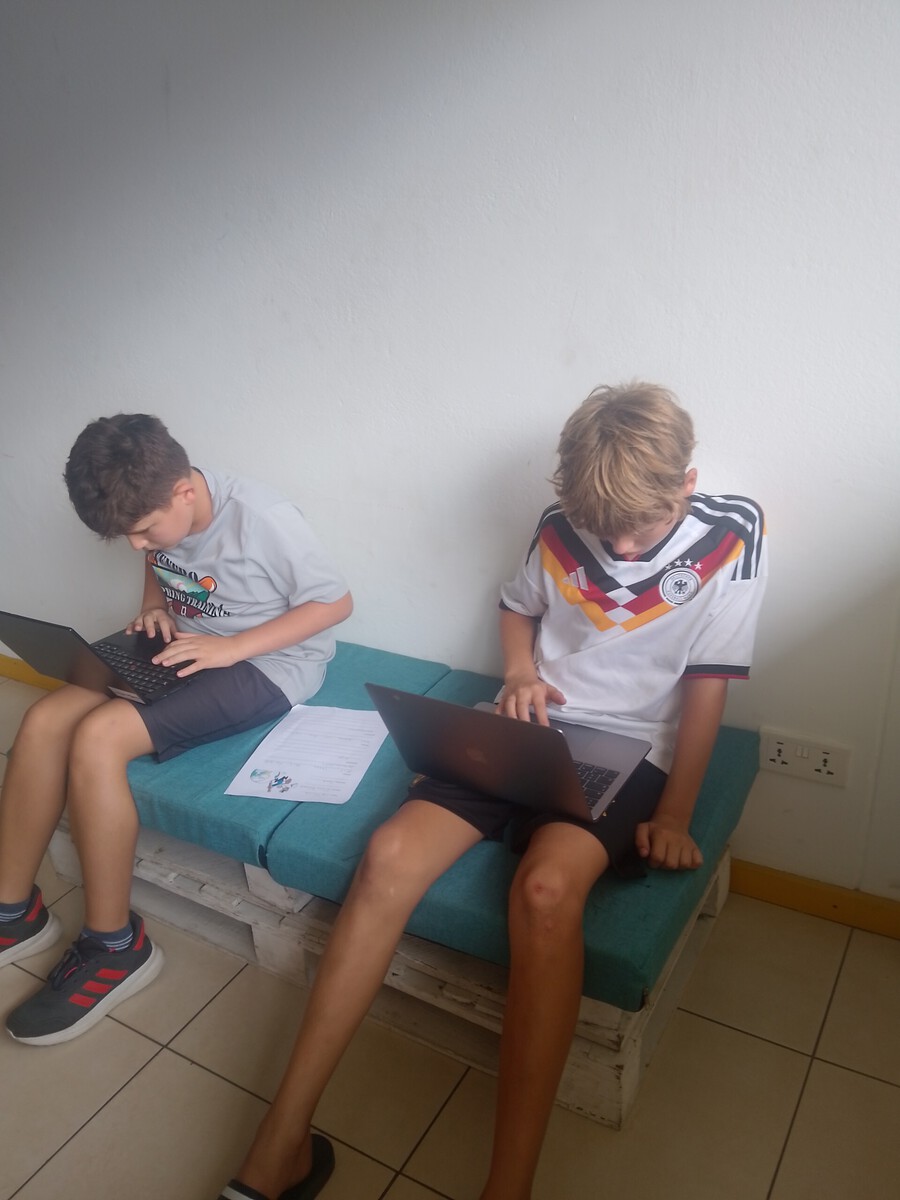
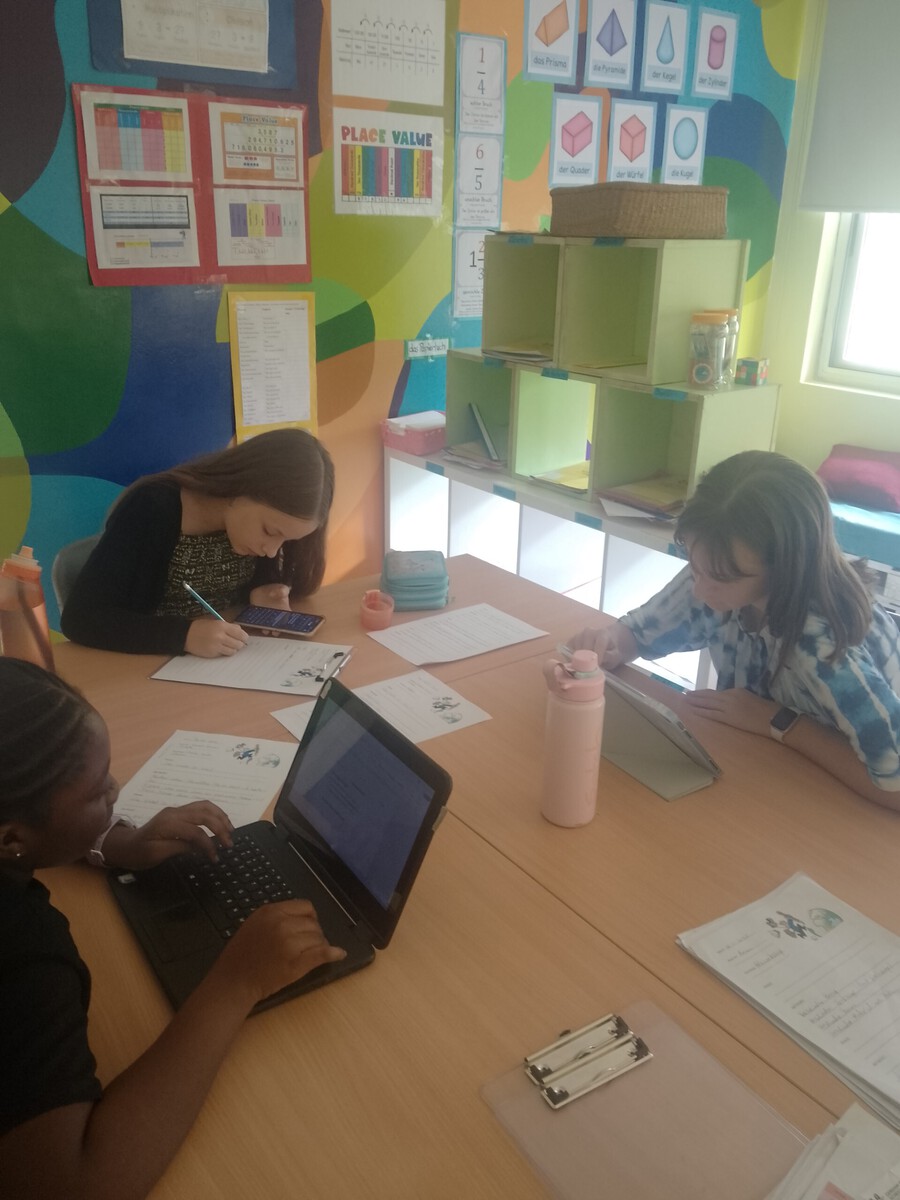
This week, we were once again racing through the school as our “Roving Reporters” — although at a slightly calmer pace than the week before. Instead of conducting lots of interviews, we focused mainly on editorial work. We discussed our articles, researched different topics, and worked hard on writing and typing our texts to make sure everything would be ready for the newsletter on time.
Trip to Ghana
Interview by the Roving Reporters Sarah, Arcani and Frieda (13 January 2026)
What are you doing here?
“We are creating a newsletter.”
“We are making a PowerPoint presentation with one slide per lesson.”
“We are writing our own website about a specific topic.”
“We are designing a travel guide about Ghana.”
How do you like the project?
“Very good.”
“Good.”
“Very interesting.”
“Okay.”
Why did you choose this project?
“Because there are cool sports games here.”
“I’m not really sure.”
Why was this project started?
“I’m interested in what Ghana has to offer. I also wanted to see what the children can do in the area of social media, and help others get to know Ghana better.”
What is the goal of the project?
“To finish the work.”
“To learn more about Ghana.”
These answers show how different the students’ approaches to the project are — but also that learning, creativity, and curiosity are at the centre of it all.
GISA News – Interview with Mrs Sara
by Levi and Felix
As part of our reporter work, we interviewed Mrs Sara. She told us that she has already been working in her profession for six years. At GISA, she is a coordinator and also takes on many other responsibilities in everyday school life.
When asked how she would rate the school on a scale from 1 to 10, Mrs Sara answered with a 9. She explained that she really likes the school. What she enjoys most about her job is working every day with happy and funny children.
When talking about her goals, Mrs Sara said that she would like to stay in Ghana and continue being actively involved there, including in connection with the hostel. The interview gave us an exciting insight into her work and her strong connection to GISA.
We are looking forward to the coming weeks at GISA. Many more interesting and exciting reports, interviews, and insights into school life are waiting for us. The Roving Reporters will continue to follow current projects, document special events, and capture exclusive voices from students and teachers. Get ready for exciting stories, new discoveries, and plenty of behind-the-scenes glimpses of our school — it will definitely stay exciting and varied!
Dates & Outlook
⚽ Saturday, 24 January 2026
Gerald Asamoah Cup 2026
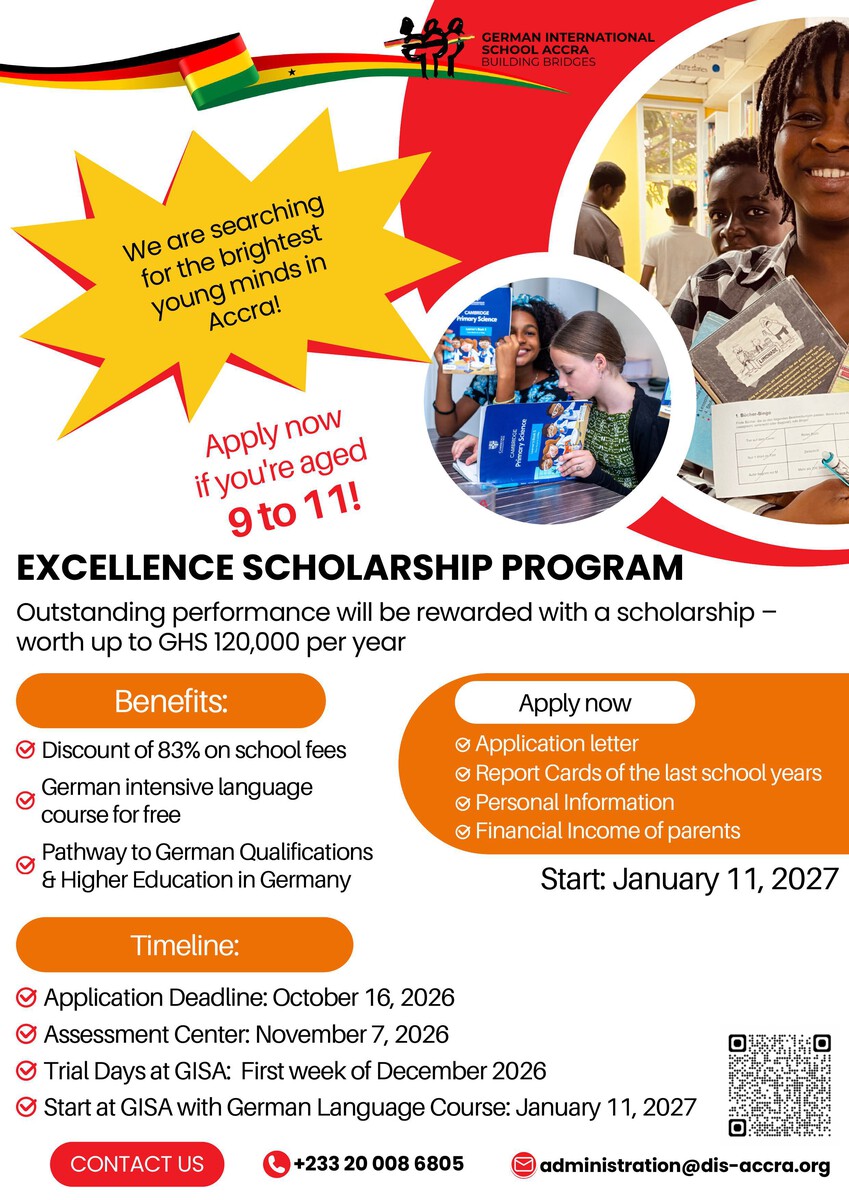
Football tournament for children aged 9–12 as part of the selection process for the Excellence Scholarship Program
💻 Thursday, 29 January 2026, 17:00–18:30 (online)
Information session for the school community regarding the upcoming visit
📄 Friday, 30 January 2026
Distribution of mid-year reports
End of the first school semester
🎭 Friday, 13 February 2026
School Carnival
🏖️ Monday, 16 February – Friday, 20 February 2026
Sports Break
📚 Monday, 23 February 2026
First day back at school after the Sports Break
🎉 60th Anniversary – Event Framework
🇬🇭🇩🇪🇨🇭 Thursday, 26 February 2026
Ghana Day – Three nations celebrating together
🏆 Saturday, 28 February 2026
GISA Cup
🏆 Monday, 2 March 2026
GISA Cup – Kids Edition
⚽ Monday, 30 March 2026, 19:45
Germany 🇩🇪 vs Ghana 🇬🇭
International Friendly Match
Venue: Stuttgart
🏖️ Monday, 30 March – Friday, 10 April 2026
Easter Break
🎒 Monday, 30 March – Thursday, 2 April 2026
Holiday Camp
📚 Monday, 13 April 2026
First day back at school after the Easter Break
Excellence Scholarship Programme 2027
⚽Gerald Asamoah Football Academy
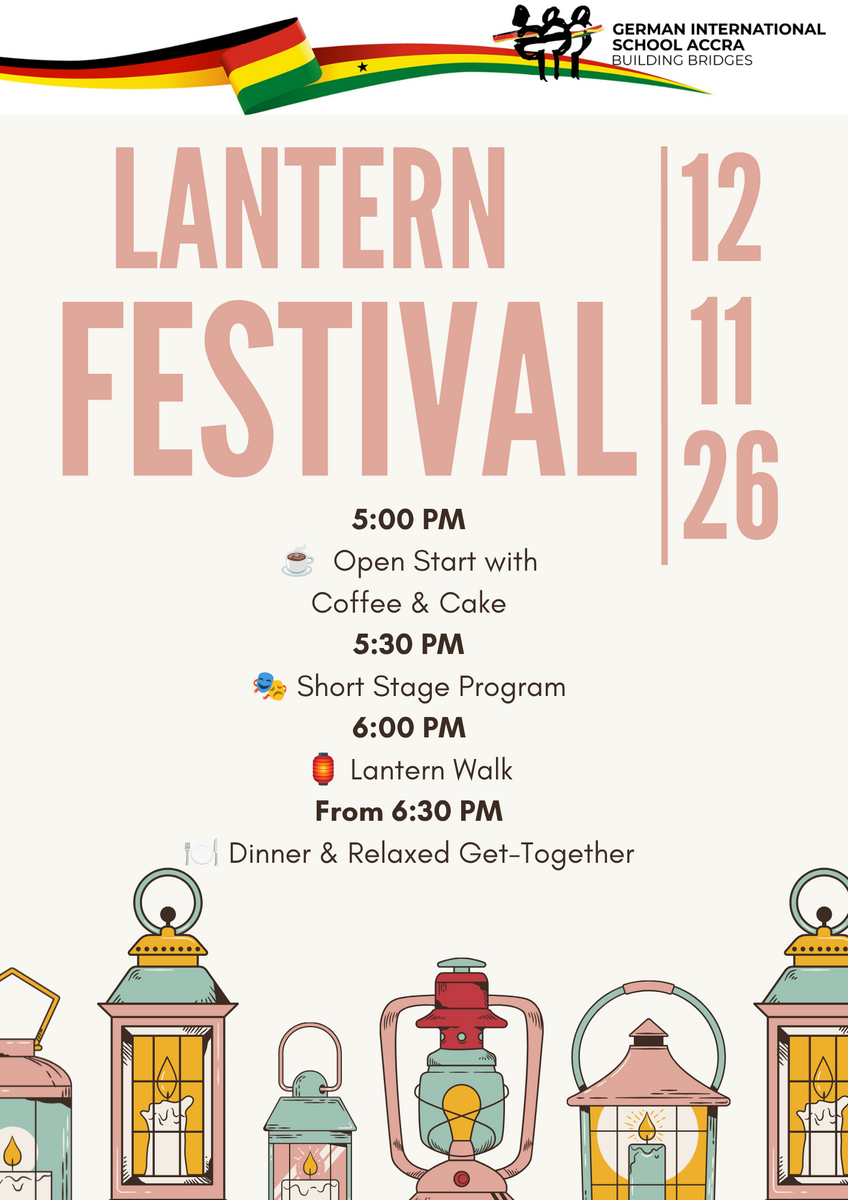
Lantern Festival
🇩🇪 German Language Day

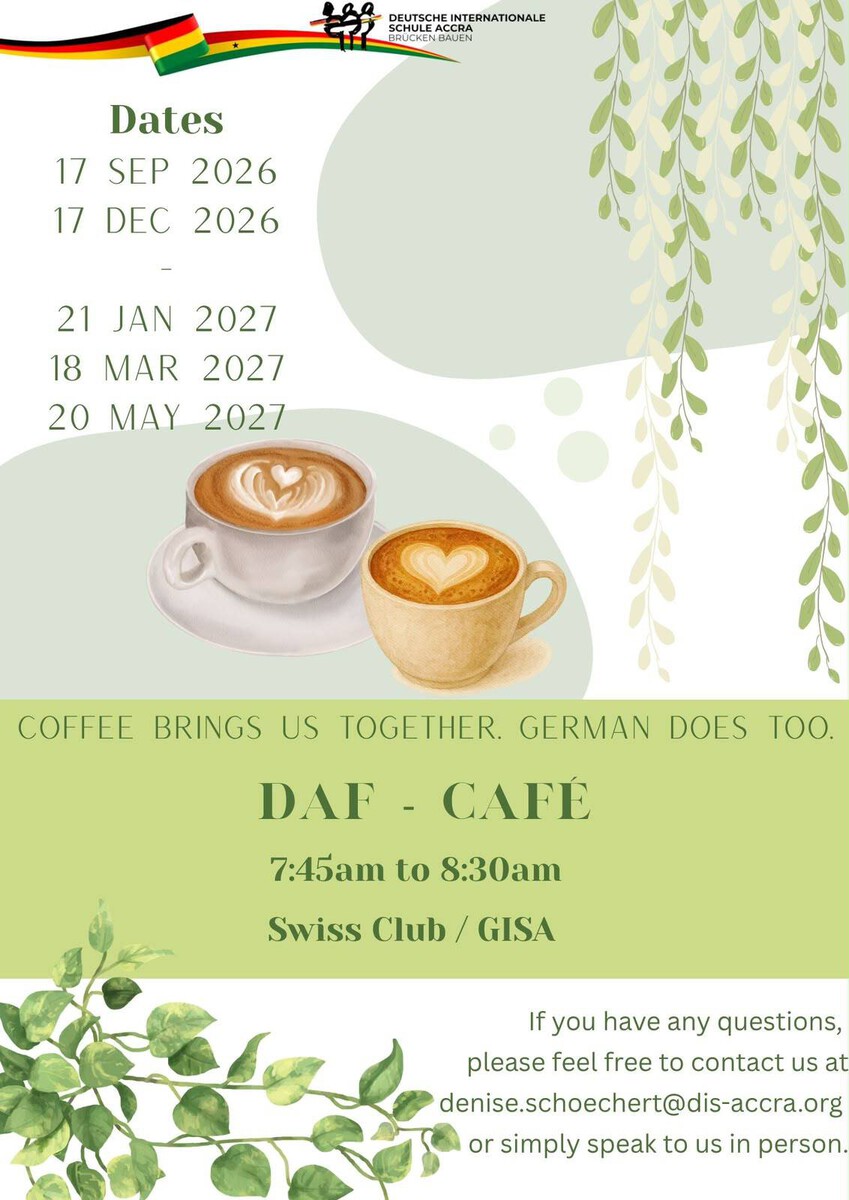
☕ DaF Café: Speaking German and Connecting Through Conversation
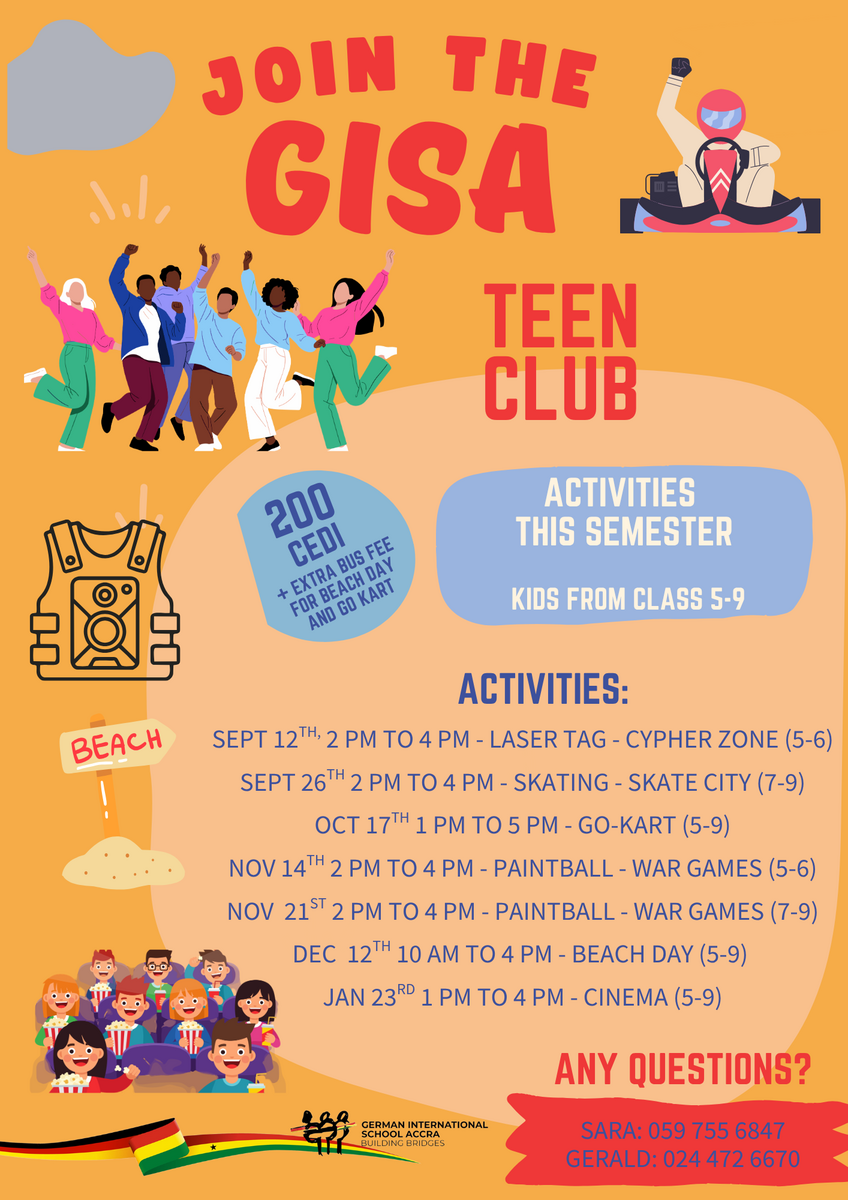
GISA Teen Club